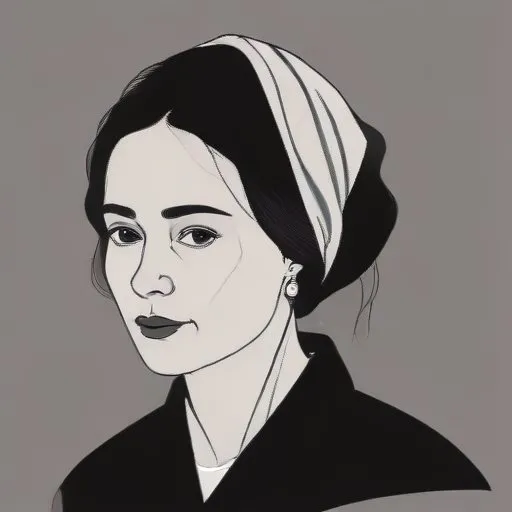
Irina Ratushinskaya: The Fearless Poet and Soviet Dissident
A Voice of Defiance in a Repressive Era
Irina Ratushinskaya was a Russian-Soviet dissident, poet, and writer known for her unwavering courage in the face of political persecution. Her poetry, infused with Christian theology and artistic creativity, became a powerful tool of resistance against the Soviet regime, earning her a reputation as a beacon of hope and freedom in a time of oppression.
Early Life and Education
Born on March 4, 1954, in Odesa, Ukraine, Irina Ratushinskaya grew up in a family with a rich cultural heritage. Her father, Boris Leonidovich Ratushinsky, was an engineer, and her mother, Irina Valentinovna Ratushinskaya, was a teacher of Russian literature. Her maternal great-grandfather was deported from Poland to Siberia after the January 1863 Uprising against forced conscription into the Russian Imperial Army.
Ratushinskaya pursued higher education at Odesa University, graduating with a master's degree in physics in 1976. Before and after her graduation, she taught at a primary school in her native Odesa from 1975 to 1978.
Political Persecution and Imprisonment
On September 17, 1982, Ratushinskaya's life took a drastic turn when she was arrested and accused of anti-Soviet agitation for writing and circulating her collections of verse. In March 1983, she was tried in Kyiv and convicted of agitation carried on for the purpose of subverting or weakening the Soviet regime, punishable under Article 62. Ratushinskaya received the maximum sentence of seven years in a strict-regime labor camp, followed by five years of internal exile.
During her imprisonment, Ratushinskaya continued to write poetry, often under harsh conditions, including one year in solitary confinement in an unheated cell where temperatures plummeted to minus 40°C in the winter. Her poetry, however, remained a testament to her indomitable spirit, focusing on love, Christian theology, and artistic creation rather than politics or policies.
Release and International Pressure
After spending three and a half years in prison, Ratushinskaya was released on October 9, 1986, on the eve of the summit in Reykjavík, Iceland between President
Ronald Reagan and
Mikhail Gorbachev. Her release was largely attributed to international pressure and the efforts of human rights organizations, which had been advocating for her freedom.
Literary Contributions and Legacy
Ratushinskaya's poetry, characterized by its lyricism, depth, and spirituality, has been widely acclaimed for its beauty and courage. Her work has been translated into multiple languages, including English, French, German, and Italian, and has been published in various anthologies and journals.
Through her writing, Ratushinskaya has left an indelible mark on modern Russian literature, inspiring generations of writers, poets, and artists to speak truth to power and resist oppression. Her legacy continues to be celebrated through her poetry, which remains a powerful testament to the human spirit's capacity for resilience and creativity in the face of adversity.
Awards and Honors
* Winner of the Freedom to Write Award (1984)
* Honorary Member of the American Academy of Arts and Letters (1987)
* Recipient of the Vaclav Havel Award for Creative Dissent (2015)
Personal Milestones and Key Life Events
* Married to Igor Gerashchenko, a Soviet dissident and writer
* Mother of two sons, Alexei and Kirill
* Passed away on July 5, 2017, in Moscow, Russia
Ratushinskaya's remarkable life and literary achievements serve as a beacon of hope and inspiration, reminding us of the power of art and courage in the face of oppression.