


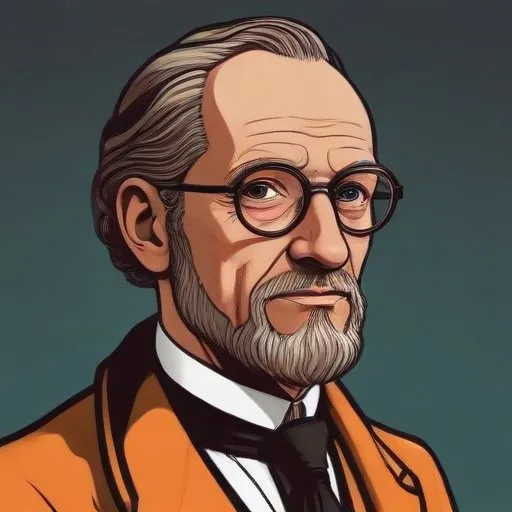
Meet Isaac Beeckman, a Dutch philosopher and scientist who laid the groundwork for modern atomism, a fundamental concept in physics and chemistry. Through his studies and interactions with prominent natural philosophers, Beeckman's work had a profound impact on the development of scientific thought, making him a crucial figure in the history of science.
Born on December 10, 1588, in Middelburg, Zeeland, to a strongly Calvinistic family, Beeckman's early life was marked by a strong educational foundation. He studied theology, literature, and mathematics in Leiden, setting the stage for his future endeavors.
After completing his studies, Beeckman returned to Middelburg, where he couldn't find a position as a minister due to disagreements with the local church. He then followed in his father's footsteps, taking up the candlemaking business and setting up his own company in Zierikzee. However, his curiosity didn't stop there. He dabbled in various projects, including creating water conduits and conducting meteorological observations.
In 1616, Beeckman sold his business to his apprentice and pursued a degree in medicine from Caen, which he completed in 1618. Upon his return, he became an assistant rector in Utrecht and later taught at the Latin school in Rotterdam, where he founded a Collegium Mechanicum, or Technical College.
One of Beeckman's most notable contributions was his influence on the renowned philosopher and mathematician René Descartes. The two met in 1618 in Breda, where Descartes was stationed as a soldier. According to legend, they encountered each other while viewing a mathematical problem posted in the Breda marketplace, which Descartes asked Beeckman to translate from Dutch to French.
This chance encounter marked the beginning of a lasting friendship and intellectual partnership between the two. Beeckman's teachings and discussions with Descartes had a profound impact on the development of Descartes' philosophical ideas, particularly in the realm of metaphysics.
Despite his significant contributions to the development of modern atomism and his influence on Descartes, Beeckman's work was largely overshadowed by that of his contemporaries. Nevertheless, his legacy extends far beyond his own lifetime, with his ideas continuing to shape the course of scientific inquiry and philosophical thought.
Beeckman's commitment to interdisciplinary thinking, his passion for learning, and his ability to inspire others have cemented his place as a pioneer in the history of science. As we continue to navigate the complexities of the natural world, we would do well to remember the forgotten achievements of this remarkable Dutch philosopher and scientist.
Although there are no recorded quotes from Beeckman, his legacy speaks volumes about the importance of curiosity, interdisciplinary thinking, and the power of mentorship in shaping the course of human knowledge.
Born in 1596
Developed influential philosophical and mathematical concepts, including the famous phrase "I think, therefore I am," and laid the foundation for modern Western philosophy.
Born in 1564
Pioneering astronomer, physicist, and mathematician who played a major role in the Scientific Revolution, making key discoveries that challenged Aristotelian views and laid the foundation for modern science.
Born in 1571
A 17th-century trailblazer who discovered the three laws of planetary motion, revolutionizing our understanding of the solar system. He's also credited with being a pioneer in the field of astrology.
Born in 1561
A 16th-17th century Renaissance figure who pioneered the scientific method and empiricism, and served as a prominent government official.
Born in 1578
Discovered the circulatory system and described how blood flows through the body, revolutionizing understanding of human physiology.
Born in 1546
A 16th-century astronomer who made precise measurements of the stars and planets, laying the foundation for modern astronomy. His data helped Kepler discover planetary orbits.
Born in 1592
A 17th-century polymath who made significant contributions to the scientific revolution, merging ancient Greek philosophy with modern scientific methods, and providing a foundation for modern astronomy. He's also known for his work on the concept of the vacuum and the behavior of gases.
Born in 1588
A 17th-century polymath who made significant contributions to mathematics, particularly in the discovery of prime numbers, and wrote extensively on philosophy and theology.
