


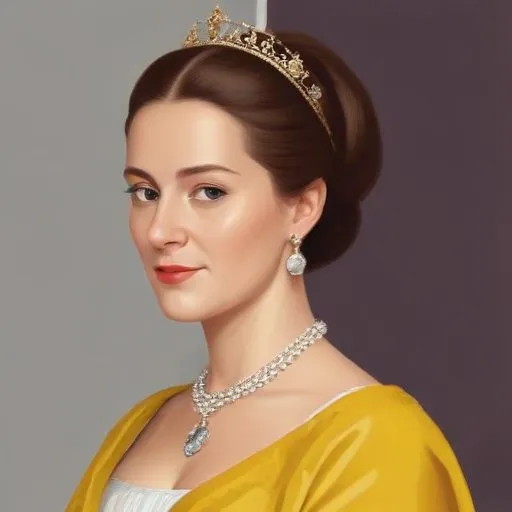
Queen of Denmark from 1514 to 1523, known for her strong will and influence on her husband, King Christian II, as well as her role in shaping Danish politics during her reign.
Isabella of Austria, also known as Elizabeth, is renowned for her brief yet eventful reign as the Queen of Denmark, Norway, and Sweden under the Kalmar Union, as well as her unwavering support for her husband, King Christian II.
Born on July 18, 1501, in Brussels, Isabella was an Archduchess of Austria and Infanta of Castile from the House of Habsburg. She was the daughter of King Philip I and Queen Joanna of Castile, and the sister of Charles V, Holy Roman Emperor.
Isabella's upbringing was marked by a comprehensive education in Mechelen, under the guidance of notable humanists like Juan Luis Vives and Adrian of Utrecht. Her aunt, Archduchess Margaret, oversaw her education, which was considered exceptional for a woman of her time.
In 1514, Isabella entered into a strategic marriage with Christian II of Denmark, Norway, and Sweden. However, the marriage encountered early challenges due to Christian's existing relationship with his Dutch mistress, Dyveke Sigbritsdatter. Following Dyveke's death in 1517, the relations between Isabella and her husband significantly improved, and Isabella was entrusted with the position of regent in 1520 and became a political advisor to the king.
In 1523, King Christian II was deposed, and the Danish royal family, including Isabella and her children, sought refuge in various European states. During this exile, Isabella strongly advocated for her husband's cause. In 1524, she participated in the Imperial Diet in Nürnberg, where she campaigned on behalf of King Christian II, seeking support for his restoration to the Danish throne.
Isabella's travels through Germany, England, and the Netherlands contributed to her evolving religious sympathies for the Protestant movement. Although her death in 1526 prompted widespread mourning, the Habsburgs declared that she had died a fervent Catholic.
Isabella's brief yet impactful reign and her dedication to her husband's cause have left a lasting legacy in Scandinavian history. Her story serves as a testament to the complexities of royal politics and the agency of women in the 16th century.
Isabella's life and reign took place during a time of great political upheaval in Europe. Her story is intertwined with the complexities of royal politics, the rise of Protestantism, and the struggles of women in power. Her legacy serves as a testament to the agency and determination of women in the 16th century.
Born in 1749
King of Denmark and Norway from 1766 to 1808, known for his mental health issues and scandals, which led to a regency that ruled in his place.
Born in 1749
King of Denmark and Norway from 1766 to 1808, known for his mental health issues and scandals, which led to a regency that ruled in his place.
Born in 1609
King of Denmark and Norway from 1648 to 1670, known for establishing absolute monarchy and modernizing Denmark's administration.
Born in 1478
The King of Castile and ruler of Burgundy, known for his lavish spending and cultural achievements, including the construction of the Palace of Coudenberg in Brussels.
Born in 1748
The last king of the Spanish Habsburg dynasty, he's known for his ineptitude and weakness, which led to the downfall of the Spanish Empire and the rise of the Bourbon dynasty. He's also infamous for his numerous scandals and corrupt court.
