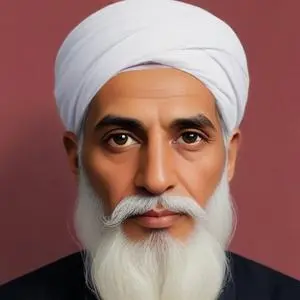
Ismail al-Faruqi

Ismail al-Faruqi

Ismail al-Faruqi was born on January 1st, 1921

Full Name: Ismail Raji al-Faruqi
Place of Birth: Jaffa, Ottoman Syria
Nationality: Palestinian-American
Profession: Philosopher and Academic
Notable Works: Christian Ethics
Date of Birth: January 27, 1921
Date of Death: May 27, 1986
Education: University of Pennsylvania

This Palestinian-American philosopher and academic was a leading authority on Islamic thought and its integration with Western philosophy, known for his work on comparative religion and Islamic-Christian dialogue. He founded the International Institute of Islamic Thought and wrote extensively on Islamic philosophy and its relevance to modern society.

Written by: Grace Lee Grace Lee

Ismail alFaruqi: A Pioneer in Islamic Studies and Interfaith Dialogue

A Legacy of Scholarship and Dialogue

Ismail alFaruqi was a renowned Palestinian-American philosopher and scholar who left an indelible mark on the fields of Islamic studies and interfaith dialogue. Known for his groundbreaking contributions to these fields, alFaruqi was a prolific writer, educator, and institution-builder who dedicated his life to promoting cross-cultural understanding and cooperation.

Early Life and Education

Born on January 1, 1921, in Jaffa, British-mandate Palestine, alFaruqi was raised in a family of Islamic scholars. His father, Abd al-Huda alFaruqi, was an Islamic judge (qadi), and his early religious education was shaped by his father's teachings and the local mosque. AlFaruqi's intellectual curiosity and academic excellence earned him a place at the French Dominican Collège des Frères de Jaffa in 1936.

After completing his secondary education, alFaruqi worked as a registrar of cooperative societies under the British Mandate government in Jerusalem and later as the district governor of Galilee. Following the 1948 Arab-Israeli War, he emigrated to Beirut, Lebanon, where he pursued higher education at the American University of Beirut.

Academic Pursuits and Philosophical Contributions

AlFaruqi's academic pursuits took him to Indiana University, where he earned his M.A. in philosophy with a thesis on Kantian and Nietzschean ethics in 1949. He later earned a second M.A. in philosophy from Harvard University in 1951 and a Ph.D. from Indiana University in 1952. His doctoral thesis, "On Justifying the Good," argued that values are absolute, self-existent essences known a priori through emotional intuition.

AlFaruqi's philosophical contributions were instrumental in shaping Islamic thought and promoting interfaith dialogue. He believed in the importance of understanding different religious traditions and their contributions to human civilization. His works emphasize the need for mutual respect, tolerance, and cooperation among people of different faiths and cultures.

Teaching and Institution-Building

AlFaruqi's academic career spanned several institutions, including McGill University in Montreal, Canada, and Temple University in Philadelphia, where he founded and chaired the Islamic Studies program. He also founded the International Institute of Islamic Thought (IIIT), a premier research and education center dedicated to promoting Islamic scholarship and fostering interfaith dialogue.

Throughout his teaching career, alFaruqi inspired generations of students and scholars, encouraging them to engage in critical thinking, intellectual inquiry, and academic rigor. His commitment to education and institution-building helped establish Islamic studies as a vital field of academic inquiry.

Major Works and Publications

AlFaruqi was a prolific writer and published numerous books and articles on Islamic thought, philosophy, and interfaith dialogue. Some of his notable works include:

These works showcase alFaruqi's intellectual range and his ability to engage with diverse philosophical and theological traditions. His publications have had a lasting impact on Islamic studies, philosophy, and interfaith dialogue, and continue to inspire scholars and researchers today.

Legacy and Impact

Ismail alFaruqi's legacy extends far beyond his academic accomplishments. He played a crucial role in promoting cross-cultural understanding, fostering interfaith dialogue, and advancing Islamic studies as a field of academic inquiry. His institution-building efforts helped establish centers of learning and research that continue to shape the intellectual landscape of Islamic studies and interfaith dialogue.

Today, alFaruqi's contributions are recognized and celebrated by scholars and intellectuals from diverse backgrounds and traditions. His commitment to promoting mutual respect, tolerance, and cooperation serves as a beacon of hope in an increasingly complex and interconnected world.

Timeline
1921
Born in Jaffa, Palestine
Ismail al-Faruqi was born on January 27, 1921, in Jaffa, Palestine, to a Muslim family.
1942
Moved to the United States
Ismail al-Faruqi moved to the United States in 1942, to pursue higher education.
1952
Earned PhD from Indiana University
Ismail al-Faruqi earned his PhD in philosophy from Indiana University in 1952, specializing in Islamic philosophy.
1966
Founded the American Islamic College
Ismail al-Faruqi founded the American Islamic College in 1966, to promote Islamic education in the US.
1986
Died at Age 65
Ismail al-Faruqi was assassinated on May 27, 1986, at the age of 65, in Philadelphia, Pennsylvania.
Ismail al-Faruqi

Ismail al-Faruqi Quiz

Ismail al-Faruqi was a leading authority on which field of thought?

Score: 0/5
FAQ
What was Ismail al-Faruqis area of expertise?
Ismail al-Faruqi was a renowned scholar of Islamic philosophy and theology, with a particular focus on the relationship between Islam and Christianity.
What was Ismail al-Faruqis educational background?
Ismail al-Faruqi earned his Ph.D. in philosophy from the University of Indiana in 1952. He later taught at several universities, including Temple University and Al-Azhar University.
What was Ismail al-Faruqis contribution to interfaith dialogue?
Ismail al-Faruqi was a pioneer in interfaith dialogue, working to promote understanding and cooperation between Muslims and Christians. He was a key figure in the establishment of the International Institute of Islamic Thought.
What was Ismail al-Faruqis views on Islam and modernity?
Ismail al-Faruqi believed that Islam was compatible with modernity and that Muslims could engage with modern ideas and values while remaining true to their faith.
How is Ismail al-Faruqi remembered today?
Ismail al-Faruqi is remembered as a leading scholar and advocate for interfaith dialogue and understanding. His work continues to inspire and guide scholars and activists around the world.

Related People:

Edward Said

90 Years Old

A prominent cultural critic and scholar who challenged Western perceptions of the Middle East and Islam, and wrote extensively on Orientalism and imperialism.

Noam Chomsky

97 Years Old

Developed groundbreaking theories on language acquisition and universal grammar, and is a prominent critic of power and propaganda in modern society.

Hans-Georg Gadamer

Born in 1900

A German philosopher and scholar who developed philosophical hermeneutics, a methodology for interpreting texts and understanding human experience, and is known for his work on the importance of language and tradition in shaping our understanding of the world.

Martin Heidegger

Born in 1889

A German philosopher and academic who explored the meaning of existence, time, and human existence, influencing 20th-century philosophy with his concept of "Being-in-the-world".

Jean-Paul Sartre

Born in 1905

Existentialist philosopher and playwright who argued that humans have complete freedom to choose their actions and create their own meaning in life, influencing modern thought on morality and individual responsibility.

Ali Shariati

92 Years Old

A pioneering thinker who merged Islamic ideology with socialism and Marxism, inspiring Iran's 1979 revolution and shaping modern Islamic thought.

Muhammad Iqbal

Born in 1877

A Pakistani philosopher, poet, and politician who played a key role in the creation of Pakistan and is revered for his philosophical and literary works that explored Islamic identity and nationalism.