


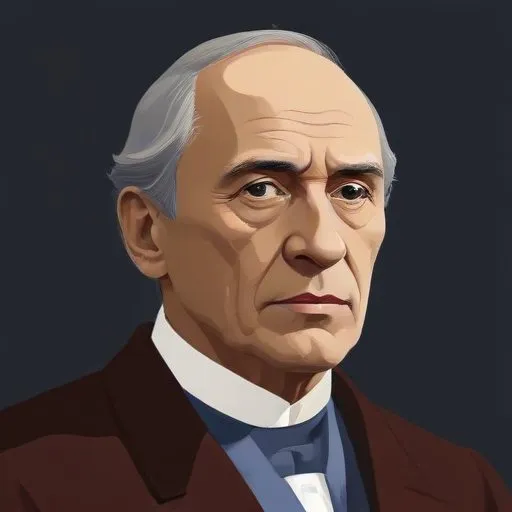
A prominent figure in 18th-century Russia, he was a poet and politician who played a key role in shaping the country's legal system. He's most known for his efforts to reform the judiciary and promote Enlightenment values.
Ivan Dmitriev was a multifaceted Russian personality, renowned as a statesman, poet, and literary figure, who left an indelible mark on the country's cultural and political landscape. Born on September 10, 1760, Dmitriev is celebrated for his contributions to the sentimentalist movement in Russian literature, as well as his influential role in the country's government.
Dmitriev was born at his father's estate in the government of Simbirsk, Russia. Following the Pugachev revolt, his family fled to Saint Petersburg, where he was enrolled in the school of the Semenov Guards. He later secured a post in the military service, rising to the rank of colonel before quitting to pursue a career in government.
Dmitriev's appointment as procurator for the senate marked the beginning of his illustrious career in government. He soon became a privy councillor and, between 1810 and 1814, served as minister of justice under Emperor Alexander I. After retiring from public life, Dmitriev dedicated himself to his literary passions, collecting books and works of art, and engaging in lively debates about language and literature.
Dmitriev was a prolific poet, penning a range of works, including songs, odes, satires, tales, epistles, and fables. His poems often tackled themes of love, nature, and patriotism, showcasing his skill as a wordsmith. His witty and engaging style earned him a place among the most celebrated poets of his time. Notably, his fables, partly original and partly translated from La Fontaine, Florian, and Arnault, have become iconic in Russian literature.
Dmitriev's literary works often reflected his philosophical stance, which sided with the progressive views of Nikolay Karamzin. He advocated for the modernization of the Russian language, arguing against the Old Slavonic party's attempts to preserve archaic linguistic forms. Through his writings, Dmitriev promoted the development of a more accessible and contemporary Russian language.
Ivan Dmitriev's multifaceted contributions to Russian literature and politics have left an enduring legacy. His poetry and fables continue to delight readers, while his advocacy for language modernization helped shape the country's literary landscape. As a statesman, he played a significant role in shaping Russia's governance, and his influence can still be felt today.
Dmitriev's life serves as a testament to the power of creativity, dedication, and public service. His remarkable achievements continue to inspire future generations, cementing his place as one of Russia's most celebrated sons.
Born in 1799
Russia's literary icon penned timeless tales of love, drama, and social commentary, leaving an indelible mark on the country's cultural heritage.
Born in 1814
A 19th-century Russian literary giant, known for his poignant poetry and novels that explored the human condition, particularly in the context of Russian society. His works are still widely read and studied today.
Born in 1783
A Russian literary giant who masterfully translated European classics into Russian, while also penning his own romantic poetry that captivated the nation's heart.
Born in 1743
A prominent 18th-century poet and statesman who served as Minister of Justice, known for his lyrical poetry and reforms that modernized Russia's legal system.
Born in 1803
A Russian poet and diplomat who wrote romantic and patriotic poetry that explored the human experience, and served as a diplomat in Germany and Italy.
