


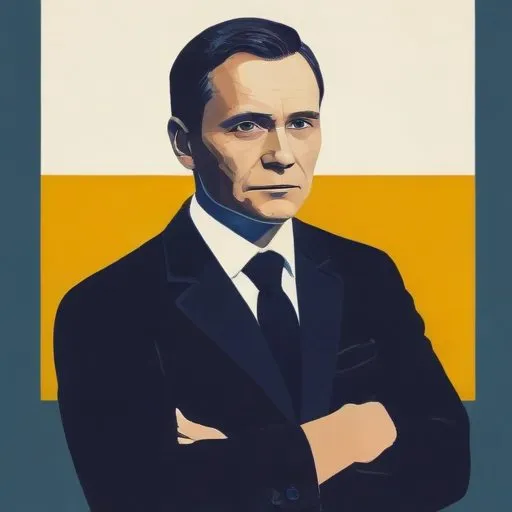
Estonian educator and politician who played a key role in the country's struggle for independence and was a prominent figure in the early 20th-century Estonian government. He's also known for his contributions to the development of Estonian education and culture.
Jaan Anvelt, also known by his pseudonyms Eessaare Aadu, Jaan Holm, Jaan Hulmu, Kaarel Maatamees, and Onkel Kaak, was a renowned Estonian Bolshevik revolutionary and writer who played a pivotal role in shaping the country's political landscape. He is best known for being the leader of the Communist Party of Estonia, the first premier of the Soviet Executive Committee of Estonia, and the chairman of the Council of the Commune of the Working People of Estonia.
Anvelt was born on April 18, 1884, to a peasant family in Oorgu, Visiku Parish (now Viljandi Parish), Kreis Fellin, Governorate of Livonia. He pursued his passion for education and became a schoolteacher, studying in Dorpat (now Tartu) and later in St. Petersburg, where he joined the Russian Social Democratic Labour Party's Bolshevik faction.
On November 5, 1917, Anvelt led his leftist revolutionaries to the October Revolution in Tallinn, the capital of Estonia, and took political power. Although the revolution was eventually defeated in the Baltics, Anvelt remained active as a revolutionary and continued to play a key role in shaping Estonia's political landscape.
Anvelt was imprisoned during Joseph Stalin's Great Purge in 1937 and died from injuries sustained during a beating by Aleksandr Langfang while in NKVD custody on December 11, 1937.
Jaan Anvelt's contributions to Estonia's revolutionary movement and his role in shaping the country's political landscape continue to be remembered and honored. His legacy serves as a testament to the power of determination and perseverance in the face of adversity.
Although Anvelt's quotes and sayings are not well-documented, his actions and writings continue to inspire and motivate people to this day.
Jaan Anvelt's life and legacy continue to fascinate and inspire people around the world. His contributions to Estonia's revolutionary movement and his unwavering commitment to his ideals will always be remembered as a testament to the power of the human spirit.
Born in 1874
Estonia's first president, a key figure in the country's struggle for independence from Russia, served as a unifying force during tumultuous times. He's remembered for his role in shaping Estonia's early years and its path to sovereignty.
Born in 1870
State Elder of Estonia, serving as the head of government from 1924 to 1925, known for his contributions to Estonia's early independence and development.
Born in 1886
Estonia's Head of State during World War II, leading the country's government-in-exile and advocating for independence from Soviet occupation. He played a crucial role in preserving Estonia's sovereignty and identity.
Born in 1888
Estonian journalist and politician who served as the 6th Prime Minister of Estonia, known for his leadership during the country's interwar period and his role in shaping the nation's early years of independence.
Born in 1872
Estonia's 7th State Elder, a prominent lawyer and politician, played a crucial role in shaping the country's early 20th-century government and politics. He's most known for his efforts in establishing Estonia's independence and sovereignty.
Born in 1884
Estonia's 7th Prime Minister, a lawyer and politician who played a crucial role in shaping the country's early years of independence, known for his diplomatic efforts and national unification.
Born in 1875
Estonia's second Prime Minister, a lawyer and politician, played a crucial role in shaping the country's early years, serving as a key figure in its struggle for independence. He's most known for his efforts in establishing Estonia's sovereignty and democratic government.
Born in 1868
Estonia's 2nd Prime Minister, a pioneering journalist, lawyer, and politician who played a crucial role in the country's struggle for independence and development. He's most known for his efforts to establish a democratic government and promote national unity.
