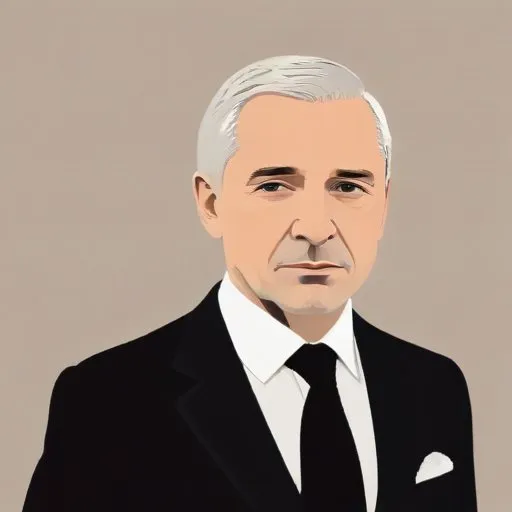
Jaan Tnisson: The Estonian Statesman Who Fought Against Soviet Oppression
A Leader in Turbulent Times
Jaan Tnisson is remembered as a prominent Estonian statesman who served as the Prime Minister of Estonia twice, from 1919 to 1920, and later as the State Elder (head of state and government) from 1927 to 1928 and in 1933. He was a strong advocate for Estonian independence and democracy, fighting against the Soviet occupation of his country.
Early Life and Nationalist Roots
Tnisson was born on December 22, 1868, in Viiratsi Parish, Viljandi County, Estonia, which was then part of the Governorate of Livonia of the Russian Empire. Growing up during the Estonian national awakening, he was inspired by nationalist ideas from a young age. He studied at the University of Tartu, graduating in 1892 with a degree in law.
Rise to Prominence in the National Movement
While at university, Tnisson joined the Estonian Students Society, a group that played a significant role in the national movement. He became the chairman of the society, where he met Villem Reimann, the leader of the national movement at the time. In 1893, Tnisson became the editor of the largest Estonian daily, Postimees, where he used his platform to speak out against the Russification policy that had closed several Estonian organizations.
Government Positions and Soviet Oppression
Tnisson's career in politics spanned several decades. He served as the Foreign Minister of Estonia from 1931 to 1932 and was the Prime Minister of Estonia twice, from 1919 to 1920, and later as the State Elder from 1927 to 1928 and in 1933. However, after the Soviet invasion and occupation of Estonia in June 1940, Tnisson was arrested by the Stalinist regime and imprisoned. He was last known to be alive in June 1941, and his exact date and location of death remain unknown.
Legacy and Impact
Despite his untimely death, Jaan Tnisson's legacy lives on as a champion of Estonian independence and democracy. His bravery in the face of Soviet oppression serves as an inspiration to those fighting for freedom and justice.
Key Dates and Events
- December 22, 1868: Born in Viiratsi Parish, Viljandi County, Estonia
- 1892: Graduated from the University of Tartu with a degree in law
- 1893: Became the editor of Postimees, the largest Estonian daily
- 1919-1920: Served as the Prime Minister of Estonia
- 1927-1928 and 1933: Served as the State Elder of Estonia
- 1931-1932: Served as the Foreign Minister of Estonia
- June 1940: Arrested by the Soviet regime
- June 1941: Last known to be alive
Remembering a Hero
Jaan Tnisson's life and legacy serve as a testament to the power of courage and determination in the face of oppressive regimes. His fight for Estonian independence and democracy continues to inspire generations to come.
FAQ
What was Jaan Tõnissons role in Estonian politics?
Jaan Tõnisson was a prominent Estonian politician who served as the 2nd Prime Minister of Estonia from 1919 to 1920. He was a key figure in Estonias struggle for independence from Russia.
What was Jaan Tõnissons background?
Tõnisson was born in 1868 in Estonia, which was then part of the Russian Empire. He studied law at the University of Tartu and became involved in politics at a young age.
What was Jaan Tõnissons role in the Estonian War of Independence?
Tõnisson played a key role in Estonias War of Independence against Russia from 1918 to 1920. He served as the chairman of the Estonian Provincial Assembly and helped to negotiate the Treaty of Tartu, which recognized Estonias independence.
What were Jaan Tõnissons views on Estonian independence?
Tõnisson was a strong advocate for Estonian independence and self-determination. He believed that Estonia should be a sovereign state, free from Russian influence.
What is Jaan Tõnissons legacy in Estonia?
Tõnissons legacy in Estonia is that of a national hero and a champion of independence. He is remembered as one of the most important figures in Estonias struggle for freedom and self-determination.