


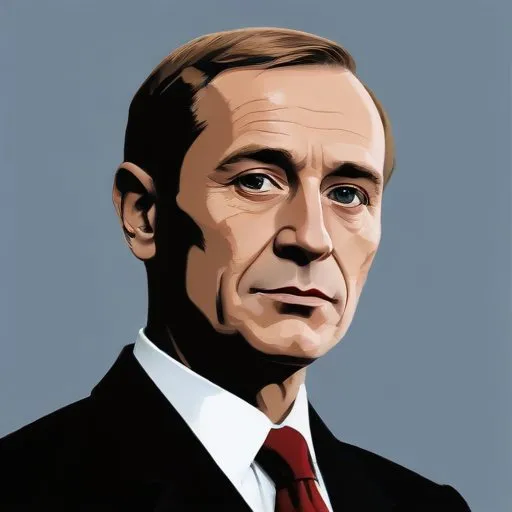
A prominent Estonian leader who served as the country's Prime Minister during a tumultuous period, guiding Estonia through World War II and the Soviet occupation. He's revered for his bravery and statesmanship during Estonia's struggle for independence.
Jri Uluots, a distinguished Estonian Prime Minister, journalist, and academic, left an indelible mark on his country's history. As a prominent attorney and Dean of the Faculty of Law at the University of Tartu, Uluots' vast expertise and leadership played a crucial role in shaping Estonia's political and educational landscape.
Uluots was born on January 13, 1890, in Kirbla Parish, Estonia. He pursued higher education at St. Petersburg University, where he studied law from 1910 to 1918. After completing his degree, he returned to Estonia to share his knowledge, teaching Roman and Estonian law at the University of Tartu until 1944.
Uluots' passion for writing led him to edit the Kaja newspaper from 1919 to 1920, followed by his tenure as editor-in-chief of Postimees from 1937 to 1938. Through his journalistic endeavors, he championed the pursuit of truth and informed public discourse.
Uluots' political career began when he was elected to the Riigikogu, Estonia's parliament, from 1920 to 1926 and again from 1929 to 1932. His exceptional leadership skills led to his appointment as speaker of the Riigivolikogu lower chamber from 1938 to 1939. Subsequently, he served as Prime Minister of Estonia from 1939 to 1940.
When Soviet troops occupied Estonia in 1940, Uluots' constitutional government went underground, and he continued to lead the country in exile. The United States, United Kingdom, and other Western powers recognized his government as the legitimate authority, rejecting the Soviet-backed puppet government.
Following the arrest and deportation of Estonian President Konstantin Päts in 1940, Uluots took on the duties of the President as per the Estonian constitution. When Nazi forces invaded Estonia in 1941, he met with the Nazi military government, requesting permission to form an independent Estonian government. Although his request was denied, Uluots refused to head the Estonian Self-Administration, maintaining his commitment to Estonian autonomy.
Jri Uluots' remarkable life serves as a testament to his unwavering dedication to Estonia and its people. Through his multifaceted career, he instilled a sense of national pride and demonstrated exceptional leadership during times of turmoil. As a professor, journalist, and statesman, Uluots left an indelible mark on Estonia's history, making him a revered figure in the country's struggle for independence and self-determination.
"I will not betray the trust of the Estonian people."
This quote, often attributed to Uluots, reflects his unwavering commitment to his country and its people, even in the face of adversity.
Born in 1874
Estonia's first president, a key figure in the country's struggle for independence from Russia, served as a unifying force during tumultuous times. He's remembered for his role in shaping Estonia's early years and its path to sovereignty.
Born in 1868
Estonia's 2nd Prime Minister, a pioneering journalist, lawyer, and politician who played a crucial role in the country's struggle for independence and development. He's most known for his efforts to establish a democratic government and promote national unity.
Born in 1884
Estonia's 7th Prime Minister, a lawyer and politician who played a crucial role in shaping the country's early years of independence, known for his diplomatic efforts and national unification.
Born in 1875
Estonia's second Prime Minister, a lawyer and politician, played a crucial role in shaping the country's early years, serving as a key figure in its struggle for independence. He's most known for his efforts in establishing Estonia's sovereignty and democratic government.
Born in 1888
Estonian journalist and politician who served as the 6th Prime Minister of Estonia, known for his leadership during the country's interwar period and his role in shaping the nation's early years of independence.
Born in 1870
State Elder of Estonia, serving as the head of government from 1924 to 1925, known for his contributions to Estonia's early independence and development.
Born in 1886
Estonia's Head of State during World War II, leading the country's government-in-exile and advocating for independence from Soviet occupation. He played a crucial role in preserving Estonia's sovereignty and identity.
