


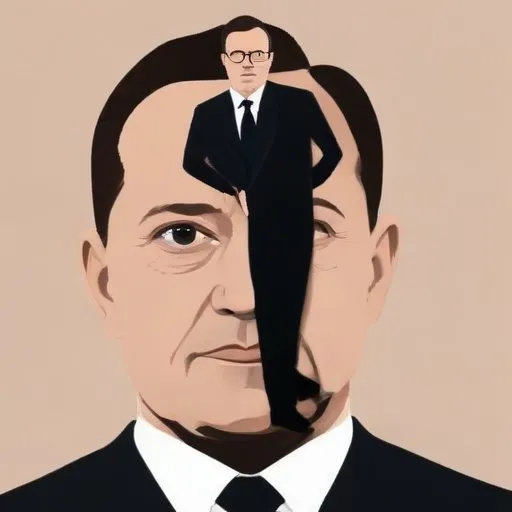
Estonia's 7th Prime Minister, a lawyer and politician who played a crucial role in shaping the country's early years of independence, known for his diplomatic efforts and national unification.
Ants Piip, a prominent Estonian lawyer, diplomat, and politician, was born on February 16, 1884, in Tuhalaane, Kreis Fellin, to a small independent farmer. He took his high school exams at the Kuressaare State High School and later studied at the Teachers Seminar in Kuldga, Latvia.
In 1903-1905, Piip served as a parish clerk and schoolteacher at Alksne, and later taught at the Emperor Nikolai Eastern Orthodox Parish School in Kuressaare. He continued his education at the law department of the Saint Petersburg University in 1908-1913, where he received a scientific scholarship. During this period, he worked in the Russian Justice and Interior Ministries. Piip also took additional courses in the Berlin University in 1912.
Ants Piip's political career began to take shape as a member of the Estonian Province Assembly (Estonian Maapev) and later the Constituent Assembly (Asutav Kogu). He was an active participant in the Paris Peace Conference, where he played a pivotal role in internationalizing the independence aspirations of Estonia following World War I. Piip's dedication and expertise earned him a spot as the Deputy to the Minister of Foreign Affairs in 1919.
Ants Piip's contributions to Estonia's independence and development have left an indelible mark on the country's history. His tireless efforts to promote Estonia's interests on the international stage have cemented his position as one of the most revered figures in Estonian politics.
Piip's life was marked by dedication to his work and an unwavering commitment to his country. His untimely death on October 1, 1942, in the Nyrobsky camp, Perm Oblast, Russian SFSR, has left a lasting impact on the Estonian people.
Ants Piip's legacy extends beyond the realm of politics. His commitment to education and international cooperation has inspired generations of Estonians to pursue careers in diplomacy, law, and academia. His unwavering dedication to his country has set a precedent for public service and commitment to the betterment of society.
Piip's vision for an independent Estonia was rooted in his strong belief in the principles of democracy, sovereignty, and self-determination. His commitment to these ideals has left a lasting impact on the country's political landscape and continues to shape Estonia's foreign policy to this day.
In the context of Estonian politics, Ants Piip's achievements are often compared to those of fellow statesmen such as Konstantin Päts and Otto Strandman. While each of these figures made significant contributions to Estonia's development, Piip's unique blend of diplomatic acumen, academic expertise, and unwavering dedication to his country sets him apart as a true visionary.
Born in 1874
Estonia's first president, a key figure in the country's struggle for independence from Russia, served as a unifying force during tumultuous times. He's remembered for his role in shaping Estonia's early years and its path to sovereignty.
Born in 1890
A prominent Estonian leader who served as the country's Prime Minister during a tumultuous period, guiding Estonia through World War II and the Soviet occupation. He's revered for his bravery and statesmanship during Estonia's struggle for independence.
Born in 1888
Estonian journalist and politician who served as the 6th Prime Minister of Estonia, known for his leadership during the country's interwar period and his role in shaping the nation's early years of independence.
Born in 1868
Estonia's 2nd Prime Minister, a pioneering journalist, lawyer, and politician who played a crucial role in the country's struggle for independence and development. He's most known for his efforts to establish a democratic government and promote national unity.
Born in 1875
Estonia's second Prime Minister, a lawyer and politician, played a crucial role in shaping the country's early years, serving as a key figure in its struggle for independence. He's most known for his efforts in establishing Estonia's sovereignty and democratic government.
Born in 1886
Estonia's Head of State during World War II, leading the country's government-in-exile and advocating for independence from Soviet occupation. He played a crucial role in preserving Estonia's sovereignty and identity.
Born in 1878
Estonian pastor and politician who served as the 9th Minister of Foreign Affairs, playing a significant role in Estonia's early 20th-century politics and independence movement. He was a key figure in shaping the country's foreign policy and international relations.
Born in 1871
Estonian physician and politician who served as the Head of State of Estonia, playing a crucial role in the country's struggle for independence. He is remembered for his efforts to establish a sovereign Estonian state.
