


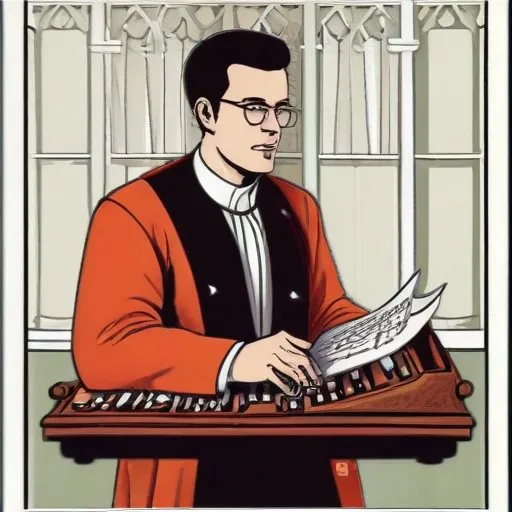
Noted for their significant contributions to the English musical scene, this organist and composer created numerous works for the church and royal court. Their compositions showcased mastery of harmony and counterpoint.
William Jackson, affectionately referred to as Jackson of Exeter, was an English organist and composer who left an indelible mark on the world of music. Born on May 29, 1730, in Exeter, England, Jackson's talents extended beyond his expertise as an organist to encompass composition, teaching, and writing, making him a formidable figure in his time.
Jackson was born to a grocer father who later became the master of the city workhouse. His early musical instruction came from John Silvester, the organist of Exeter Cathedral. In 1748, Jackson was sent to London to become a pupil of John Travers, organist to the Chapel Royal. This exposure to the country's musical elite would shape Jackson's future endeavors.
Jackson's compositional prowess is evident in his operas, The Lord of the Manor (1780) and Metamorphoses (1783). His musical adaptations of famous literary works, such as Milton's Lycidas (1767), showcased his skill in setting words to music. Jackson's prolific output also included odes, songs, canzonets, madrigals, pastorals, hymns, anthems, sonatas for harpsichord, and church services.
Upon his return to Exeter, Jackson devoted himself to teaching music, producing notable pupils such as George Baker, William Bennet, and John Davy. His writings include 30 Letters on Various Subjects (London, 1782), Observations on the Present State of Music in London (1791), and The Four Ages, together with Essays on Various Subjects (1798). These works demonstrate Jackson's erudition and insight into the world of music.
Jackson's contributions to music education and composition earned him a reputation as a respected figure in his field. His influence extended beyond Exeter, with his works being performed in prominent London venues. As an organist, composer, and teacher, Jackson of Exeter left a lasting legacy that continues to inspire generations of musicians and music lovers alike.
Through his multifaceted career, Jackson of Exeter proved himself a true Renaissance man, leaving behind a rich legacy that continues to enrich the world of music.
Born in 1892
A renowned British organist, composer, and educator, he was a prominent figure in the development of 20th-century Anglican church music, particularly in his contributions to the genre of hymnody.
Born in 1872
A renowned composer and educator, he's celebrated for his symphonies and folk-song inspired works that evoke a sense of English heritage and nostalgia. His music is a testament to his love for his homeland's cultural roots.
Born in 1901
A British composer and teacher, renowned for his lyrical and introspective works, particularly in the genres of choral and orchestral music.
Born in 1902
A renowned composer of orchestral and choral works, particularly famous for his iconic score for Laurence Olivier's 1944 film "Henry V" and his ceremonial music for British coronations.
Born in 1905
A renowned composer and conductor, known for blending modernist and romantic elements in his works, creating a unique and expressive sound. His operas and symphonies are highly acclaimed for their lyricism and dramatic intensity.
Born in 1848
A renowned composer and music historian, he's credited with elevating British music to international prominence, particularly through his iconic "Jerusalem" anthem.
