


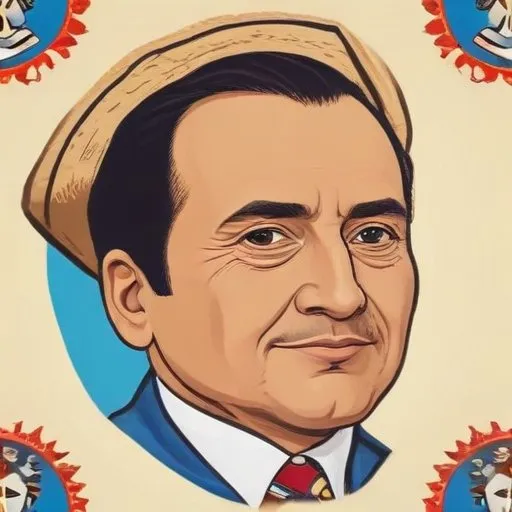
Guatemalan leader who nationalized land and industries, sparking CIA-backed coup; champion of social and economic reform.
Jacobo Árbenz, a Guatemalan military officer and politician, is best known for his pivotal role in shaping the country's democratic landscape and implementing landmark social reforms during his presidency from 1951 to 1954. As the second democratically elected President of Guatemala, Árbenz's progressive policies have had a lasting impact on the nation's history and beyond.
Born on September 14, 1913, to a wealthy family, Árbenz's early life was marked by a strong sense of social justice. His father, a Swiss German immigrant, and his Guatemalan mother instilled in him a deep respect for human dignity. After graduating with high honors from a military academy in 1935, Árbenz served in the army until 1944, quickly rising through the ranks.
During his military service, Árbenz witnessed the brutal suppression of agrarian laborers by the United States-backed dictator Jorge Ubico. This experience profoundly influenced his political views, and he became determined to bring about meaningful change. In 1944, Árbenz joined forces with Francisco Arana and other progressive military factions to overthrow Ubico's regime. Following Arana's death, Árbenz ran for president in 1950 and won by a landslide, defeating his nearest challenger, Miguel Ydígoras Fuentes.
As president, Árbenz implemented a radical program of agrarian reform, which aimed to redistribute land from wealthy landowners to peasant farmers. This groundbreaking initiative not only improved the lives of thousands of Guatemalans but also made him a symbol of hope for the region. Árbenz's reforms also extended voting rights to a larger proportion of the population, solidifying Guatemala's transition to democracy.
Árbenz's marriage to María Vilanova in 1938 was a catalyst for his progressive views. Vilanova introduced him to the works of Marx and Lenin, which significantly influenced his political ideology. Árbenz was also deeply influenced by José Manuel Fortuny, a Guatemalan communist who shaped his understanding of social justice.
Árbenz's presidency was cut short by a CIA-backed military coup in 1954, leading to his exile and eventual death in 1971. Despite this, his legacy has endured, inspiring generations of Latin American leaders to prioritize social justice and democratic values. His pioneering agrarian reform program remains a testament to his commitment to the welfare of the Guatemalan people.
"The land is not only a source of livelihood, but also a symbol of our national dignity."
Today, Jacobo Árbenz remains a celebrated figure in Guatemalan history, a champion of democracy, and a pioneer of social reform. His legacy continues to inspire leaders and citizens alike, reminding us of the power of courage and conviction in the pursuit of a more just and equal society.
Born in 1914
Led a CIA-backed coup in 1954, overthrowing Guatemala's democratically elected government and establishing a repressive regime that ruled with an iron fist. He's infamous for his brutal suppression of dissent and human rights abuses.
Born in 1895
The authoritarian leader who ruled Argentina with his charismatic wife Eva, implementing populist economic policies and promoting nationalism, while suppressing opposition and civil liberties.
Born in 1926
The Cuban revolutionary who led the country from 1959 to 2008, implementing socialist policies and defying US opposition, becoming an iconic figure in modern history.
Born in 1926
A Guatemalan dictator who ruled with an iron fist, responsible for numerous human rights atrocities, including genocide against the Mayan population. His regime was marked by brutal suppression of opposition and dissent.
