


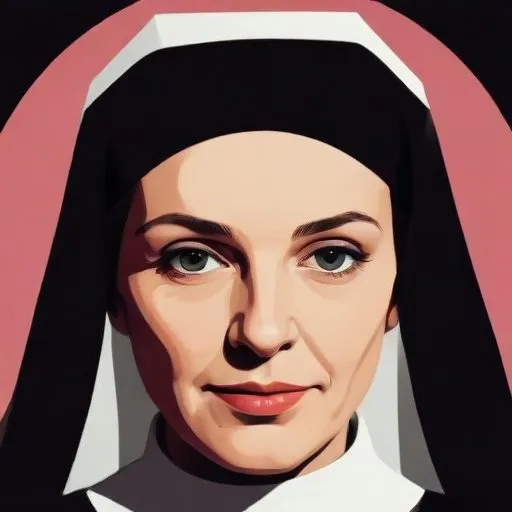
A 17th-century nun who composed music and wrote about her convent life, leaving behind a unique perspective on women's experiences during that era.
Jacqueline Pascal, sister of the famous philosopher and mathematician Blaise Pascal, was a prodigious writer and Jansenist nun in 17th century France. Known for her remarkable literary talents, which she demonstrated from a young age, and her later conversion to Jansenism, Jacqueline left an indelible mark on the world of literature and philosophy.
Born on October 4, 1625, in Clermont-Ferrand, Auvergne, France, Jacqueline was the sister of Blaise and Gilberte Prier. She showed extraordinary literary talent from a very young age, composing verses at the age of eight and even writing a five-act comedy at eleven. Her early writings showcased her exceptional linguistic skills and imagination, setting her apart as a child prodigy.
In 1646, under the influence of her brother Blaise, Jacqueline converted to Jansenism, a Catholic theological movement that emphasized individual faith and moral rigor. This conversion had a profound impact on her life, leading her to take the veil and enter the Port-Royal Abbey in Paris in 1652. Despite her brother's initial opposition, Jacqueline became an integral part of the abbey, where she continued to write and develop her spiritual convictions.
Jacqueline vehemently opposed the attempt to compel the nuns to assent to the Papal bulls condemning Jansenism. Her resistance, however, was ultimately unsuccessful, and she was forced to yield. This defeat, coupled with the strain of her convictions, took a toll on her health, and she passed away on October 4, 1661, at the age of 36, on the same day she was born.
Jacqueline Pascal's remarkable life and writings left an indelible mark on French literature and philosophy. Her early literary talents and later conversion to Jansenism not only shaped her own life but also influenced her brother Blaise, who was instrumental in her final conversion. Although her life was marked by controversy and opposition, Jacqueline's legacy serves as a testament to her unwavering convictions and remarkable literary achievements.
Jacqueline's relationships with her siblings, particularly Blaise, played a significant role in shaping her life and beliefs. Her conversion to Jansenism, largely influenced by Blaise, highlights the strong bond between the two siblings. Despite their disagreements, their shared convictions and literary talents created a lasting legacy that continues to inspire and educate.
Jacqueline Pascal's life and writings are set against the backdrop of 17th century France, a time marked by religious and philosophical turmoil. Her conversion to Jansenism and subsequent opposition to Papal bulls placed her at the forefront of a theological movement that shaped French Catholicism. Today, her life and works serve as a testament to the power of conviction and the importance of individual faith.
In conclusion, Jacqueline Pascal's remarkable life, marked by literary talent, spiritual conviction, and personal sacrifice, continues to inspire and educate. Her legacy serves as a reminder of the importance of individual faith, philosophical inquiry, and the power of family relationships in shaping our lives and beliefs.
Born in 1623
A 17th-century genius who made major contributions to mathematics, physics, and philosophy, inventing the mechanical calculator and developing the theory of probability. His writings also explored the human condition and faith.
Born in 1639
A 17th-century master of French tragedy, crafting intricate, psychologically complex dramas that probed the human condition, influencing the development of Western theatre.
Born in 1622
A 17th-century master of comedy, he penned witty plays that satirized the French aristocracy, leaving a lasting impact on Western theater. His works remain widely performed and adapted today.
Born in 1621
A 17th-century master of fables, crafting witty, moral tales that entertain and educate, still widely read and adapted today.
Born in 1612
A 17th-century polymath who made significant contributions to mathematics, theology, and philosophy, particularly in the development of probability theory and critiques of Cartesian philosophy.
Born in 1606
A 17th-century French mastermind behind iconic plays like "Le Cid" and "Horace", known for pioneering the classical French tragedy genre.
Born in 1712
A pioneering thinker who shaped modern democracy and education with his ideas on social contracts, general will, and the importance of early childhood education. His writings influenced the French Revolution and modern political thought.
