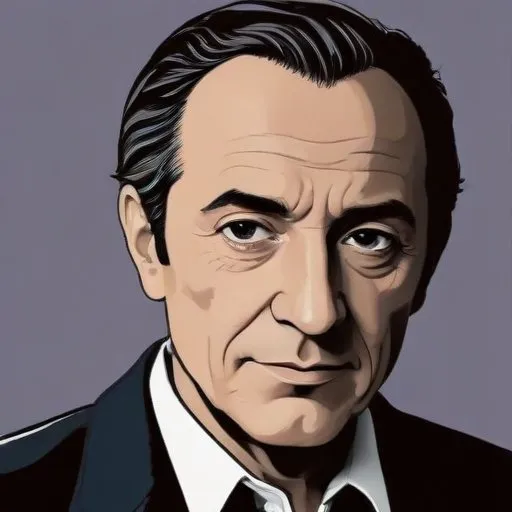
Jacques Deray: The Master of French Crime Films
French film director and screenwriter Jacques Deray is prominently known for directing many crime and thriller films that have left an indelible mark on the world of cinema. With a career spanning over four decades, Deray's films are synonymous with suspense, intrigue, and high-stakes drama.
Early Life and Career
Born Jacques Desrayaud on February 19, 1929, in Lyon, France, Deray came from a family of industrialists. His early interest in drama led him to study under René Simon in Paris at the age of 19. Deray's early foray into the film industry began with minor roles on stage and screen, followed by stints as an assistant director to luminaries like
Luis Buñuel, Gilles Grangier,
Jules Dassin, and Jean Boyer.
Rise to Prominence
Deray's directorial debut,
The Gigolo, released in 1960, marked the beginning of his journey as a filmmaker. His fascination with American film noir led him to focus on crime stories, which became the hallmark of his career. His 1969 film
La Piscine, starring
Romy Schneider and
Alain Delon, established his reputation as a master of the genre.
International Breakthrough
Deray's 1970 film
Borsalino, starring Alain Delon and
Jean-Paul Belmondo, was a massive international hit, catapulting him to global recognition. This film about two small-time gangsters who murder their way to the top in 1930s Marseilles showcased Deray's ability to craft gripping narratives that kept audiences on the edge of their seats.
Adapting Literary Works
Deray was known for adapting works of renowned authors, including
Georges Simenon, Jean-Patrick Manchette, and Derek Raymond. His love for literary works was evident in his films, which often explored the darker aspects of human nature.
Awards and Recognition
In 1981, Deray served as the president of the jury at the 34th Cannes Film Festival, a testament to his standing in the film community. Upon his death in 2003, French President
Jacques Chirac praised Deray, acknowledging his innate sense of storytelling and action.
Legacy
The Jacques Deray Prize, established in 2005, honors his contribution to French cinema. Deray's legacy continues to inspire filmmakers and audiences alike, with his films remaining a staple of French crime cinema.
Notable Works
- The Gigolo (1960)
- La Piscine (1969)
- Borsalino (1970)
- The Teddy Bear (1994)
Trivia
- Deray worked as an assistant director to Luis Buñuel, Gilles Grangier, Jules Dassin, and Jean Boyer.
- He was the vice-president of the Institut Lumière until his death.
- Deray's last theatrical release was The Teddy Bear in 1994.
Deray's films continue to captivate audiences with their intricate plots, memorable characters, and atmospheric tension. His contribution to French cinema has left an indelible mark, cementing his place as one of the most talented filmmakers of his generation.
FAQ
What kind of films did Jacques Deray direct?
Jacques Deray was a French film director and screenwriter who directed a range of films, including crime thrillers, romantic dramas, and historical epics. His films often explored themes of love, loss, and redemption.
What is Jacques Derays most famous film?
Jacques Derays most famous film is Borsalino, a 1970 crime thriller starring Alain Delon and Jean-Paul Belmondo. The film was a critical and commercial success, and is still widely regarded as one of the best French films of all time.
Has Jacques Deray worked with any famous actors?
Yes, Jacques Deray has worked with several famous actors, including Alain Delon, Jean-Paul Belmondo, and Catherine Deneuve. He has also collaborated with notable cinematographers and composers to create visually stunning and atmospheric films.
What awards has Jacques Deray won?
Jacques Deray has won several awards for his films, including the Prix Louis Delluc and the César Award for Best Director. He has also been nominated for several other awards, including the Academy Award for Best Foreign Language Film.
Is Jacques Derays work still relevant today?
Yes, Jacques Derays work is still widely regarded as relevant and influential today. His films have been cited as an inspiration by many contemporary directors, and his use of atmospheric lighting and composition has influenced the visual style of many modern films.