


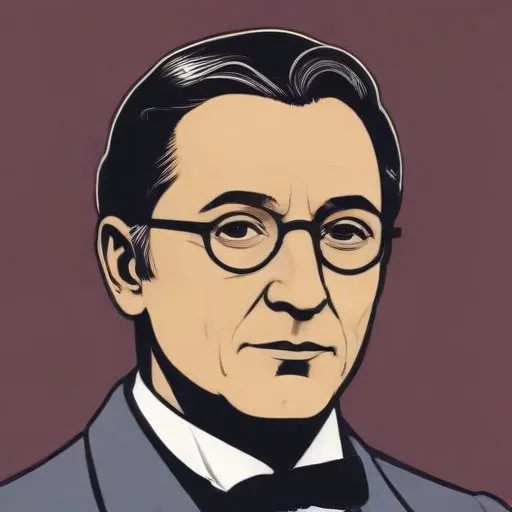
A French composer and educator, known for his eclectic and witty style, blending jazz, opera, and classical music, creating iconic film scores and concertos.
Jacques Ibert is renowned for his diverse and vibrant compositions, which span across multiple genres, including opera, ballet, incidental music, and chamber music. He is particularly celebrated for his orchestral works, such as Divertissement (1930) and Escales (1922), which showcase his unique blend of lightheartedness and romanticism.
Born on August 15, 1890, in Paris, Ibert was exposed to music from a young age. His mother, a talented pianist, encouraged his musical interests, and he began studying violin and piano at the age of four. Despite his father's wishes for him to pursue a career in business, Ibert's passion for music led him to the Paris Conservatoire, where he won the prestigious Prix de Rome at his first attempt.
Ibert's compositional career was marked by his eclecticism, as he refused to confine himself to a particular genre or style. He wrote seven operas, five ballets, and numerous incidental scores for plays and films. His orchestral works, such as Divertissement and Escales, are considered some of his most notable achievements. Divertissement, with its lighthearted and frivolous tone, showcases Ibert's ability to craft music that is both entertaining and sophisticated. Escales, on the other hand, is a ripely romantic work that highlights his mastery of orchestration.
In addition to his compositional career, Ibert held several administrative positions, including director of the Académie de France at the Villa Medici in Rome. During World War II, he was proscribed by the pro-Nazi government in Paris and went into exile in Switzerland. After the war, he was restored to his former eminence and served as the director of the Paris Opera and the Opéra-Comique. Through his work, Ibert left an indelible mark on French musical life.
Ibert's music has had a lasting impact on modern society, influencing generations of composers and musicians. His eclectic style, which blended elements of classical music with popular and folk idioms, has inspired many to experiment with new sounds and styles. His work has also been featured in numerous films, ballets, and theatrical productions, ensuring his music remains relevant and accessible to a wide audience.
In conclusion, Jacques Ibert's remarkable career and legacy have left an indelible mark on the world of classical music. His eclectic style, innovative approach, and dedication to his craft have inspired generations of musicians and composers, ensuring his music remains a beloved and integral part of our cultural heritage.
Born in 1892
A French composer and educator who blended jazz and classical music to create a unique sound, and is best known for his ballet scores and chamber music compositions.
Born in 1892
A French composer and educator, he blended classical and modern styles, creating iconic works like "Pacific 231" that evoke powerful images and emotions.
Born in 1899
A renowned French pianist and composer, celebrated for his eclectic and innovative works that blend jazz, classical, and sacred music, leaving a lasting impact on modern classical music.
Born in 1899
A French composer who wrote music for films, ballets, and orchestras, creating iconic scores for movies like "Roman Holiday" and "The Lavender Hill Mob".
Born in 1892
A pioneering female composer and educator, she broke gender barriers in the classical music world, leaving a lasting legacy in the development of modern French music.
Born in 1866
A pioneering composer of minimalist and avant-garde music, known for his unconventional and humorous approach to classical music, creating a new kind of simplicity and clarity. His music often featured repetitive patterns and witty titles.
Born in 1862
A renowned French pianist and composer who revolutionized classical music with his unique, dreamy, and unconventional style, creating iconic works like "Clair de Lune" and "Prelude to the Afternoon of a Faun".
Born in 1875
A renowned French musician who blended classical and modern styles, creating iconic works like "Bolero" that continue to mesmerize audiences with their beauty and complexity.
