


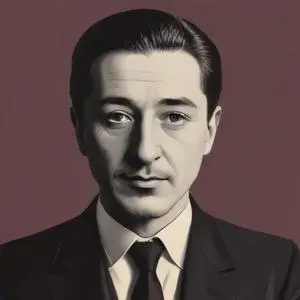
A 20th-century philosopher and author who developed a philosophy of existence and the human person, integrating Thomistic and existentialist thought. His work had significant influence on Catholic intellectuals and the development of Christian philosophy.
Jacques Maritain, a French Catholic philosopher, is renowned for his instrumental role in reviving Thomas Aquinas' philosophical legacy for modern times and his significant contributions to the drafting of the Universal Declaration of Human Rights. His prolific writing career, spanning over 60 books, has had a profound impact on various aspects of philosophy, including aesthetics, political theory, and metaphysics.
Born on November 18, 1882, in Paris, France, Maritain was raised in a liberal Protestant family. He was the son of Paul Maritain, a lawyer, and Genevive Favre, the daughter of philosopher and educator Julie Favre. Maritain's early education took place at the Lyce Henri IV, followed by his studies in natural sciences at the Sorbonne.
At the Sorbonne, Maritain met Rassa Oumanoff, a Russian Jewish migrant, whom he married in 1904. Rassa, a poet and mystic, became his intellectual partner in his search for truth. Together, they became disenchanted with scientism, which they believed could not address the larger existential issues of life. In 1901, they made a pact to commit suicide together if they could not discover a deeper meaning to life within a year. Fortunately, they were spared from following through on this pact.
In 1906, Maritain converted to Catholicism, a decision that would have a profound impact on his life and work. His conversion was influenced by the writings of Leon Bloy and the philosopher's own introspection.
Maritain's philosophical contributions are vast and diverse. He was a key figure in the revival of Thomistic philosophy, making the works of Thomas Aquinas accessible to modern audiences. His own philosophical beliefs were rooted in a deep commitment to Catholicism, which he saw as a means to address the moral and existential crises of modernity.
Maritain's influence on modern society is multifaceted. His work on human rights, particularly his involvement in the drafting of the Universal Declaration of Human Rights, has had a lasting impact on international human rights law. He also played a significant role in shaping Catholic social teaching, influencing the development of Catholicism in the 20th century.
Some of Maritain's most notable works include:
Maritain received numerous awards and honors for his work, including the Grand Prix de Littérature from the French Academy in 1953. He was also offered a lay cardinalship by Pope Paul VI, which he declined.
Jacques Maritain's legacy is a testament to the power of philosophy and faith to shape modern society. His commitment to human rights, Catholic social teaching, and the revival of Thomistic philosophy has had a lasting impact on modern Catholicism and beyond. Today, his work continues to inspire scholars, philosophers, and social activists around the world.
Born in 1417
A 15th-century pope who played a significant role in the fall of the Western Schism, ending the division in the Catholic Church. He's also known for his lavish spending and nepotism.
Born in 1881
Reformed the Catholic Church, introducing progressive reforms and ecumenical dialogue, and convened the Second Vatican Council.
Born in 1890
A French military leader who led the Free French Forces during WWII and later became President of France, known for his strong leadership and vision for a unified Europe.
Born in 1916
A French lawyer and politician who served as the 21st President of France, known for his socialist policies and role in shaping the European Union. He's also remembered for his controversial past and complex personality.
Born in 1905
Existentialist philosopher and playwright who argued that humans have complete freedom to choose their actions and create their own meaning in life, influencing modern thought on morality and individual responsibility.
Born in 1908
A pioneering feminist philosopher who wrote extensively on ethics, politics, and gender, famously arguing that "one is not born, but rather becomes, a woman."
Born in 1913
A French novelist, philosopher, and journalist who wrote influential works like "The Stranger" and "The Plague", exploring absurdism and the human condition.
