


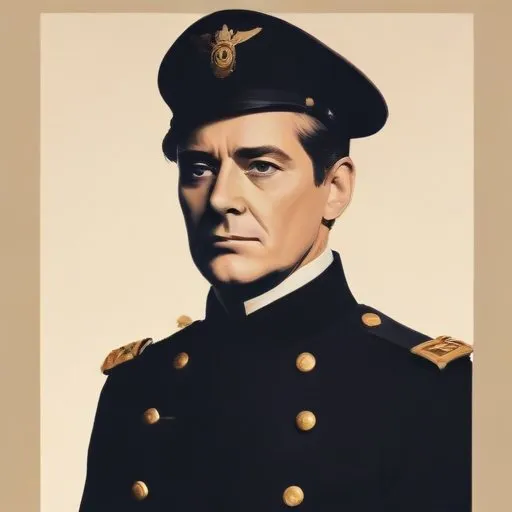
American lieutenant who led the 7th Cavalry Regiment at the Battle of Little Bighorn, where he was killed, becoming a symbol of the American West's violent expansion.
James Calhoun, born on August 24, 1845, in Cincinnati, Ohio, was a soldier in the United States Army during the American Civil War and the Black Hills War. He is perhaps best known for his ill-fated involvement in the Battle of the Little Bighorn, where he perished alongside his brother-in-law, George Armstrong Custer.
Upon returning to the United States, Calhoun enlisted in the Union Army in 1864, ultimately rising to the rank of Sergeant by the war's end. In July 1867, he was commissioned as a second lieutenant in the infantry, and later, through the influence of his brother-in-law, George Armstrong Custer, he was appointed to the U.S. 7th Cavalry Regiment as first lieutenant, assigned to Company C.
Calhoun was known for his dashing good looks, earning him the sobriquet "The Adonis of the Seventh." He was an integral part of the so-called Custer Clan, a close-knit circle of relatives and friends of the former Civil War general. His romantic involvement with Margaret "Maggie" Custer, George Armstrong Custer's sister, ultimately led to their marriage.
Through his correspondence, Calhoun revealed a complex and somewhat paradoxical worldview. On one hand, he demonstrated a limited understanding of Native American cultures, often referring to them as "heathens" and expressing a desire for the eventual assimilation of indigenous populations into Western society. On the other hand, his letters also betray a sense of frustration and disillusionment with the harsh realities of military conquest.
Calhoun's life was tragically cut short during the Battle of Little Bighorn in Montana Territory on June 25, 1876. Alongside Custer and over 250 other soldiers, Calhoun fell victim to the combined forces of the Lakota, Cheyenne, and Arapaho tribes.
Calhoun's story serves as a poignant reminder of the tumultuous and often tragic nature of the American West during the late 19th century. His involvement in the Battle of Little Bighorn, though ultimately disastrous, has become an integral part of American history, symbolizing the clash of cultures and the high cost of westward expansion.
When compared to his contemporaries, Calhoun's military career and personal relationships place him firmly within the inner circle of prominent figures of the American West. His experiences and beliefs, as reflected in his correspondence, offer a unique window into the complexities and contradictions of the era.
Born in 1807
Led the Confederate States Army during the American Civil War, surrendering to Union forces at Appomattox, marking the war's effective end.
Born in 1822
Led the Union Army to victory in the Civil War and later became President, known for issuing the Emancipation Proclamation and strengthening federal authority.
Born in 1826
A Union general during the American Civil War, he's infamous for his cautious tactics and disagreements with President Lincoln, later becoming a governor of New Jersey.
Born in 1820
A renowned Union general during the American Civil War, he's infamous for his scorched earth tactics and march through the Confederacy, leaving destruction in his wake.
Born in 1824
A Confederate general during the American Civil War, he's renowned for his unconventional tactics and bravery, earning him a legendary status among military historians.
Born in 1808
The President of the Confederate States of America during the American Civil War, leading the secessionist movement and fighting to preserve slavery. He's infamous for his role in the Civil War and its aftermath.
Born in 1824
A Union general during the American Civil War, known for his distinctive sideburns and leading the Army of the Potomac to a disastrous defeat at the Battle of Fredericksburg.
Born in 1815
Led the Union Army to victory in the Battle of Gettysburg, a turning point in the American Civil War, and later oversaw the construction of the Washington Aqueduct.
