


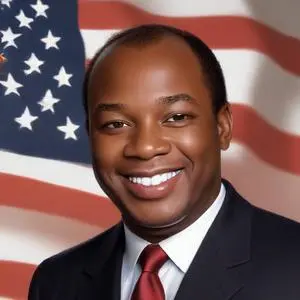
Co-founder of the Congress of Racial Equality, a pioneering civil rights organization that used nonviolent protest to challenge segregation and discrimination. He played a key role in the Freedom Rides and other pivotal events in the Civil Rights Movement.
James Farmer, a renowned American civil rights activist, is best known for his unwavering commitment to nonviolent protest, which played a pivotal role in dismantling segregation in the United States. Alongside Martin Luther King Jr., Farmer was a key figure in the Civil Rights Movement, leading the charge towards racial equality and social justice.
James Leonard Farmer Jr. was born on January 12, 1920, in Marshall, Texas, to James L. Farmer Sr. and Pearl Houston, both educators. Growing up, Farmer witnessed firsthand the injustices of segregation, which sparked a fire in him to fight for equality. One defining moment, which he would later recount, was when his mother refused to let him buy a Coca-Cola at a store because of his race.
In 1942, Farmer co-founded the Committee of Racial Equality (CORE) with a group of like-minded individuals, including George Houser, James R. Robinson, Samuel E. Riley, Bernice Fisher, Homer Jack, and Joe Guinn. CORE's primary objective was to end racial segregation in the United States through nonviolent means. Farmer's leadership and vision guided the organization, which would become a cornerstone of the Civil Rights Movement.
In 1961, Farmer organized the first Freedom Ride, a bold experiment in nonviolent direct action that sought to desegregate interstate transportation. The ride, which involved 13 CORE members, was met with violence and arrest, but ultimately led to a Supreme Court ruling declaring segregation on interstate buses and trains unconstitutional.
By the 1960s, Farmer was recognized as one of the "Big Four" civil rights leaders, alongside Martin Luther King Jr., Roy Wilkins, and Whitney Young. He continued to push for civil rights, participating in the March on Washington for Jobs and Freedom in 1963, where King delivered his iconic "I Have a Dream" speech.
Farmer's commitment to nonviolent protest was rooted in his Christian faith and the teachings of Mahatma Gandhi. He believed that civil disobedience, combined with moral persuasion, could bring about significant social change. Farmer's philosophy was centered on the idea that social justice could be achieved through collective action, rather than violence or aggression.
Farmer's tireless efforts were recognized with numerous awards and honors, including the Medal of Freedom, the country's highest civilian award, which he received in 1998.
James Farmer's unwavering dedication to civil rights has left an indelible mark on American history. His leadership in CORE and his role in the Freedom Rides helped pave the way for landmark legislation, including the Civil Rights Act of 1964 and the Voting Rights Act of 1965. Today, Farmer's legacy serves as a testament to the power of nonviolent protest and collective action in bringing about social change.
"We who are Christians, and who know the love of God, are called to be the leaders in the struggle for civil rights."
"The struggle for civil rights is not a seasonal affair. It is a long, hard, and sometimes painful process."
James Farmer's remarkable life and legacy continue to inspire generations to strive for social justice and equality. His commitment to nonviolent protest and collective action serves as a beacon of hope for a more just and equitable society.
97 Years Old
A prominent leader in the civil rights movement, advocating for racial equality and social justice through nonviolent means, leaving a lasting impact on American history.
Born in 1913
Refused to give up her seat on a Montgomery, Alabama bus to a white person, sparking the Montgomery Bus Boycott, a pivotal event in the Civil Rights Movement.
Born in 1925
A prominent figure in the Civil Rights Movement, advocating for African American rights and self-defense, and a powerful orator who inspired a generation.
Born in 1912
A pioneering civil rights activist who played a key role in organizing the 1963 March on Washington, where Martin Luther King Jr. delivered his iconic "I Have a Dream" speech.
Born in 1889
Leader of the Brotherhood of Sleeping Car Porters, pioneering the Civil Rights Movement through nonviolent protests and advocacy for African American workers' rights.
85 Years Old
A prominent figure in the Civil Rights Movement, advocating for Black Power and self-defense, and famously coining the term "Black Power" in 1966. Known for his radical approach to achieving racial equality.
Born in 1880
Led a powerful miners' union, fighting for workers' rights and fair wages, and was a key figure in shaping America's labor movement. Known for his charismatic leadership and militant tactics.
86 Years Old
A prominent civil rights leader and vocal advocate for social justice, known for his work as a founding member of the Student Nonviolent Coordinating Committee (SNCC) and his long tenure in the Georgia State Legislature.
