


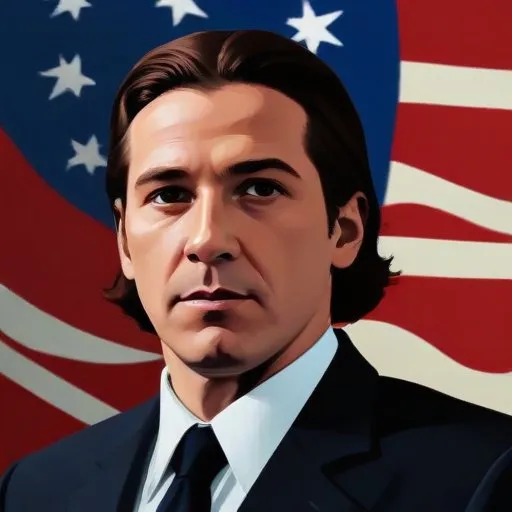
A CIA counterintelligence chief who oversaw the agency's efforts to uncover Soviet moles, and was known for his paranoia and intricate theories about Soviet espionage. He was a key figure in the CIA's Cold War operations.
James Jesus Angleton, the erstwhile chief of the counterintelligence department of the Central Intelligence Agency (CIA), remains one of the most intriguing figures in the world of espionage. His reign from 1954 to 1975 was marked by an unwavering dedication to unmasking the enemies of the United States, earning him the admiration of his peers and the respect of six consecutive CIA directors.
Born on December 9, 1917, in Boise, Idaho, to James Hugh Angleton and Carmen Mercedes Moreno, Angleton's early life was shaped by his father's military career, which took the family to various parts of the country. This nomadic upbringing perhaps instilled in him the adaptability and cunning that would serve him well in his future profession.
Angleton's introduction to the world of espionage came during World War II, when he served in the Office of Strategic Services (OSS), a precursor to the CIA. Stationed in Italy and London, he honed his skills in counterintelligence, quickly rising through the ranks. After the war, he became one of the founding officers of the CIA, initially responsible for collecting foreign intelligence and liaison with allied countries.
In 1954, Allen Dulles promoted Angleton to chief of the Counterintelligence Staff, a position that would cement his reputation as the dominant counterintelligence figure in the non-communist world. His tenure was marked by two significant events: the defection of Soviet KGB agents Anatoliy Golitsyn and Yuri Nosenko. Golitsyn's revelations convinced Angleton that the CIA harbored a high-ranking Soviet mole, sparking an intensive search that would become one of the most controversial episodes in CIA history.
The mole hunt, as it came to be known, remains a subject of intense historical debate. While some view it as a necessary caution, others see it as a witch hunt that damaged the agency's morale and reputation. Investigative journalist Edward Jay Epstein, however, defends Angleton's actions, citing the trust he earned from six CIA directors.
Angleton's personality was a complex tapestry of contradictions. A chain-smoker with a dry sense of humor, he was known for his intense focus and unwavering dedication to his work. Yet, he was also a devoted family man, married to Cicely d'Autremont, with whom he had two children. His obsession with uncovering moles, however, took a toll on his personal life, leading to allegations of paranoia and a reputation as a ruthless operator.
Love him or loathe him, James Jesus Angleton leaves behind a legacy that continues to shape the world of counterintelligence. His unwavering commitment to national security and his unrelenting pursuit of truth, though often shrouded in controversy, have earned him a place in the pantheon of espionage legends. As the CIA's most feared and respected counterintelligence officer, Angleton's impact on modern intelligence gathering remains unparalleled.
Angleton's retirement in 1975 marked the end of an era. He passed away on May 11, 1987, leaving behind a complex, often contradictory legacy. While his methods may have been unorthodox, his dedication to the craft of counterintelligence remains unimpeachable. As we continue to navigate the treacherous landscape of modern espionage, the enigmatic James Jesus Angleton serves as a reminder of the importance of vigilance, cunning, and an unwavering commitment to national security.
As the curtain falls on the life of James Jesus Angleton, we are left to ponder the intricate dance of loyalty, deception, and betrayal that defines the world of espionage. Angleton's story serves as a poignant reminder that, in the shadows of international intrigue, the line between patriot and pariah is often blurred, and the truth is forever shrouded in mystery.
Born in 1893
The 5th Director of Central Intelligence was a master spy and diplomat who oversaw the CIA during the Cold War, orchestrating covert operations and shaping global politics. He's infamous for his role in the Bay of Pigs invasion and CIA-led coups.
Born in 1913
The 8th Director of Central Intelligence played a crucial role in shaping the CIA's operations during the Cold War era, overseeing clandestine activities and intelligence gathering. He's also infamous for illegally destroying CIA documents related to MKUltra, a secret mind-control program.
Born in 1920
The 10th Director of Central Intelligence oversaw the CIA during a tumultuous period, implementing reforms and testifying before Congress about CIA abuses. He's also known for his mysterious death.
Born in 1918
A CIA officer and author involved in the Watergate scandal, known for his role in the break-in and subsequent cover-up. He also wrote several spy novels.
73 Years Old
A highly decorated four-star general who led the US military efforts in Iraq and Afghanistan, later becoming the head of the CIA, known for his strategic thinking and leadership.
83 Years Old
The 22nd United States Secretary of Defense, serving from 2006 to 2011, is a highly respected figure in American politics and defense, known for his pragmatic approach to national security and foreign policy. He's also a renowned academic and author, having served as the president of Texas A&M University.
