


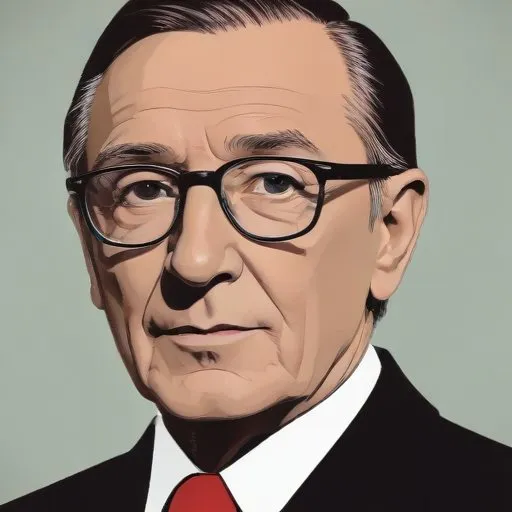
The 10th Director of Central Intelligence oversaw the CIA during a tumultuous period, implementing reforms and testifying before Congress about CIA abuses. He's also known for his mysterious death.
William Egan Colby, a man synonymous with intelligence and strategic operations, is best known for serving as the Director of Central Intelligence (DCI) from 1973 to 1976. During his tenure, he implemented a policy of relative openness about U.S. intelligence activities, ushering in a new era of transparency in the CIA.
Colby was born on January 4, 1920, in Saint Paul, Minnesota, to a family with a strong military and public service background. His father, Elbridge Colby, was a professor of English, author, and military officer who served in the U.S. Army and held university positions in China, Vermont, and Washington, D.C. Colby's mother, Margaret Egan, was from an Irish family active in business and Democratic politics.
Colby attended Princeton University, graduating with an A.B. degree in 1941. During World War II, he served with the Office of Strategic Services (OSS), where he demonstrated exceptional bravery and skill, earning a Silver Star and a Bronze Star.
After the war, Colby joined the newly created Central Intelligence Agency (CIA), where he quickly rose through the ranks. He served as chief of station in Saigon, chief of the CIA's Far East Division, and head of the Civil Operations and Rural Development effort. His experience and expertise led to his appointment as Director of Central Intelligence in 1973.
Colby's involvement in the Phoenix Program, a covert operation aimed at neutralizing the Viet Cong, remains a contentious issue. Critics argued that the program resulted in human rights abuses and extrajudicial killings. However, Colby maintained that the program was necessary to combat the communist threat.
During Colby's tenure as DCI, he faced intense scrutiny from Congress and the media. In response, he adopted a policy of relative openness, providing unprecedented access to CIA documents and information. This shift in policy was a significant departure from the agency's traditional secrecy.
Colby served as DCI until January 1976, when he was succeeded by George H.W. Bush. After leaving the CIA, Colby wrote several books on intelligence and foreign policy, including Honorable Men: My Life in the CIA. He passed away on May 6, 1996, at the age of 76.
Colby's legacy is complex and multifaceted. His commitment to transparency and accountability in the CIA paved the way for future reforms. However, his involvement in controversial programs like the Phoenix Program raises important questions about the ethics of intelligence gathering and covert operations.
Colby's life and career have inspired several books, films, and television shows, including the documentary The Man Nobody Knew: In Search of My Father, CIA Spymaster William Colby, directed by his son, Carl Colby.
Colby received several awards and honors for his service, including the Silver Star, Bronze Star, and the Distinguished Intelligence Medal.
Born in 1913
The 8th Director of Central Intelligence played a crucial role in shaping the CIA's operations during the Cold War era, overseeing clandestine activities and intelligence gathering. He's also infamous for illegally destroying CIA documents related to MKUltra, a secret mind-control program.
Born in 1893
The 5th Director of Central Intelligence was a master spy and diplomat who oversaw the CIA during the Cold War, orchestrating covert operations and shaping global politics. He's infamous for his role in the Bay of Pigs invasion and CIA-led coups.
Born in 1888
A prominent Cold War diplomat who served as Secretary of State under President Dwight D. Eisenhower, known for his anti-communist foreign policy and role in shaping the United States' response to the Soviet Union.
Born in 1913
The 38th President of the United States, a former football star and lawyer, is known for being the first vice president to assume the presidency under the 25th Amendment and for his controversial pardon of Richard Nixon. He's also remembered for his humble and accidental rise to the presidency.
Born in 1923
A renowned diplomat and strategist who played a pivotal role in shaping global politics during the Cold War era, known for his Realpolitik approach and brokering peace agreements .
Born in 1913
The 37th President of the United States, a polarizing figure who led the country through significant domestic and foreign policy changes, infamous for his involvement in the Watergate scandal.
Born in 1923
The 12th Director of Central Intelligence led the CIA during a pivotal time in American history, overseeing significant reforms and intelligence gathering operations. He's also known for his academic pursuits and naval career.
Born in 1924
The 41st President of the United States, a decorated war hero and skilled diplomat, led the country through the end of the Cold War and Gulf War. He's known for his foreign policy expertise and "kinder, gentler nation" vision.
