


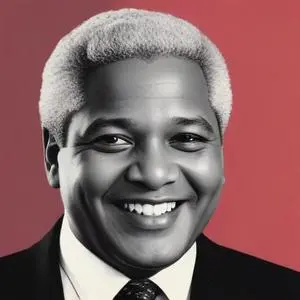
A prominent figure in the Civil Rights Movement, he organized nonviolent protests and workshops, training many influential activists, including Martin Luther King Jr.
James Lawson was a key figure in the American Civil Rights Movement, renowned for his role in organizing the Nashville sit-ins and his advocacy of nonviolent civil disobedience. Through his work, he empowered countless individuals to challenge the status quo and fight for their rights, earning him a reputation as a champion of social justice.
Lawson was born in 1928 in Uniontown, Pennsylvania. He grew up in a family deeply committed to social justice, with his mother being an advocate for women's suffrage and his father engaging in community service. This upbringing laid the foundation for Lawson's future activism.
Lawson studied at Baldwin-Wallace College in Ohio, where he became involved in the Fellowship of Reconciliation, a pacifist organization. This exposure solidified his commitment to nonviolent resistance, a philosophy that would define his approach to activism.
In 1959, Lawson moved to Nashville, Tennessee, to attend the Vanderbilt Divinity School. There, he began conducting workshops on nonviolent civil disobedience, teaching students strategies for peaceful protest. These workshops laid the groundwork for the Nashville sit-ins, a series of protests that would challenge segregation in the city's lunch counters.
The sit-ins, which began on February 13, 1960, involved African American students occupying lunch counters at downtown department stores, refusing to leave until they were served. The protests sparked widespread media attention, prompting the city to eventually desegregate its lunch counters.
Lawson's leadership and activism extended far beyond the Nashville sit-ins. He played a crucial role in the Southern Christian Leadership Conference (SCLC), working alongside prominent figures such as Martin Luther King Jr. and Ralph Abernathy.
In the 1960s, Lawson participated in various civil rights campaigns, including the Birmingham Campaign and the March on Washington for Jobs and Freedom. He also helped establish the Student Nonviolent Coordinating Committee (SNCC), which focused on grassroots activism and community empowerment.
Throughout his life, Lawson received numerous awards and honors for his contributions to the Civil Rights Movement. In 2005, he was awarded the prestigious Community of Christ International Peace Award, recognizing his dedication to nonviolent conflict resolution.
In 2013, Lawson received the National Civil Rights Museum's Freedom Award, an honor shared with fellow civil rights icons such as King and Rosa Parks.
James Lawson's legacy extends far beyond his work in the Civil Rights Movement. His advocacy of nonviolent civil disobedience has inspired generations of activists, from anti-apartheid campaigners to modern-day social justice advocates.
Today, Lawson continues to speak out on issues such as racism, poverty, and inequality, remaining a powerful voice for social change.
"The way to right wrongs is to turn the light of truth upon them."
"Nonviolence is a way of life, not just a method of protest."
Lawson's friendship with Martin Luther King Jr. was a significant factor in his involvement with the SCLC. The two men shared a deep commitment to nonviolent resistance, often discussing strategies and philosophies late into the night.
In 1960, Lawson was arrested and jailed for his role in the Nashville sit-ins. During his imprisonment, he penned a letter to King, urging him to continue the fight for civil rights, even in the face of adversity.
Lawson's activism took place during a pivotal moment in American history, when the Civil Rights Movement was gaining momentum. His work, along with that of other prominent figures, helped shape the course of the movement and pave the way for future generations of activists.
Today, Lawson's legacy serves as a testament to the power of nonviolent resistance, inspiring individuals around the world to challenge injustice and fight for human rights.
97 Years Old
A prominent leader in the civil rights movement, advocating for racial equality and social justice through nonviolent means, leaving a lasting impact on American history.
Born in 1926
A prominent leader in the American Civil Rights Movement, he worked closely with Martin Luther King Jr. to advocate for racial equality and social justice through nonviolent means.
Born in 1912
A pioneering civil rights activist who played a key role in organizing the 1963 March on Washington, where Martin Luther King Jr. delivered his iconic "I Have a Dream" speech.
94 Years Old
A prominent civil rights leader and diplomat who served as a key advisor to Martin Luther King Jr. and later became the first African American to hold a top post in an American presidential administration.
Born in 1880
Led a powerful miners' union, fighting for workers' rights and fair wages, and was a key figure in shaping America's labor movement. Known for his charismatic leadership and militant tactics.
Born in 1897
A pioneering social activist and journalist who advocated for pacifism, women's rights, and the poor, founding the Catholic Worker Movement to promote social justice and nonviolence.
Born in 1889
Leader of the Brotherhood of Sleeping Car Porters, pioneering the Civil Rights Movement through nonviolent protests and advocacy for African American workers' rights.
85 Years Old
A prominent figure in the Civil Rights Movement, advocating for Black Power and self-defense, and famously coining the term "Black Power" in 1966. Known for his radical approach to achieving racial equality.
