


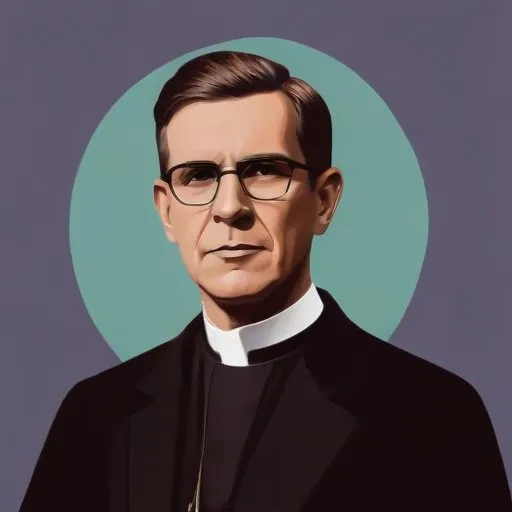
A Unitarian Universalist minister who fought for civil rights, marching alongside Martin Luther King Jr. and suffering a fatal beating in Selma, Alabama. He embodied faith-driven activism.
James Reeb, a Unitarian Universalist minister, pastor, and activist, is famously known for his unwavering dedication to the civil rights movement, which ultimately cost him his life. His brutal murder in Selma, Alabama, in 1965, sparked national outrage and galvanized the fight for racial equality.
Born on January 1, 1927, in Wichita, Kansas, to Mae Fox and Harry Reeb, James grew up in Kansas and Casper, Wyoming. He attended Natrona County High School, graduating in 1945, before joining the Army, despite being exempt from service due to his commitment to the ministry.
After his honorable discharge in 1946, Reeb pursued his education, attending Casper Junior College, St. Olaf College, and Princeton Theological Seminary, where he earned his Bachelor of Divinity degree in 1953. He was ordained as a Presbyterian minister at the First Presbyterian Church of Casper, subsequently serving as a chaplain at the Philadelphia General Hospital.
As a scholar of theology, Reeb's progressive views led him to drift away from traditionalist Presbyterian teachings. He became drawn to the Unitarian Universalist church, eventually resigning from his Presbyterian position in 1957. This theological shift enabled him to focus on social justice, aligning with his growing concerns about racial inequality.
In 1965, Reeb participated in the Selma to Montgomery marches, a pivotal moment in the civil rights movement. On March 9, 1965, while walking back to his hotel, he was brutally attacked by white segregationists, leaving him with severe head injuries. Two days later, on March 11, 1965, Reeb succumbed to his injuries, becoming a martyr for the civil rights cause.
Three men were tried for Reeb's murder, but an all-white jury acquitted them, leaving the case officially unsolved. Reeb's senseless killing shocked the nation, intensifying calls for racial equality and inspiring widespread outrage.
James Reeb's courageous stand for civil rights continues to inspire generations. His sacrifice has been recognized through various honors, including a posthumous Presidential Medal of Freedom in 1965 and the James Reeb Memorial Chapel at All Souls Church in Washington, D.C.
Reeb's legacy extends beyond his martyrdom. He embodied the principles of social justice, compassion, and equality, challenging the status quo and inspiring others to do the same. His unwavering commitment to the civil rights movement has left an indelible mark on American history.
Reeb's words reflect his unyielding dedication to the pursuit of justice and equality, making him an enduring symbol of courage in the face of adversity.
97 Years Old
A prominent leader in the civil rights movement, advocating for racial equality and social justice through nonviolent means, leaving a lasting impact on American history.
Born in 1926
A prominent leader in the American Civil Rights Movement, he worked closely with Martin Luther King Jr. to advocate for racial equality and social justice through nonviolent means.
Born in 1880
Led a powerful miners' union, fighting for workers' rights and fair wages, and was a key figure in shaping America's labor movement. Known for his charismatic leadership and militant tactics.
Born in 1912
A pioneering civil rights activist who played a key role in organizing the 1963 March on Washington, where Martin Luther King Jr. delivered his iconic "I Have a Dream" speech.
Born in 1889
Leader of the Brotherhood of Sleeping Car Porters, pioneering the Civil Rights Movement through nonviolent protests and advocacy for African American workers' rights.
Born in 1922
Co-founder of the Southern Christian Leadership Conference, a prominent civil rights organization that fought for racial equality and social justice in the 1950s and 1960s. Known for his fearless activism and leadership in the face of violent opposition.
Born in 1897
A pioneering social activist and journalist who advocated for pacifism, women's rights, and the poor, founding the Catholic Worker Movement to promote social justice and nonviolence.
99 Years Old
Founded the United Farm Workers to improve working conditions and wages for farmworkers, leading boycotts and strikes to bring attention to their plight.
