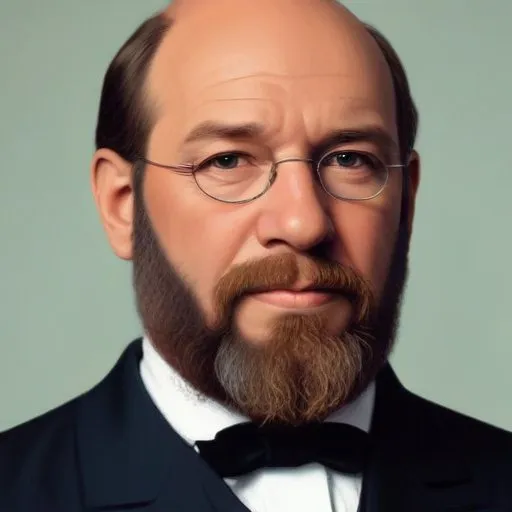
James Rudolph Garfield: The Son of a President Turned Trailblazing Politician
A Legacy of Service and Reform
James Rudolph Garfield, son of President
James A. Garfield and First Lady Lucretia Garfield, is renowned for his remarkable career in law and politics. As Secretary of the Interior during President
Theodore Roosevelt's administration, Garfield left an indelible mark on the country's development, championing progressive reforms and battling corruption.
Early Life and Education
Born on October 17, 1865, in Hiram, Ohio, Garfield was the third of seven children. His early life was marked by tragedy when, at just 15, he witnessed the assassination of his father by
Charles J. Guiteau at the Baltimore and Potomac railroad station in Washington, D.C. This traumatic event would shape his perspective and drive his future endeavors.
After his father's passing, Garfield attended Williams College, graduating in 1885 with an A.B. degree. He then pursued a law degree at Columbia Law School, earning admission to the Ohio bar in 1888. Alongside his brother Harry Augustus Garfield, he established the law firm Garfield and Garfield in Cleveland, Ohio.
Political Career and Reforms
Garfield's entry into politics began in 1896, when he served in the Ohio State Senate until 1899. His expertise and influence led to his appointment as a Member of the United States Civil Service Commission from 1902 to 1903, during which he advised President Theodore Roosevelt. This association culminated in his appointment as Commissioner of Corporations at the Department of Commerce and Labor from 1903 to 1907. In this role, Garfield advocated for progressive reforms, combating corporate corruption and promoting transparency.
Personal Life and Legacy
Garfield's personal life was marked by a long-standing marriage to Helen Newell, with whom he had four sons: John, James, Newell, and Rudolph. His grandson, Newell Garfield, would later marry Jane Harrison Walker, a granddaughter of President
Benjamin Harrison.
Through his unwavering commitment to public service and his fight against corruption, James Rudolph Garfield left a lasting impact on American politics. His legacy serves as a testament to the power of dedication and the importance of upholding the ideals of justice and equality.
Key Life Events and Milestones
- October 17, 1865: Born in Hiram, Ohio
- 1881: Witnessed the assassination of his father, President James A. Garfield
- 1885: Graduated from Williams College with an A.B. degree
- 1888: Admitted to the Ohio bar
- 1890-1930: Married to Helen Newell
- 1896-1899: Served in the Ohio State Senate
- 1902-1903: Member of the United States Civil Service Commission
- 1903-1907: Commissioner of Corporations at the Department of Commerce and Labor
- March 24, 1950: Passed away at the age of 84
FAQ
What were James Rudolph Garfields achievements as Secretary of the Interior?
James Rudolph Garfield served as the 23rd United States Secretary of the Interior from 1907 to 1909. During his tenure, he focused on conservation efforts, including the establishment of several national parks and wildlife refuges.
What was James Rudolph Garfields early life and education like?
James Rudolph Garfield was born in 1865 in Ohio. He graduated from Williams College and later studied law at Columbia University. He began his career as a lawyer before entering politics.
How did James Rudolph Garfields father influence his life?
James Rudolph Garfield was the son of President James A. Garfield. His fathers assassination in 1881 had a profound impact on his life and influenced his decision to pursue a career in politics.
What were James Rudolph Garfields views on conservation?
James Rudolph Garfield was a strong advocate for conservation. He believed that natural resources should be protected for future generations and worked to promote conservation efforts during his time in office.
What was James Rudolph Garfields role in Theodore Roosevelts administration?
James Rudolph Garfield served as the Secretary of the Interior under President Theodore Roosevelt. He was a key advisor on conservation issues and played a crucial role in shaping Roosevelts conservation policies.