


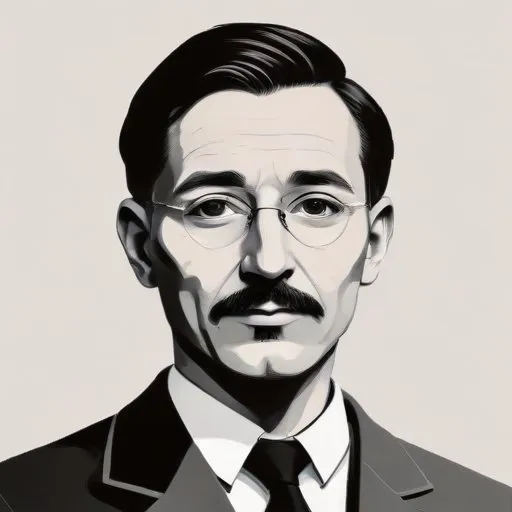
A Belgian painter and illustrator, he's most known for his dreamlike, Symbolist-style works that often featured fantastical creatures and landscapes. His art often blended mysticism with a sense of wonder.
Jan Frans De Boever, a Belgian Symbolist painter, is renowned for his captivating and often unsettling works of art, featuring voluptuous nude women in haunting, eerie contexts, intertwined with themes of death, skeletons, and eroticism. His unique style, a blend of romantic imagery and allegorical/mythological representations, transported viewers to a realm of dark beauty and mystique.
De Boever received his artistic training at the Royal Academy of Fine Arts in Ghent, under the guidance of Louis Tytgadt. This mentorship not only refined his skills but also provided an introduction to influential artistic circles in Ghent, Antwerp, Brussels, and Liège, eventually propelling him to become a celebrated figure in these cities.
In 1909, De Boever's artistic approach underwent a profound transformation, as he began to create works that would define his career. His paintings shifted focus to women, often prostitutes, amidst morbid and bizarre settings, featuring skeletons, diabolism, and subservient men, all intertwined with erotic undertones. This radical change marked the beginning of his signature Symbolist style, which drew inspiration from literature, music, and mythology.
One of De Boever's most notable projects was his illustration of Charles Baudelaire's iconic "Les Fleurs du mal" for the Ghent collector and art patron, Lon Speltinckx. Between 1914 and 1924, he created approximately 157 gouaches for the poems, with 86 of them recovered to date. These illustrations exemplified his mastery of Symbolism, blending the boundaries between artistic representation and literary expression.
De Boever's artistic vision was also fueled by his patriotism. During World War I, he created several paintings reflecting the catastrophic consequences of war, showcasing death and destruction in his characteristic Symbolist style. This fusion of artistic expression and historical context cemented his position as a stalwart of the Belgian art scene.
De Boever's artistic success was marked by numerous exhibitions and accolades, solidifying his reputation as a prominent figure in Belgian art. However, his career was not without its challenges. In 1935, he faced a financial crisis, leading him to reduce his prices and continue painting in his distinct Symbolist fashion until his passing in 1949.
Jan Frans De Boever's unique style and thematic focus have left an indelible mark on the art world. His ability to weave together elements of death, eroticism, and mysticism created a distinctive narrative, weaving a tapestry of intrigue and fascination. Today, his works continue to captivate audiences, serving as a testament to the power of art to evoke emotion and challenge our perceptions.
Born in 1577
A renowned Flemish painter and diplomat, famous for his vivid and emotive Baroque-style masterpieces, particularly his lush nudes and dramatic altarpieces.
Born in 1599
A renowned Flemish-English painter and etcher, famous for capturing the essence of 17th-century European aristocracy through his exquisite portraits, characterized by dramatic lighting and subtle emotional depth.
