


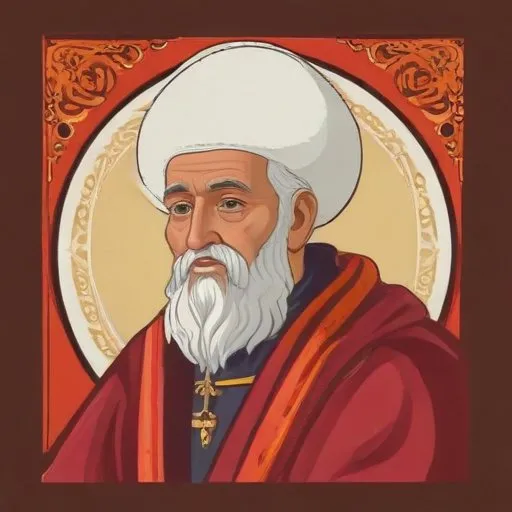
A 15th-century Hungarian bishop and poet, known for his Latin poetry that showcased his mastery of classical forms and his influence on the Renaissance humanist movement.
Janus Pannonius, a Croatian-Hungarian Latinist, poet, diplomat, and Bishop of Pécs, is renowned for his remarkable contributions to humanist poetry in Europe during the Renaissance. He is celebrated as the most significant poet of the Renaissance in the Kingdom of Hungary, leaving an indelible mark on the literary landscape of his time.
Born on August 29, 1434, in Slavonia, Janus's father was a Croat of uncertain social status, while his mother, Borbála Vitz, was Hungarian. His biographer and friend, Vespasiano da Bisticci, described him as being of Slavic nationality. According to Ronsano of Palermo, he hailed from Dalmatia. Ludovik Tuberon Crijevi, another contemporary, noted that Janus was born a Slav in the interior of Dalmatia, between the Sava and Drava rivers.
In 1447, his uncle sent him to Italy for a humanist education, where he attended the School of Guarino da Verona at Ferrara. Under the guidance of a prominent teacher of the Italian Renaissance, Janus excelled in Latin and Greek authors, earning recognition as the brightest pupil of his generation. He wrote his first epigrams at around 13, showcasing his mastery of classical prosody. He completed his higher education in canon law at the University of Padua.
After completing his education, Janus returned to Hungary in 1458, the year of Matthias Corvinus's accession to the throne. He worked at the Royal Chancery and soon became the Bishop of Pécs and later the Vice-Chancellor of the country. Janus's intellectual prowess and diplomatic acumen made him an influential figure in the kingdom, allowing him to maintain connections with prominent intellectuals of his time.
Janus's poetry was characterized by its classical style, conveying themes of love, nature, and morality. His works are a testament to his command of Latin and Greek, showcasing his skill in meter, rhythm, and syntax. His poetry was widely admired during his lifetime, earning him recognition as one of the leading humanist poets of Europe.
Janus Pannonius's impact on European humanism and poetry is immeasurable. He played a pivotal role in shaping the literary landscape of Hungary and beyond, inspiring generations of writers and intellectuals. His legacy extends beyond his poetry, as he embodied the values of humanism, promoting education, tolerance, and cultural understanding.
Through his remarkable life and works, Janus Pannonius continues to inspire and educate, leaving behind a rich cultural heritage that transcends borders and time.
Born in 1443
Renaissance-era king who ruled Hungary and Croatia, known for his military campaigns, cultural achievements, and patronage of arts and education. He transformed his kingdom into a major power in Central Europe.
Born in 1876
The leader of the Catholic Church from 1939 to 1958, known for his controversial role during World War II, particularly in regards to the Holocaust. He is also remembered for his encyclicals on social justice and liturgical reforms.
Born in 1417
A 15th-century pope who played a significant role in the fall of the Western Schism, ending the division in the Catholic Church. He's also known for his lavish spending and nepotism.
