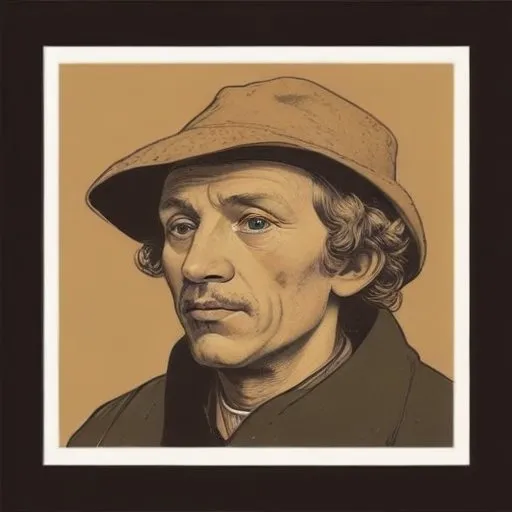
Jan van Goyen: The Prolific Dutch Landscape Painter
A Master of Diverse Landscapes
Jan van Goyen, a renowned Dutch landscape painter, is celebrated for his incredibly broad range of subjects, which include forest landscapes, marine paintings, river landscapes, beach scenes, winter landscapes, cityscapes, architectural views, and landscapes with peasants. With an astonishing oeuvre of approximately 1,200 paintings and over 1,000 drawings, van Goyen's artistic output is a testament to his boundless creativity and energy.
Early Life and Training
Born on January 13, 1596, in Leiden, Netherlands, Jan van Goyen was the son of a shoemaker. He began his artistic apprenticeship in Leiden, later studying art in Haarlem with Esaias van de Velde, a prominent Dutch painter. This formative training laid the foundation for van Goyen's future success as a landscape painter.
A Permanent Studio in The Hague
At the age of 35, van Goyen established a permanent studio in The Hague, where he would spend the remainder of his career. This strategic move allowed him to capitalize on the city's thriving art market and attract a steady stream of patrons.
Innovative Techniques and Market Strategies
Van Goyen's landscapes rarely fetched high prices, but he compensated for this by increasing his production, employing a limited palette of inexpensive pigments, and painting thinly and quickly. This innovative approach enabled him to remain financially solvent, despite the modest value of individual pieces. Additionally, van Goyen supplemented his income by working as an art dealer and auctioneer, as well as speculating in real estate and, infamously, tulips – a venture that ultimately led to significant debts.
Influence and Legacy
Van Goyen's influence extends far beyond his own oeuvre. His pupils included notable artists such as Nicolaes van Berchem, Jan Steen, and Adriaen van der Kabel. Moreover, his work had a profound impact on the development of Dutch landscape painting, shaping the styles of numerous artists who followed in his footsteps.
Personal Struggles and Later Life
Despite his artistic triumphs, van Goyen faced significant financial struggles, particularly in his later years. In 1652 and 1654, he was forced to sell his collection of paintings and graphic art, and subsequently moved to a smaller house. He passed away on April 27, 1656, in The Hague, leaving behind debts of 18,000 guilders – a substantial sum at the time. Van Goyen's widow was compelled to sell their remaining furniture and paintings to settle his outstanding debts.
Artistic Achievements and Contributions
- Developed a distinctive style characterized by muted color palettes, atmospheric lighting, and intricate detail
- Produced an astonishing 1,200 paintings and over 1,000 drawings, cementing his status as one of the most prolific artists of his time
- Influenced a wide range of artists, including his pupils Nicolaes van Berchem, Jan Steen, and Adriaen van der Kabel
- Played a significant role in shaping the landscape genre in Dutch art
Historical Significance
Jan van Goyen's remarkable career serves as a testament to the power of artistic innovation and perseverance. Despite the challenges he faced, he continued to produce works of exceptional quality, leaving an indelible mark on the art world. Today, van Goyen's paintings and drawings remain celebrated examples of Dutch Golden Age art, cherished for their beauty, intricacy, and enduring appeal.
FAQ
What were Jan van Goyens contributions to Dutch landscape painting?
Jan van Goyen was a significant figure in the development of Dutch landscape painting, known for his innovative use of light and color. He was one of the first Dutch painters to depict everyday scenes and landscapes.
How did Jan van Goyens use of light and color influence his paintings?
Jan van Goyens use of light and color was characterized by a focus on the effects of chiaroscuro and the use of muted, earthy tones. This gave his paintings a sense of depth and atmosphere.
What was Jan van Goyens relationship like with other Dutch masters?
Jan van Goyens relationship with other Dutch masters, including Rembrandt and Salomon van Ruysdael, was marked by mutual influence and respect. He was part of a circle of artists who shared ideas and techniques.
How did Jan van Goyens paintings reflect the Dutch Golden Age?
Jan van Goyens paintings reflected the Dutch Golden Age, a period of significant cultural and economic growth in the Netherlands. His landscapes and scenes of everyday life celebrated the beauty and prosperity of the Dutch Republic.
What is Jan van Goyens legacy in the history of Dutch art?
Jan van Goyens legacy in the history of Dutch art is marked by his role as a pioneer of Dutch landscape painting and his influence on later artists, including the French Barbizon school.