


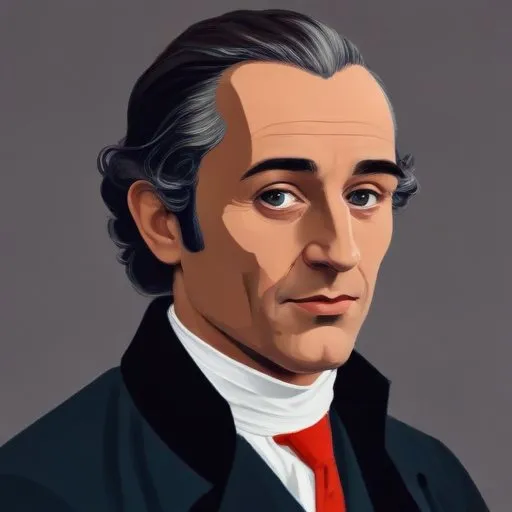
Jean Antoine de Baf was a 16th-century French poet and member of the prestigious Pléiade, a group of renowned poets who revolutionized French literature. He is best known for his contributions to the establishment of the Académie de Poésie et de Musique, a pioneering institution that aimed to unite music and poetry, thereby elevating the artistic landscape of France.
Born on February 19, 1532, in Venice, Italy, Baf was the natural son of Lazare de Baf, a scholar and French ambassador. His father's diplomatic position exposed him to the finer aspects of Italian culture, which would later influence his work. Baf received a stellar education, with lessons in Latin from Charles Estienne and Greek from Ange Vergce, a Cretan scholar and calligraphist.
At the tender age of 11, Baf was placed under the care of the celebrated Jean Daurat. It was during this period that he met Pierre de Ronsard, his senior by eight years, who would become a lifelong friend and collaborator. Baf's exceptional talent and facility with language allowed him to assist Ronsard in mastering Greek, while Ronsard, in turn, introduced Baf to the intricacies of French versification.
Baf's literary output was astonishingly prolific, with numerous volumes of short poems, translations, and paraphrases of classical works. He drew inspiration from ancient Greek poets like Bion of Smyrna, Moschus, Theocritus, Anacreon, and Roman poets such as Catullus and Martial. His work was widely admired, and he enjoyed the favor of the French court, with patrons like Charles IX and Henry III.
In 1570, Baf, in collaboration with composer Joachim Thibault de Courville, founded the Académie de Poésie et de Musique, with the support of the French monarchy. This pioneering institution aimed to promote a harmonious union between music and poetry, reviving the classical ideal of the arts. Baf's residence became a hub for esteemed musicians, including Claude Le Jeune and Jacques Mauduit, who would go on to shape the course of French music.
Jean Antoine de Baf's contributions to French literature and music are immeasurable. Through his work, he not only bridged the gap between poetry and music but also fostered a cultural renaissance in France. His legacy continues to inspire generations of artists, poets, and musicians, ensuring that his harmonious vision remains an integral part of the French cultural heritage.
In conclusion, Jean Antoine de Baf's remarkable life and achievements have left an indelible mark on French cultural history. As a poet, musician, and patron of the arts, he embodied the Renaissance spirit, harmoniously blending creativity, innovation, and beauty.
Born in 1622
A 17th-century master of comedy, he penned witty plays that satirized the French aristocracy, leaving a lasting impact on Western theater. His works remain widely performed and adapted today.
Born in 1639
A 17th-century master of French tragedy, crafting intricate, psychologically complex dramas that probed the human condition, influencing the development of Western theatre.
Born in 1606
A 17th-century French mastermind behind iconic plays like "Le Cid" and "Horace", known for pioneering the classical French tragedy genre.
Born in 1694
A witty and insightful 18th-century writer and philosopher who used satire to critique societal norms and advocate for reason, tolerance, and human rights.
Born in 1712
A pioneering thinker who shaped modern democracy and education with his ideas on social contracts, general will, and the importance of early childhood education. His writings influenced the French Revolution and modern political thought.
Born in 1636
A 17th-century French poet and critic who advocated for reason and morality in literature, and is known for his influential writings on poetry and aesthetics.
Born in 1635
A 17th-century French playwright and composer who wrote librettos for operas, including collaborations with Jean-Baptiste Lully, and was a key figure in the development of French opera.
