


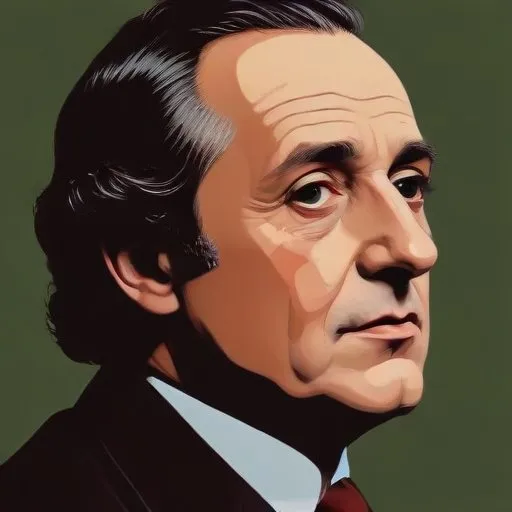
A 17th-century French playwright and composer who wrote librettos for operas, including collaborations with Jean-Baptiste Lully, and was a key figure in the development of French opera.
Philippe Quinault is renowned for his significant contributions to the world of French theatre, particularly in the realm of lyrical drama and libretti. As a prolific dramatist and librettist, Quinault's works showcased his remarkable faculty for combining music and drama, earning him the title of master of a new style.
Quinault was born on June 3, 1635, in Paris, France. He was educated by the liberality of François Tristan l'Hermite, a renowned author of Marianne. This early exposure to literature and theatre laid the foundation for Quinault's future success.
Quinault's first play was produced at the Hôtel de Bourgogne in 1653, when he was just 18 years old. This early success was followed by a string of comedies, tragedies, and tragicomedies, showcasing his versatility as a playwright. Some of his notable works include:
In 1671, Quinault contributed to the singular miscellany of Psyché, a collaboration with Pierre Corneille and Molière, set to the music of Jean-Baptiste Lully. This project marked a turning point in Quinault's career, as he began to focus on composing libretti for Lully's operas. This partnership resulted in some of Quinault's most notable works, including:
Quinault's contributions to French theatre were recognized by his peers, and he was elected to the Académie française in 1670. He also received one of the literary pensions established by the French government, further solidifying his reputation as a master of his craft.
Quinault's work had a lasting impact on the development of French theatre, particularly in the realm of opera and lyrical drama. His collaborations with Lully laid the groundwork for the development of French opera, and his libretti continue to be celebrated for their lyricism and dramatic flair. As a master of a new style, Quinault's legacy continues to inspire and influence generations of playwrights, composers, and librettists.
Quinault married a widow with money in 1660, which allowed him to purchase a place in the Cour des Comptes. This union provided him with the financial stability to focus on his writing, leading to some of his most notable works.
Quinault's life was cut short when he passed away on November 26, 1688, leaving behind a legacy of innovative and influential works that continue to shape the world of French theatre.
Born in 1622
A 17th-century master of comedy, he penned witty plays that satirized the French aristocracy, leaving a lasting impact on Western theater. His works remain widely performed and adapted today.
Born in 1632
A 17th-century mastermind who revolutionized French opera, creating lavish productions that captivated the royal court and beyond. He's credited with establishing the French opera tradition.
Born in 1639
A 17th-century master of French tragedy, crafting intricate, psychologically complex dramas that probed the human condition, influencing the development of Western theatre.
Born in 1606
A 17th-century French mastermind behind iconic plays like "Le Cid" and "Horace", known for pioneering the classical French tragedy genre.
Born in 1694
A witty and insightful 18th-century writer and philosopher who used satire to critique societal norms and advocate for reason, tolerance, and human rights.
Born in 1683
A prominent figure in the Baroque period, this composer and theorist revolutionized Western classical music with innovative harmonies and treatises on music theory, shaping the course of classical music.
Born in 1660
A French Baroque composer and conductor, known for his sacred music and operas that blended Italian and French styles. He was a prominent figure in French music during the early 18th century.
Born in 1668
A renowned Baroque composer and organist, known for his intricate and expressive harpsichord music that showcased his mastery of counterpoint and ornamentation. His works continue to inspire and influence classical music today.
