


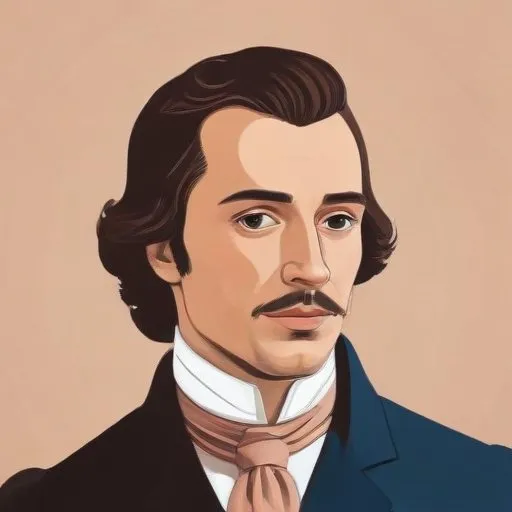
A French scholar and academic who pioneered the study of ancient Greek manuscripts, making significant contributions to the field of classical philology. He's credited with discovering and publishing previously unknown works of ancient Greek authors.
Jean-Baptiste-Gaspard d'Ansse de Villoison is renowned for his groundbreaking discoveries in classical scholarship, particularly his edition of the Iliad from a 10th-century manuscript, which revolutionized the field of Homeric studies. This remarkable find, known as the codex Venetus A, contains ancient scholia and marginal notes, providing valuable insights into the evolution of Homer's epic poem.
Born on March 5, 1750, in Corbeil-sur-Seine, France, de Villoison demonstrated a keen interest in classical languages from an early age. He pursued his passion at the University of Paris, where he honed his skills in Greek, Latin, and other ancient languages.
De Villoison's academic journey was marked by several notable achievements, including:
In 1786, de Villoison embarked on a journey to Greece, hoping to uncover more treasures like the Venetian Homer. Although the expedition did not yield the expected results, it sparked a renewed interest in modern Greek studies. Upon his return to Paris, he assumed a professorship in modern Greek and later became a professor of ancient and modern Greek languages at the Collège de France.
De Villoison's contributions to classical scholarship have been profound and far-reaching. His discoveries and publications have:
Today, Jean-Baptiste-Gaspard d'Ansse de Villoison is remembered as a pioneering classical scholar whose tireless efforts have left an indelible mark on the field of Homeric studies.
Born in 1712
A pioneering thinker who shaped modern democracy and education with his ideas on social contracts, general will, and the importance of early childhood education. His writings influenced the French Revolution and modern political thought.
Born in 1694
A witty and insightful 18th-century writer and philosopher who used satire to critique societal norms and advocate for reason, tolerance, and human rights.
Born in 1689
A French lawyer and philosopher who developed the concept of separation of powers, which divides a government into legislative, executive, and judicial branches to prevent abuse of power. His ideas greatly influenced modern democracy.
Born in 1714
A French philosopher who developed a comprehensive system of philosophy that emphasized the role of sensation and experience in shaping our understanding of the world, and is known for his influential works on epistemology and psychology.
Born in 1647
A 17th-century philosopher and writer who critiqued religious intolerance and advocated for reason, skepticism, and intellectual freedom. His works influenced the Enlightenment and modern critical thinking.
