


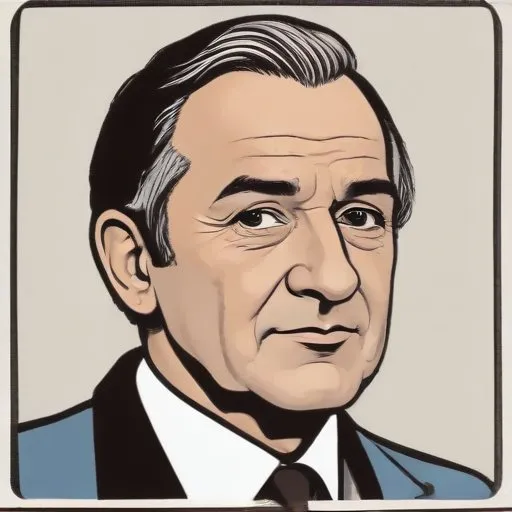
A Swiss Enlightenment thinker who wrote influential works on natural law, politics, and morality, shaping modern democratic thought. His ideas on social contracts and individual rights remain relevant today.
Genevan legal and political theorist Jean-Jacques Burlamaqui is renowned for popularizing ideologies that laid the groundwork for modern constitutionalism. His treatise, The Principles of Natural and Politic Law, has been hailed as a seminal work that significantly influenced the American Founding Fathers, shaping the fabric of modern democracy.
Born on June 24 or 13 July 1694, in Geneva, Republic of Geneva, Burlamaqui was part of a Calvinist family with a rich history of republican sentiments. His ancestor, Francesco Burlamacchi of Lucca, was a 16th-century Italian merchant who had taken refuge in Geneva for his republican beliefs.
Burlamaqui studied law and, at the tender age of 25, was designated as an honorary professor of ethics and the law of nature at the University of Geneva. Before taking up the appointment, he embarked on a journey through France and England, where he made the acquaintance of prominent writers of the period.
Upon his return to Geneva, Burlamaqui began to lecture, quickly gaining a wide reputation for his simplicity of style and the precision of his views. He continued to lecture for 15 years, earning accolades for his theoretical knowledge and practical sagacity.
His health eventually forced him to resign, but his fellow citizens immediately elected him a member of the council of state. This esteemed position allowed him to apply his theoretical knowledge to practical governance, further solidifying his reputation as a visionary thinker.
Burlamaqui's magnum opus, The Principles of Natural and Politic Law, is a testament to his rational utilitarianism. This foundational principle represents a digest of the thoughts of likeminded theorists, including Richard Cumberland and Hugo Grotius.
His treatise has been translated into six languages, with over 60 editions, cementing its status as a seminal work in the realm of constitutionalism. Burlamaqui's vision of constitutionalism has had a profound impact on modern society, shaping the course of democratic governance.
Burlamaqui's influence on the American Founding Fathers is undeniable. His ideas on constitutionalism and governance have had a lasting impact on the development of modern democracy.
Early American thought drew heavily from Burlamaqui's work, which served as a catalyst for the creation of the United States Constitution. His ideas continue to inform political discourse and shape the fabric of modern democracy.
Jean-Jacques Burlamaqui's legacy extends far beyond his native Geneva. His work has transcended borders and generations, shaping the course of human history.
As a testament to his enduring influence, Burlamaqui's treatise remains a vital resource for scholars, policymakers, and thinkers across the globe. His vision of constitutionalism continues to inspire and inform, solidifying his place as a towering figure in the annals of modern thought.
These works have been widely acclaimed for their simplicity, clarity, and precision, earning Burlamaqui a reputation as a masterful communicator of complex ideas.
Through his remarkable life and work, Jean-Jacques Burlamaqui has left an indelible mark on human history, shaping the course of constitutionalism and governance for generations to come.
Born in 1712
A pioneering thinker who shaped modern democracy and education with his ideas on social contracts, general will, and the importance of early childhood education. His writings influenced the French Revolution and modern political thought.
Born in 1694
A witty and insightful 18th-century writer and philosopher who used satire to critique societal norms and advocate for reason, tolerance, and human rights.
Born in 1689
A French lawyer and philosopher who developed the concept of separation of powers, which divides a government into legislative, executive, and judicial branches to prevent abuse of power. His ideas greatly influenced modern democracy.
61 Years Old
A lawyer and politician who served in the U.S. House of Representatives from 1987 to 1997, known for his moderate Republican views and advocacy for environmental issues.
Born in 1724
Developed influential philosophical frameworks, such as the Critique of Pure Reason, that shaped modern Western thought on ethics, morality, and human understanding.
Born in 1632
A 17th-century thinker who laid the groundwork for modern democracy, arguing that governments derive their power from the people and that individuals have inherent rights to life, liberty, and property.
