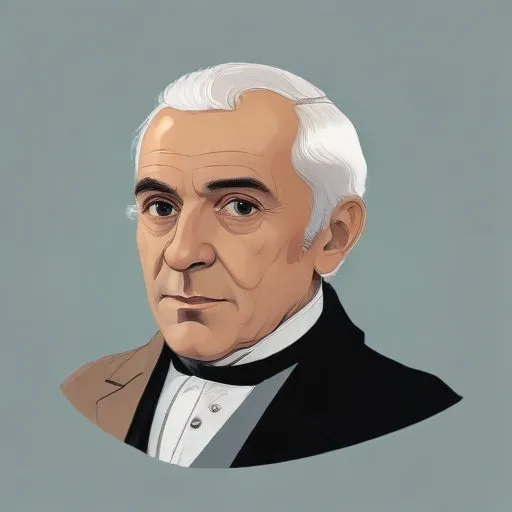
Jean-Louis Pons: The Comet King of the 19th Century
A Life of Celestial Discovery
Jean-Louis Pons is renowned for being the greatest visual comet discoverer of all time, with an astonishing 37 comet discoveries to his name between 1801 and 1827. This self-taught French astronomer's remarkable achievements have left an indelible mark on the field of astronomy.
Humble Beginnings
Born on December 24, 1761, in Peyre, Hautes-Alpes, Pons came from a poor family and received little formal education. Despite these humble beginnings, he began working at the Marseille Observatory as a caretaker in 1789, where he gradually gained experience in assisting astronomers with observations.
Rise to Prominence
Pons' remarkable ability to remember star fields and note changes in them caught the attention of his colleagues. His first comet discovery, jointly attributed to
Charles Messier, was made on July 11, 1801. He went on to make numerous discoveries, including Encke's Comet and Crommelin's Comet, which were significant comet recoveries of the 19th century.
Unconventional Methods
Pons' approach to astronomy was unorthodox. He used telescopes and lenses of his own design, including the "Grand Chercheur" (Great Seeker), which had a large aperture and short focal length, similar to a comet seeker. Although he was not a diligent recorder of his observations, his notes were often extremely vague, making it difficult for others to follow his work.
Career Highlights
- 37 comet discoveries between 1801 and 1827, a record that still stands today
- Worked at three observatories: Marseille Observatory, Royal Park La Marlia in Tuscany, and the observatory in Florence
- Supported the recovery of Encke's Comet and Crommelin's Comet
Legacy and Impact
Pons' contributions to astronomy have had a lasting impact on the field. His work inspired future generations of astronomers and paved the way for further research into cometary phenomena. Despite his unorthodox methods, his discoveries have remained a testament to his dedication and passion for astronomy.
Trivia and Fun Facts
- Pons was the target of jokes by more experienced astronomers, including Franz Xaver von Zach, who advised him to look for comets when sunspots were visible, inadvertently giving him good advice
- He was not a diligent recorder of his observations, often leaving his notes extremely vague
- Pons' "Grand Chercheur" telescope had a large aperture and short focal length, similar to a comet seeker
Conclusion
Jean-Louis Pons' remarkable achievements in astronomy have cemented his place in history as one of the greatest comet discoverers of all time. His unorthodox methods and dedication to his craft have inspired generations of astronomers, leaving a lasting legacy in the field of astronomy.
FAQ
Who was Jean-Louis Pons?
Jean-Louis Pons was a French astronomer who lived in the 18th and 19th centuries. He is known for his discoveries of several comets and his contributions to the field of astronomy.
What were Jean-Louis Pons most significant discoveries?
Jean-Louis Pons discovered 37 comets during his career, including the famous Comet Encke. He also made significant contributions to the study of astronomy, including the discovery of several celestial objects and the improvement of telescope technology.
Where did Jean-Louis Pons work?
Jean-Louis Pons worked at the Marseille Observatory in France, where he was director for many years. He also worked at the Paris Observatory and was a member of several scientific societies.
What was Jean-Louis Pons impact on astronomy?
Jean-Louis Pons had a significant impact on astronomy, making important contributions to our understanding of comets and celestial bodies. His discoveries and research paved the way for future generations of astronomers.
What is Jean-Louis Pons legacy in astronomy?
Jean-Louis Pons legacy in astronomy is one of discovery and innovation. He remains one of the most important astronomers of his time, and his contributions continue to inspire scientists today.