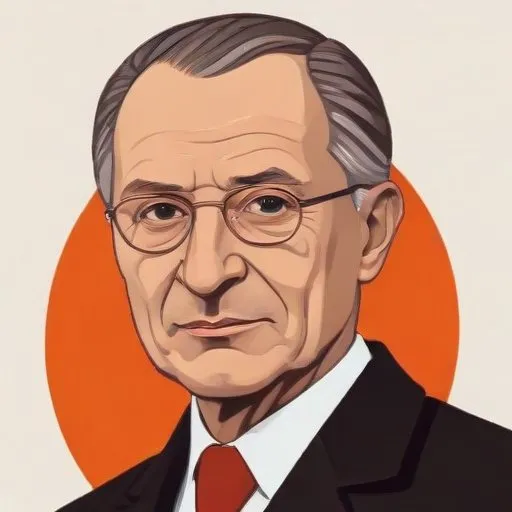
Jerzy Robert Nowak

Jerzy Robert Nowak

Jerzy Robert Nowak was born on September 8th, 1940

Nationality: Polish
Full Name: Jerzy Robert Nowak
Profession: Historian
Profession: Journalist
Country: Poland
Occupation: Historian and journalist
Role: Polish historian
Born: Poland

A Polish historian and journalist who wrote extensively on the country's history, politics, and culture, and was a vocal critic of communism.

Written by: Penelope Wildwood Penelope Wildwood

A Life Dedicated to History and Controversy

Jerzy Robert Nowak, born on September 8, 1940, is a Polish historian known for his provocative views and writings on Hungarian matters, as well as his involvement in Catholic media outlets. As a former columnist for Nasz Dziennik, Telewizja Trwam, and Radio Maryja, Nowak has made a name for himself as a vocal and divisive figure in Polish politics and historiography.

Early Life and Education

Born in Terespol, Poland, Nowak grew up in a country shrouded in war and uncertainty. His early life was marked by the turmoil of World War II, an experience that would shape his worldview and inform his later writings.

A Career in Politics and History

Nowak's academic background is rooted in history, with a particular focus on Hungarian affairs. He worked as an expert in the Polish Institute of International Affairs, where he honed his knowledge of Hungarian politics and culture. This expertise led to the publication of several books on the subject, solidifying his reputation as a respected historian. However, it is his involvement in the Alliance of Democrats Poland, a right-wing Catholic party, that has sparked controversy. Nowak's outspoken views on matters such as antisemitism, Masonry, and the role of Catholics in Polish society have drawn criticism from intellectuals, clergy, and even some of his own Catholic peers.

The Judeopolonia Controversy

One of the most contentious aspects of Nowak's career is his promotion of the Judeopolonia conspiracy theory. This theory posits that Jews are secretly controlling Polish politics and society, a notion that has been widely debunked as anti-Semitic propaganda. In lectures and writings, Nowak has perpetuated this myth, often couching it in nationalist and religious rhetoric. This has led to accusations of anti-Semitism from Catholic intellectuals, clergy, and human rights organizations.

The Jedwabne Pogrom Debate

During the intense debate surrounding the Jedwabne pogrom, a massacre of Jews during World War II, Nowak took a divisive stance. He dismissed Jan T. Gross, a prominent historian, as a propagandist spreading lies about Polish complicity in the atrocity. Instead, Nowak argued that Jews should apologize to Poles for their supposed anti-Polish activities. This inflammatory rhetoric has further polarized an already contentious issue, drawing criticism from scholars and human rights advocates.

Criticisms and Controversies

Throughout his career, Nowak has faced criticism for his anti-Semitic views, nationalist rhetoric, and perceived bias. Catholic intellectuals, clergy, and organizations have distanced themselves from his writings and public statements. Despite these criticisms, Nowak remains a prominent figure in Polish politics and historiography. His writings continue to spark controversy, and his views on Jewish-Polish relations remain a source of concern for those committed to promoting tolerance and understanding.

A Legacy of Controversy

Jerzy Robert Nowak's life and work serve as a testament to the complexities of Polish history and politics. While his expertise in Hungarian affairs has earned him recognition, his divisive views on Jewish-Polish relations and anti-Semitic conspiracy theories have marred his legacy. As a historian, Nowak's work is a reminder that the past is full of complexities and controversies. His legacy serves as a warning about the dangers of perpetuating harmful stereotypes and biases, and the importance of critically examining the historical record.
Timeline
1940
Born in Warsaw, Poland
Jerzy Robert Nowak was born on September 20, 1940, in Warsaw, Poland.
1963
Graduated from University
Nowak graduated from the University of Warsaw with a degree in history.
1970
Started Journalism Career
Nowak started his journalism career, working for various Polish publications.
1990
Published Notable Book
Nowak published a notable book on Polish history, which received critical acclaim.
2010
Received Journalism Award
Nowak received a prestigious journalism award for his contributions to Polish journalism.
Jerzy Robert Nowak

Jerzy Robert Nowak Quiz

What was Jerzy Robert Nowak's profession?

Score: 0/5
FAQ
What is Jerzy Robert Nowaks area of expertise as a historian?
Jerzy Robert Nowak is a historian specializing in modern Polish history, with a particular focus on the countrys experience during World War II and the post-war period.
How has Jerzy Robert Nowak contributed to the study of Polish history?
Jerzy Robert Nowak has contributed significantly to the study of Polish history, publishing numerous books and articles on the subject and helping to promote a deeper understanding of Polands complex past.
What awards has Jerzy Robert Nowak received for his work?
Jerzy Robert Nowak has received several awards for his work, including the Polish Ministry of Cultures prestigious Golden Gloria Artis medal for his contributions to the field of history.
What has Jerzy Robert Nowak said about the importance of historical research?
Jerzy Robert Nowak has emphasized the importance of rigorous historical research, urging scholars to approach their work with objectivity, critical thinking, and a commitment to accuracy.
What is Jerzy Robert Nowaks legacy in the field of history?
Jerzy Robert Nowaks legacy in the field of history is one of meticulous scholarship, intellectual honesty, and a deep commitment to understanding the complexities of the human experience.

Related People:

Adam Michnik

79 Years Old

A prominent dissident and advocate for democracy, known for his courageous opposition to Poland's communist regime and influential writings on politics and history.

Wojciech Jaruzelski

Born in 1923

The last communist leader of Poland, who imposed martial law in 1981, but later helped transition the country to democracy. He's a symbol of Poland's complex political past.

82 Years Old

A Polish electrician-turned-politician who played a key role in the country's transition from communism to democracy, and was awarded the Nobel Peace Prize for his efforts. He's a symbol of resistance against oppression and a champion of workers' rights.

Pope John Paul II

Born in 1920

Leader of the Catholic Church from 1978 to 2005, known for helping to end communism in Poland and being a charismatic advocate for human rights and social justice.

Zbigniew Brzezinski

98 Years Old

A Polish-born American strategist and policymaker who served as National Security Advisor, shaping US foreign policy and advising presidents on global affairs. Known for his realist approach and expertise on geopolitics.

Václav Havel

89 Years Old

A Czech poet, playwright, and politician who led the country's transition from communism to democracy, and is known for his advocacy of human rights and individual freedom.

Mikhail Gorbachev

95 Years Old

The last leader of the Soviet Union, who introduced reforms that led to the end of the Cold War and the collapse of communism, earning a Nobel Peace Prize. He's known for his policies of glasnost and perestroika, which transformed the Soviet Union and the world.

Ronald Reagan

Born in 1911

The charismatic leader who championed conservative policies, helped end the Cold War, and is often credited with restoring American pride and optimism. He's also remembered for his folksy, actor-honed communication style.