


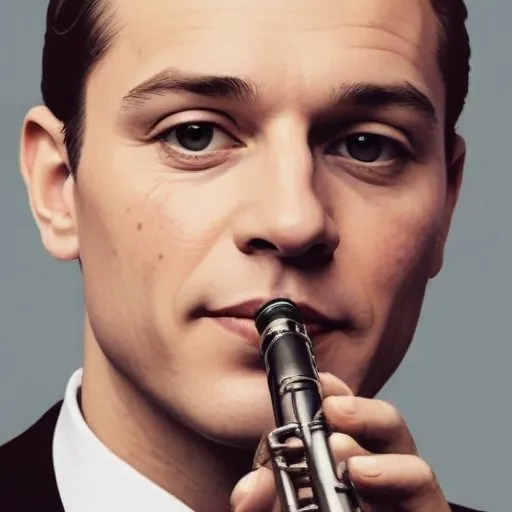
A pioneering jazz musician and composer, known for blending cool jazz with chamber music elements, creating a unique, introspective sound.
Jimmy Giuffre, an American jazz clarinetist, saxophonist, composer, and arranger, is renowned for developing forms of jazz that allowed for free interplay between musicians, anticipating forms of free improvisation. His innovative approach to jazz paved the way for future generations of musicians, making him a pioneer in the genre.
Jimmy Giuffre was born on April 26, 1921, in Dallas, Texas, to Joseph Francis Giuffre, an Italian immigrant, and Everet McDaniel Giuffre. He graduated from Dallas Technical High School and North Texas State Teachers College (now the University of North Texas College of Music).
Giuffre's career took off as an arranger for Woody Herman's big band, for which he wrote the iconic "Four Brothers" in 1947. He continued to write creative, unusual arrangements throughout his career, becoming a central figure in West Coast jazz and cool jazz.
In 1951, Giuffre became a member of Howard Rumsey's Lighthouse All Stars, along with Shorty Rogers and Shelly Manne. During this period, he collaborated with Rogers on many charts written for the All Stars, including the hit "Big Boy". The Lighthouse in Hermosa Beach, California, became the focal point of West Coast jazz in the 1952-1953 period.
Giuffre left the Lighthouse All Stars in 1953 and became a member of Shorty Rogers and His Giants before going solo. His first trio consisted of Giuffre, guitarist Jim Hall, and double bassist Ralph Pea (later replaced by Jim Atlas). This trio explored what Giuffre dubbed "blues-based folk jazz."
In 1957, Giuffre's "The Train and the River" was featured on the television special "The Sound of Jazz," introducing his unique style to a wider audience. This breakthrough solidified his position as a pioneer of free improvisation in jazz, influencing generations of musicians to come.
"I don't want to be a leader, I want to be a collaborator."
Jimmy Giuffre
Giuffre's innovative approach to jazz has had a lasting impact on modern music, inspiring musicians to experiment and push the boundaries of their craft. His legacy continues to influence contemporary jazz and beyond, cementing his place as a true pioneer in the genre.
Giuffre's unique approach to jazz set him apart from his contemporaries, including musicians like Miles Davis and John Coltrane. While they were experimenting with modal jazz and hard bop, Giuffre was exploring the possibilities of free improvisation, creating a distinct sound that was truly his own.
Giuffre received numerous awards and honors throughout his career, including a Grammy nomination for Best Jazz Performance, Small Group or Soloist with Vocal or Instrumental in 1962.
Giuffre's innovative approach to jazz has influenced generations of musicians and educators, shaping the way jazz is taught and performed today. His legacy continues to inspire educators and musicians to experiment and push the boundaries of their craft.
Born in 1913
A legendary jazz musician and bandleader, known for his virtuosic saxophone and clarinet playing, and leading his iconic orchestra through the swing and bebop eras.
Born in 1909
A virtuosic clarinetist and bandleader, known as the "King of Swing," who revolutionized jazz music with his energetic and sophisticated style, leading a racially integrated orchestra in the 1930s.
Born in 1910
A virtuosic clarinetist and innovative bandleader, he revolutionized the swing era with his unique sound and iconic hits like "Begin the Beguine" and "Stardust".
Born in 1904
A pioneering jazz musician who revolutionized the saxophone's role in jazz, creating a rich, full-bodied sound that influenced generations of musicians.
Born in 1909
A pioneering jazz musician who introduced a smoother, more relaxed style of saxophone playing, influencing generations of musicians to come.
Born in 1920
A pioneering jazz saxophonist and composer, known for his lightning-fast solos and innovative bebop style that revolutionized jazz music. 82
Born in 1917
A virtuosic trumpet player and composer who revolutionized jazz with his lightning-fast solos and iconic puffy cheeks, creating a new language for the instrument. He's synonymous with bebop and modern jazz.
Born in 1926
A legendary jazz musician who revolutionized the genre with his improvisational style and iconic albums like "Kind of Blue". He's synonymous with cool, jazzy sophistication.
