


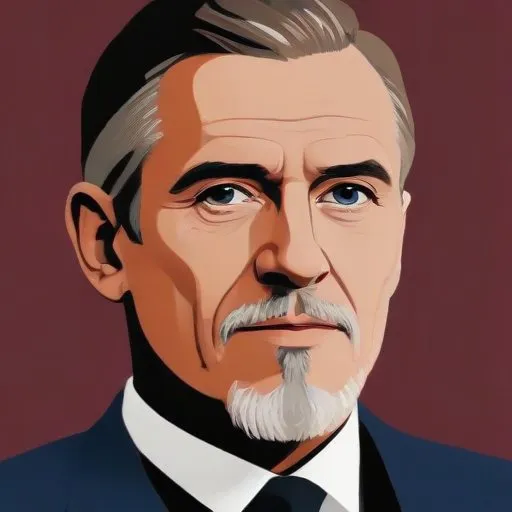
A 19th-century champion of Icelandic independence and culture, he led the fight for autonomy from Denmark and preserved Iceland's literary heritage.
Jón Sigurðsson is remembered as the prominent leader of the 19th century Icelandic independence movement, fighting tirelessly for his country's autonomy from Denmark. As a passionate advocate for Iceland's sovereignty, Sigurðsson played a pivotal role in shaping the nation's history, earning him a revered place in the annals of Icelandic politics.
Born on June 17, 1811, in Hrafnseyri, Arnarfjörður, Westfjords, Iceland, Sigurðsson was the son of pastor Sigurður Jónsson and Þórdís Jónsdóttir. His family's strong roots in the Icelandic church and community instilled in him a deep love for his heritage and a desire to serve his country. In 1833, Sigurðsson moved to Denmark to study grammar and history at the University of Copenhagen, where he developed a profound interest in Icelandic history and literature.
During his time in Denmark, Sigurðsson contracted syphilis, which left him bedridden for an extended period. This challenging experience, according to historian Guðjón Fríðriksson, marked a turning point in Sigurðsson's life, as he began to focus more intently on politics and his country's future. His bout with syphilis transformed him into a more driven and passionate individual, determined to make a lasting impact on Icelandic politics.
After completing his education, Sigurðsson began working at the Arnamagnæan Institute, a hub for Icelandic manuscript studies. His expertise in the Icelandic sagas and history earned him recognition as a leading scholar in his field. The institute became a catalyst for his growth as a politician, as he delved deeper into Iceland's rich cultural heritage and developed a profound appreciation for his nation's unique identity.
Sigurðsson's personal life was marked by a long-standing engagement to his cousin, Ingibjörg Einarsdóttir. Although they did not marry until 1845, their union was a testament to Sigurðsson's commitment to his family and community. Throughout his life, Sigurðsson maintained strong relationships with his loved ones, who supported him unconditionally in his pursuit of Icelandic independence.
In 1844, Sigurðsson was elected to the Althing, Iceland's national parliament, as a representative for the Ísafjörður county. This marked the beginning of his illustrious political career, during which he became a vocal advocate for Icelandic autonomy. In 1851, he played a crucial role in the National Assembly, leading the Icelandic resistance to Denmark's 1849 constitutional reform. Sigurðsson's unwavering commitment to his country's cause earned him recognition as a champion of Icelandic independence.
Sigurðsson's tireless efforts culminated in the passage of a limited constitution in 1874, granting Iceland autonomy in internal affairs. He served as the speaker of the Althing from 1875 to 1877, further solidifying his position as a visionary leader. Sigurðsson's contributions to Icelandic politics and culture have endured long after his passing on December 7, 1879. Today, he is remembered as a national hero, celebrated for his unwavering dedication to his country's freedom and prosperity.
Born in 1807
A 19th-century Icelandic Renaissance man, he was a prolific writer, poet, and naturalist who contributed significantly to the country's literary and scientific heritage. His works often explored the intersection of nature and human experience.
Born in 1907
Leader of the Hitler Youth organization during World War II, responsible for indoctrinating and recruiting millions of young Germans into the Nazi Party.
Born in 1893
A high-ranking Nazi official, he was a decorated World War I fighter pilot and later became a prominent politician, serving as Minister President of Prussia. He's infamous for his role in the Nazi regime and war crimes trials.
Born in 1893
A German diplomat who served as the Nazi regime's Foreign Minister, orchestrating key alliances and treaties that led to World War II. He was a close associate of Adolf Hitler and played a crucial role in shaping Nazi foreign policy.
Born in 1890
A Soviet Minister of Foreign Affairs who played a crucial role in shaping the country's foreign policy during World War II and the early Cold War era, known for his diplomatic skills and signature cocktails.
Born in 1897
A mastermind of Nazi propaganda, he crafted a persuasive narrative that fueled the Third Reich's rise to power, leaving a lasting impact on the world.
