


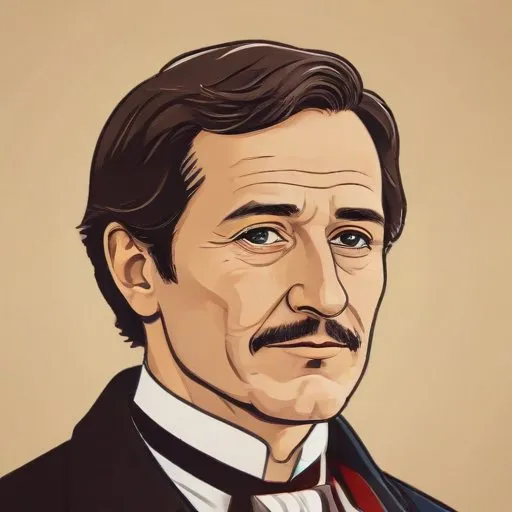
A German historian and author who wrote extensively on the Eastern Front of World War II, particularly on the Soviet Union's role and atrocities committed during the war.
Joachim Hoffmann, a renowned German historian, is best known for his exhaustive research and literary contributions to the realm of German-Soviet war, shedding light on the lesser-known aspects of this pivotal period in world history. As the academic director of the German Armed Forces Military History Research Office, Hoffmann's work has been instrumental in reshaping our understanding of the complex dynamics between Germany and the Soviet Union during World War II.
Born on December 1, 1930, in Königsberg, East Prussia, Hoffmann's family fled to western Germany to avoid the advancing Red Army during the latter stages of World War II. Settling in Berlin, Hoffmann pursued his passion for history, studying modern history, eastern European history, and comparative ethnology at the Free University of Berlin and University of Hamburg. He earned his PhD in history in 1959 for his study, "Die Berliner Mission des Grafen Prokesch-Osten 1849-1852."
Hoffmann's illustrious career spanned over three decades, from 1960 to 1995, during which he worked at the German Armed Forces Military History Research Office. His expertise focused on the Armed Forces of the Soviet Union, and he ultimately held the post of scientific director. Even after his retirement, Hoffmann continued to work as an independent author, leaving an indelible mark on the historical community.
Hoffmann's work has not been without controversy. He has faced criticism from historians who have questioned the validity of some of his claims, particularly regarding Stalin's alleged preparations for an attack on Germany. Despite these criticisms, Hoffmann's work remains an essential contribution to the field of German-Soviet war studies.
Joachim Hoffmann's remarkable career and literary contributions have left an indelible mark on the historical community. His work continues to inspire and inform new generations of historians, scholars, and researchers, ensuring that his legacy endures as a testament to the power of rigorous historical inquiry.
_rest in peace, Joachim Hoffmann (1930-2002)_
Born in 1900
Leading the SS and Gestapo, he oversaw the Nazi regime's brutal security apparatus and implemented the "Final Solution," orchestrating the genocide of six million Jews during World War II.
Born in 1894
A high-ranking Nazi official who flew to Scotland on a solo mission to negotiate peace with the UK, but was instead arrested and imprisoned.
Born in 1897
A mastermind of Nazi propaganda, he crafted a persuasive narrative that fueled the Third Reich's rise to power, leaving a lasting impact on the world.
Born in 1889
The dictator of Nazi Germany, responsible for the genocide of six million Jews and millions of other people during World War II, and infamous for his extreme nationalist and anti-Semitic ideology.
Born in 1876
A German naval leader who played a key role in the Kriegsmarine during World War II, overseeing the German U-boat fleet and naval operations. He was a close advisor to Adolf Hitler and implemented the German naval strategy during the war.
Born in 1891
A German naval commander who led the U-boat fleet during World War II and briefly served as President of Germany after Hitler's death, known for his role in the war and its aftermath.
Born in 1893
A high-ranking Nazi official, he was a decorated World War I fighter pilot and later became a prominent politician, serving as Minister President of Prussia. He's infamous for his role in the Nazi regime and war crimes trials.
Born in 1893
A German diplomat who served as the Nazi regime's Foreign Minister, orchestrating key alliances and treaties that led to World War II. He was a close associate of Adolf Hitler and played a crucial role in shaping Nazi foreign policy.
