


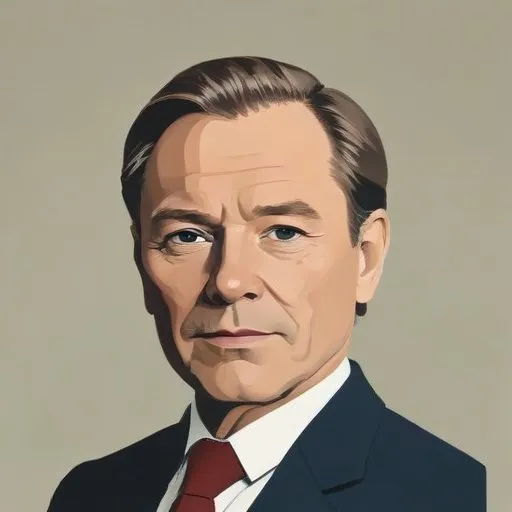
A Norwegian literary figure who wrote novels, plays, and essays, and was a prominent critic, known for his witty and incisive reviews. His work often explored themes of identity, morality, and social class.
Johan Borgen, a renowned Norwegian writer, journalist, and critic, is best known for his novel Lillelord, which earned him the Norwegian Critics Prize for Literature in 1955. His satirical and ironic writings not only captivated the hearts of Norwegians but also garnered him a Nobel Prize in Literature nomination in 1966.
Born on April 28, 1902, in Kristiania (now Oslo), Norway, Borgen was the youngest of four sons in a successful attorney's family. He attended private schools, including Frenene Platous Forskole and Frogner Skole, before graduating artium in 1920.
Borgen's writing career began in 1923 as a part-time journalist at Dagbladet, where he penned a column under the pseudonym "Mumle Gsegg." His witty and satirical articles quickly gained popularity, solidifying his position as a respected writer and critic. During the 1930s, he also translated books from various languages, showcasing his linguistic prowess.
Throughout the Occupation of Norway by Nazi Germany, Borgen continued to write against the regime, using his writing as a form of resistance. His courage and defiance led to his arrest and imprisonment in Grini concentration camp. After escaping, he continued to write against the occupation, eventually fleeing to Sweden.
Post-war, Borgen edited the literary magazine Vinduet from 1954 to 1959 and worked as a stage instructor, directing over forty performances. His semiautobiographical novel Lillelord, published in 1955, remains his most celebrated work.
Borgen's literary prowess earned him several accolades, including the Norwegian Critics Prize for Literature in 1955 for Lillelord. He was also nominated for the Nobel Prize in Literature in 1966.
Johan Borgen's contributions to Norwegian literature are undeniable. His courageous writings during the Nazi occupation and his subsequent literary achievements have cemented his position as a national icon. His works continue to inspire generations of writers, critics, and readers alike, ensuring his legacy as a champion of free speech and creative expression.
Born in 1828
A pioneer of realism in theater, known for plays that probed the human condition, challenging social norms and morals through complex characters and situations.
Born in 1859
A Norwegian literary giant, celebrated for his pioneering works that explored the human condition, nature, and the search for meaning. His writing style, a blend of realism and lyricism, influenced generations of writers.
Born in 1882
A Danish-Norwegian writer who penned epic historical novels, including the Kristin Lavransdatter trilogy, which explores themes of love, faith, and identity in medieval Norway. Her works are celebrated for their rich detail and strong female characters.
Born in 1897
A renowned Norwegian literary figure, celebrated for his poignant and evocative writings that explore the human condition, often delving into themes of love, nature, and the complexities of rural life.
Born in 1876
A pioneering Norwegian novelist and educator, known for his epic family sagas that explored the human condition, social change, and the struggle for identity. His works are considered a cornerstone of modern Norwegian literature.
