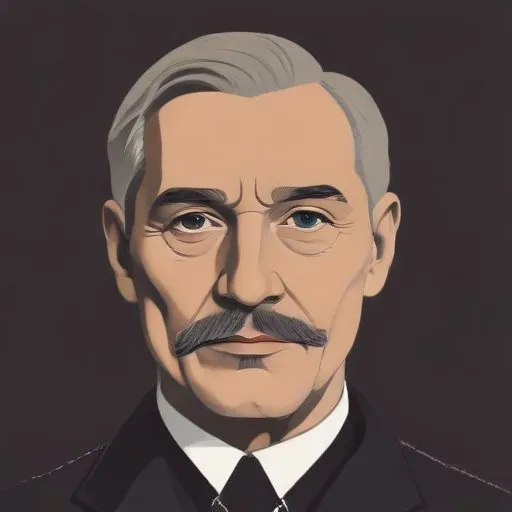
Johan Herman Wessel: The Satirical Genius of 18th Century Denmark-Norway
A Master of Parody and Wit
Johan Herman Wessel, a prominent figure in 18th century Danish-Norwegian literature, is renowned for his ingenious use of parody and satirical wit in his poetry, plays, and epigrams. Through his works, Wessel poked fun at the societal ills of his time, earning him a reputation as a sharp-tongued critic and a brilliant wordsmith.
Early Life and Education
Born on October 6, 1742, in Vestby, Akershus, Norway, Wessel was the son of Jonas Wessel, a parish priest, and Helene Maria Schumacher. He was the eldest of thirteen children, including notable siblings
Caspar Wessel, a mathematician, and Ole Christopher Wessel, a jurist. Wessel's family was steeped in intellectual pursuits, and his early life was marked by a love for learning.
Wessel attended Oslo Cathedral School in 1757 and later enrolled at the University of Copenhagen in 1761, where he studied foreign languages. This educational foundation laid the groundwork for his future success as a writer, tutor, and translator.
Literary Career and Style
Wessel's writing style was characterized by its elaborate, digressive, and witty tone, which he used to craft humorous and satirical verse tales. These tales often critiqued the foolishness and injustices of his time, showcasing his mastery of the epigram, a genre in which he excelled. His short, witty, and impudent commemorative poems demonstrated his ability to craft precise and self-ironic verse.
Wessel's works were heavily influenced by his involvement with The Norwegian Society (Norske Selskab), a group of Norwegian literary figures gathered in Copenhagen, dedicated to cultivating their national identity through classical meters.
Personal Life and Struggles
In 1780, Wessel married Anna Catharia Bukier, and the couple had one son, Jonas Wessel, born in 1781. However, their marriage was marred by Wessel's struggles with alcoholism, depression, and financial instability. His bohemian lifestyle and dependence on casual work took a toll on his health and relationships.
Legacy and Impact
Despite his personal struggles, Wessel's literary legacy endured long after his untimely death on December 29, 1785, at the age of 43. He was buried in the cemetery of Trinitatis Church in Copenhagen. Wessel's works continue to be celebrated for their wit, elegance, and biting satire, leaving an indelible mark on Danish-Norwegian literature.
Today, Wessel is remembered as a pioneer of satirical writing, whose clever use of language and clever critique of societal norms continue to inspire writers and thinkers alike.
Quote
"Satire is the easiest form of writing, for it consists merely in saying what the fools think, and the fools will always applaud."
— Johan Herman Wessel
FAQ
What is the significance of Johan Herman Wessels poetry?
Johan Herman Wessels poetry is significant for its unique blend of Norwegian and Danish influences, showcasing his contribution to the development of Norwegian literature. His works are also notable for their emotional depth and exploration of themes such as love, nature, and mortality.
How did Johan Herman Wessel influence Norwegian literature?
Johan Herman Wessels poetry and plays had a profound impact on Norwegian literature, paving the way for future generations of writers. He is credited with helping to establish Norwegian as a literary language and inspiring a national literary movement.
What was Johan Herman Wessels most famous work?
Johan Herman Wessels most famous work is the poem Kieregaard, which is considered a masterpiece of Norwegian literature. The poems themes of love, nature, and mortality are deeply resonant and have made it a beloved classic.
Was Johan Herman Wessel a influential playwright?
Yes, Johan Herman Wessel was a respected playwright in his time, known for his witty comedies and satirical works. His plays often explored themes of love, morality, and social commentary, showcasing his versatility as a writer.
What is Johan Herman Wessels legacy in Denmark and Norway?
Johan Herman Wessel is revered as a cultural icon in both Denmark and Norway, celebrated for his contributions to literature and the arts. His legacy continues to inspire writers, poets, and artists to this day.