


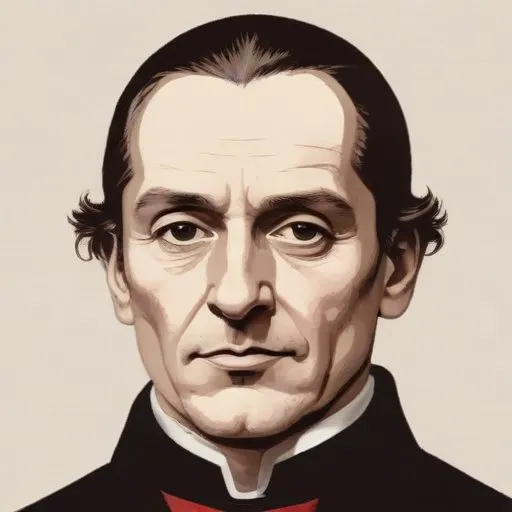
A Swiss artist and writer who created landscapes, portraits, and historical scenes, and was also a prolific writer on art and literature.
Johann Heinrich Meyer, affectionately known as Goethemeyer, was a Swiss painter, engraver, and art critic who left an indelible mark on the art world of his time. He is best known for his association with the renowned German writer Johann Wolfgang von Goethe, with whom he shared a deep bond and collaborated on various artistic projects.
Born on March 16, 1760, in Stäfa, near Lake Zurich, Switzerland, Meyer was introduced to the world of art at a tender age of 16. His father, Johann Baptist Meyer, a merchant from Zurich, recognized his son's talent and encouraged him to hone his skills. Two years later, Meyer's life took a significant turn when he met Johann Caspar Füssli, a painter who introduced him to the works of Johann Joachim Winckelmann, a German archaeologist and art critic. Winckelmann's History of the Art of Antiquity had a profound impact on Meyer's approach to art, shaping his attitudes and aesthetic sensibilities.
In 1784, Meyer traveled to Rome, where he became part of the German colony of artists. It was during this period that he met Goethe, who was impressed by Meyer's vast knowledge of art. Two years later, Meyer moved to Naples, where he worked as a drawing teacher and continued to develop his artistic skills.
Meyer's association with Goethe was a defining aspect of his life and career. In 1788, the two artists traveled to Switzerland together, where Goethe gathered material for his play William Tell, which he would later pass on to Friedrich Schiller. Their close bond and mutual respect for each other's artistic talents led to a lifelong friendship. Meyer even lived with Goethe in Weimar from 1790 until 1802, during which time they collaborated on various artistic projects, including the publication of the art journal Propyläen in 1798.
In 1795, Meyer became a professor at the Weimar Princely Free Drawing School, where he taught art history and theory. He also managed the paintings and decorations at Schloss Weimar, following a major reconstruction overseen by Goethe. Meyer's expertise in art history led to his contributions to the Allgemeine Literatur-Zeitung, a German literary magazine, where he wrote articles on art history under the pseudonym W.K.F.
In 1803, Meyer married Amalie von Koppenfels, the youngest daughter of a government councilor at the Grand Ducal Court in Jena. Although they had no children, Meyer's marriage was a happy one, and he continued to pursue his artistic passions until his death on October 11, 1832.
Today, Meyer's legacy is remembered through his contributions to the world of art, his association with Goethe, and his role in shaping the cultural landscape of Weimar during the late 18th and early 19th centuries. As an artist, critic, and educator, Meyer left behind a rich cultural heritage that continues to inspire artists and art lovers alike.
Born in 1749
A German literary giant who penned iconic works like "Faust" and "The Sorrows of Young Werther", shaping the Romantic movement and influencing countless writers.
Born in 1759
A renowned poet and playwright who crafted influential works that explored the human condition, morality, and the struggle for freedom, leaving a lasting impact on German literature.
Born in 1762
A German philosopher and academic who developed the concept of German idealism, emphasizing the role of the individual and the nation in shaping reality. He's known for his influence on German philosophy and the development of existentialism.
Born in 1724
Developed influential philosophical frameworks, such as the Critique of Pure Reason, that shaped modern Western thought on ethics, morality, and human understanding.
53 Years Old
A Jamaican artist who blends dancehall, reggae, and pop to create infectious hits, known for his energetic stage presence and chart-topping singles like "Gimme the Light" and "Baby Boy".
Born in 1776
A German Romantic-era mastermind who crafted dark, fantastical tales and composed mesmerizing music, leaving an indelible mark on literature and classical music.
Born in 1777
A German Romantic-era writer, known for his thought-provoking and psychologically complex stories that explore the human condition, often with a touch of irony and tragedy.
Born in 1773
A German Romantic poet, author, and critic who wrote influential works of fantasy and horror, shaping the genre and inspiring later writers like Edgar Allan Poe.
