


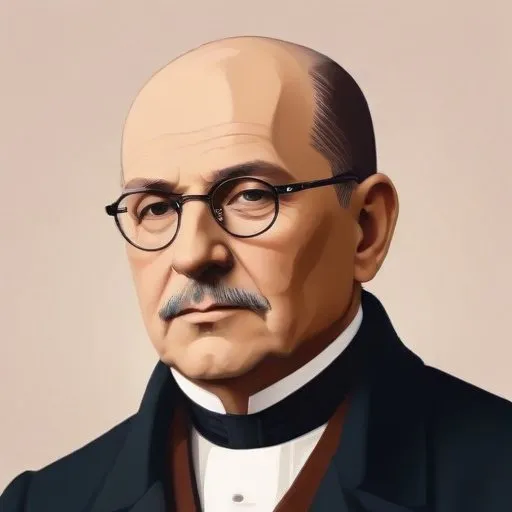
First Minister President of Prussia, playing a crucial role in the country's early governance and reforms. He laid the groundwork for Prussia's future growth and development.
Johann Kasimir Kolbe von Wartenberg was the first ever Minister-President of the Kingdom of Prussia, effectively making him the Prime Minister of the realm. He was the head of the Cabinet of Three Counts, a powerful position that allowed him to shape the course of Prussian history.
Born on February 6, 1643, in Wetterau, von Wartenberg began his career in the service of Mary of Orange, sister-in-law of the Great Elector and wife of Pfalzgraf Ludwig Heinrich von Simmern. After her death, he transferred to the service of Frederick III of Brandenburg, where he quickly rose through the ranks.
His rapid ascent was marked by a series of prominent appointments, including Oberstallmeister and Geheimer Rat in 1691, Schlosshauptmann of Berlin in 1694, and Hauptmann der Dompropstei Havelberg in 1696. His most significant appointment came in 1697, when he became Minister and Finance Minister, effectively making him the most powerful man in Prussia.
Von Wartenberg's rise to power was marked by his cunning and ruthless elimination of his competitors. He masterfully manipulated the system, using targeted intrigue to eliminate Hans Albrecht von Barfus and Paul von Fuchs, and filling important court posts with his loyal henchmen.
At the coronation of Frederick I in Königsberg in 1701, von Wartenberg was the one who placed the purple cloak on the new king. In the same year, he became Prime Minister, solidifying his position as the most powerful man in Prussia.
Von Wartenberg's influence extended far beyond his official titles. He held a plethora of offices simultaneously, including Marshal of the Kingdom of Prussia, Protector of the Royal Academy, Chancellor of the Order of the Black Eagle, Oberstallmeister, Oberaufseher of the Royal Castles, and Oberhauptmann of all the Schatullenämter. This concentration of power allowed him to fill the court with systematic corruption and enrich himself shamelessly.
His wife, Catharina Rickert, played a significant role in his rise to power. A woman of middle-class origin, she was the daughter of a tax collector for the Brandenburg court and brought a level of sophistication and strategic thinking to von Wartenberg's operations.
Von Wartenberg's legacy is complex and multifaceted. While he was instrumental in shaping the course of Prussian history, his methods were often ruthless and corrupt. Nevertheless, his impact on the kingdom cannot be overstated, and his name remains synonymous with power and influence in Prussia.
Born in 1815
Unified Germany's founder, a master strategist who forged a nation through diplomacy and war, leaving a lasting legacy in European politics.
Born in 1847
A German field marshal and politician who served as the 2nd President of Germany during the Weimar Republic, playing a crucial role in the rise of the Nazi Party. He's infamous for appointing Adolf Hitler as Chancellor of Germany in 1933.
Born in 1889
The dictator of Nazi Germany, responsible for the genocide of six million Jews and millions of other people during World War II, and infamous for his extreme nationalist and anti-Semitic ideology.
Born in 1897
A mastermind of Nazi propaganda, he crafted a persuasive narrative that fueled the Third Reich's rise to power, leaving a lasting impact on the world.
Born in 1893
A high-ranking Nazi official, he was a decorated World War I fighter pilot and later became a prominent politician, serving as Minister President of Prussia. He's infamous for his role in the Nazi regime and war crimes trials.
Born in 1894
A high-ranking Nazi official who flew to Scotland on a solo mission to negotiate peace with the UK, but was instead arrested and imprisoned.
