


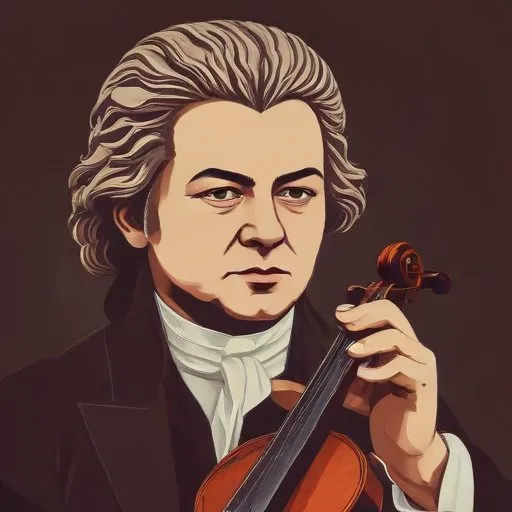
A German Baroque composer and violinist, known for his orchestral suites and sacred music, contributing to the development of the concerto grosso form.
Johann Ludwig Bach is renowned for his extensive contributions to the world of classical music, particularly in the realm of sacred cantatas. As a German composer and violinist, he left an indelible mark on the music scene of the early 18th century, with his works often overshadowed by those of his more famous cousin, Johann Sebastian Bach.
Born on February 4, 1677, in Thal, Ruhla, near Eisenach, Johann Ludwig Bach began his musical journey at a tender age. At 22, he relocated to Meiningen, where he would eventually assume the roles of cantor and Kapellmeister. It was during this period that he composed a plethora of music, frequently overseeing performances at Meiningen and neighboring courts.
Johann Ludwig Bach's oeuvre consists of an impressive array of cantatas, masses, and other sacred works. His compositions often featured intricate harmonies and complex instrumentation, showcasing his mastery of the Baroque style. One of his most notable works is the cantata Denn du wirst meine Seele nicht in der Hölle lassen, BWV 15, which was initially attributed to his cousin, Johann Sebastian Bach.
Johann Ludwig Bach's compositions did not go unnoticed by his contemporaries. His cousin, Johann Sebastian Bach, made copies of several of his cantatas and even performed them at Leipzig. This acknowledgement from one of the most revered composers of the time is a testament to Johann Ludwig's skill and artistry.
Little is known about Johann Ludwig Bach's personal life, but it is recorded that he passed away on May 1, 1731, in Meiningen. Despite his significant contributions to the world of music, Johann Ludwig Bach's legacy was largely overshadowed by that of his more famous cousin. Nevertheless, his works continue to be a valuable part of classical music's rich heritage.
In recent years, efforts have been made to revive interest in Johann Ludwig Bach's compositions, with the creation of the JohannLudwigBachVerzeichnis catalogue, which catalogues his 39 known compositions. This renewed attention has helped to solidify his position as a prominent figure in the world of Baroque music.
Born in 1685
A master of Baroque music, he composed over 1,000 works, including orchestral suites, cantatas, and passions, that still inspire and influence musicians today. His innovative use of counterpoint and harmony raised the bar for classical music.
Born in 1685
A renowned Baroque composer and organist, famous for creating majestic orchestral suites, operas, and oratorios, including the iconic "Messiah" masterpiece.
Born in 1678
A virtuosic violinist and prolific composer, he crafted over 400 concertos, including "The Four Seasons," which remains a beloved and iconic masterpiece of classical music.
Born in 1659
A renowned Baroque composer, known for his iconic opera "Dido and Aeneas" and contributions to English classical music.
Born in 1714
A renowned 18th-century musician, he was a prolific composer and virtuosic performer, known for his expressive and innovative keyboard music that bridged the Baroque and Classical styles. His compositions, particularly for harpsichord and piano, showcased his mastery of counterpoint and harmony.
Born in 1710
Eldest son of J.S. Bach, a Baroque composer who blended his father's style with emerging Classical elements, creating innovative and expressive works. He was a renowned organist and harpsichordist.
Born in 1735
A renowned Baroque composer and viol player, known for his innovative and expressive works that blended German and Italian styles. He was a prominent figure in London's musical scene during the 18th century.
