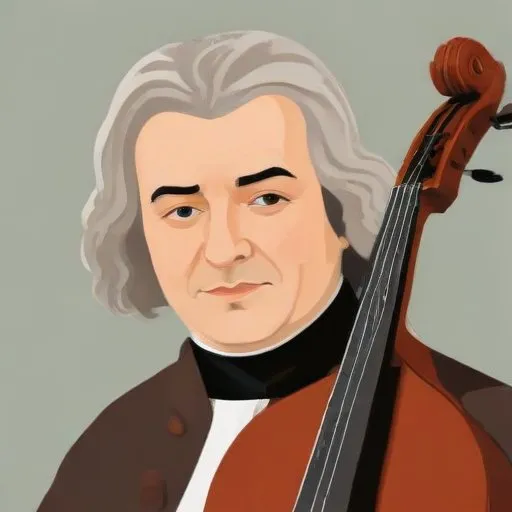
Johann Christian Bach: The Original Maverick of Classical Music
The Prolific Composer Who Defied Convention
Johann Christian Bach, the youngest son of the legendary
Johann Sebastian Bach, was a Classical-era composer who refused to be bound by tradition. With his innovative compositions and trailblazing spirit, he earned the reputation as the "English Bach," leaving an indelible mark on the world of classical music.
Early Life and Musical Training
Born on September 5, 1735, in Leipzig, Germany, Johann Christian Bach received his early musical training from his father, Johann Sebastian Bach. Following his father's death, he moved to Berlin to study with his half-brother,
Carl Philipp Emanuel Bach, who was 21 years his senior. In 1754, he ventured to Italy, where he studied with the renowned Padre Martini in Bologna.
A Convergence of Faith and Music
During his time in Italy, Bach converted from Lutheranism to Catholicism, allegedly for political reasons. This spiritual shift heavily influenced his compositional style, as he devoted most of his time to creating church music. His sacred works, including a Requiem Mass and Te Deum, showcased his mastery of the genre.
London and the Kings Theatre
In 1762, Bach traveled to London, where he premiered three operas at the Kings Theatre, solidifying his reputation as a master composer. His opera,
Orione, which debuted on February 19, 1763, was a resounding success. The castrato Giusto Fernando Tenducci, a close friend, created the title role in his opera
Adriano in Siria at the Kings Theatre, further cementing Bach's status as a visionary composer.
The Development of the Sinfonia Concertante
Bach's most significant contribution to classical music was the development of the sinfonia concertante form. This innovative style, which combined solo instruments with a larger orchestra, revolutionized the genre and paved the way for future generations of composers.
Influence on Modern Society
Johann Christian Bach's influence extended far beyond his own lifetime. He inspired some of the most prominent composers of the Classical period, including Haydn and Mozart. His compositional styles, which blended elegance with innovation, continue to shape the classical music landscape to this day.
Personal Milestones and Key Life Events
- 1735: Born in Leipzig, Germany
- 1754: Moved to Italy to study with Padre Martini in Bologna
- 1760: Appointed as an organist at Milan Cathedral
- 1762: Premiered three operas at the Kings Theatre in London
- 1763: Premiered Orione at the Kings Theatre
- 1764/1765: Premiered Adriano in Siria at the Kings Theatre
- 1782: Passed away on January 1st
Legacy and Historical Context
Johann Christian Bach's legacy is that of a true original, a composer who dared to challenge convention and push the boundaries of classical music. His innovative spirit and compositional mastery have made him one of the most influential figures of the Classical period. As we continue to celebrate his music, we are reminded of the power of artistic rebellion and the enduring impact of a true visionary.
FAQ
What type of music did Johann Christian Bach compose?
Johann Christian Bach was a prominent composer of the Baroque period, and his music spanned a range of genres, including orchestral suites, concertos, and vocal music.
What was Bachs role in the development of classical music?
Bach played a significant role in the development of classical music, as his compositions bridged the gap between the Baroque and Classical periods.
How did Bachs music influence later composers?
Bachs music had a profound influence on later composers, including Wolfgang Amadeus Mozart and Ludwig van Beethoven.
What instruments did Bach play?
Bach was a skilled viol player and composer, and often performed on the viol in addition to composing music for the instrument.
What is Bachs most famous composition?
Bachs most famous composition is the Orchestral Suite in D major, a work that showcases his mastery of the orchestral suite genre.