


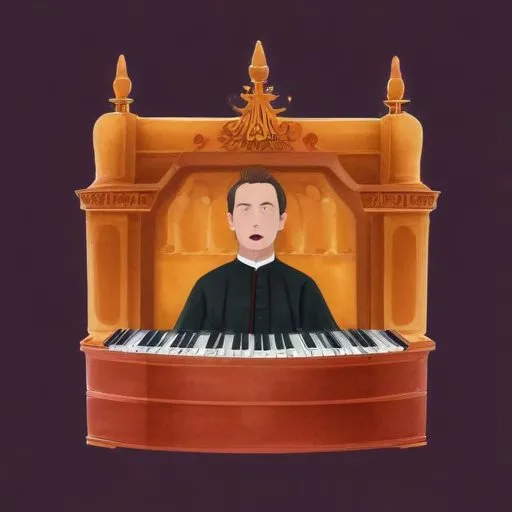
A Baroque-era musician who composed and performed sacred music, particularly cantatas and chorales, leaving a lasting impact on the development of Lutheran church music.
Johann Nicolaus Mempel, a German musician, is renowned for his significant contribution to the preservation of Johann Sebastian Bach's organ and keyboard music. Along with Johann Gottlieb Preller, Mempel created one of the most important manuscript collections of Bach's works, known as the Mempell-Preller Handschrift.
Born on December 10, 1713, in Heyda, Thuringia, Mempel was destined to make a mark in the world of music. He spent his early years studying music, and it is believed that he may have come into contact with Bach's music during his student days under Johann Peter Kellner or Johann Gottfried Walther.
In 1740, Mempel became the cantor in Apolda, a position he held until his untimely death on February 26, 1747. During his tenure, he continued to nurture his passion for music, collecting and copying the works of Bach and other prominent composers of the time.
The Mempell-Preller Handschrift is an extensive collection of manuscripts containing Bach's organ and keyboard music. This treasure trove of music is a testament to Mempel's dedication and perseverance in preserving the works of the Baroque master.
The manuscript collection consists of over 100 pieces, including fugues, toccatas, and suites. It is a remarkable representation of Bach's oeuvre, showcasing his mastery of counterpoint, harmony, and melody.
Mempel's contribution to the world of music extends beyond his own compositions. His meticulous copying and collecting of Bach's works have ensured the survival of these masterpieces for generations to come.
Today, the Mempell-Preller Handschrift is recognized as a vital source of Bach's music, providing valuable insights into the composer's creative process and artistic vision.
In conclusion, Johann Nicolaus Mempel's dedication to preserving Bach's music has left an indelible mark on the world of classical music. His tireless efforts have ensured that the works of the Baroque master continue to inspire and delight audiences to this day.
Born in 1685
A master of Baroque music, he composed over 1,000 works, including orchestral suites, cantatas, and passions, that still inspire and influence musicians today. His innovative use of counterpoint and harmony raised the bar for classical music.
Born in 1685
A renowned Baroque composer and organist, famous for creating majestic orchestral suites, operas, and oratorios, including the iconic "Messiah" masterpiece.
Born in 1585
A renowned Baroque composer and organist, known for his contributions to the development of the oratorio and passion genres, creating over 500 works that showcased his mastery of choral music.
Born in 1587
A renowned Baroque-era musician and teacher, known for his influential compositions and contributions to the development of the organ concerto.
Born in 1660
A renowned Baroque-era organist and composer, known for his innovative and expressive works that bridged the gap between the Renaissance and Baroque styles. His compositions showcased exceptional mastery of counterpoint and harmony.
Born in 1809
A renowned 19th-century musician who masterfully blended classical and romantic styles, creating iconic works like the "Wedding March" and "Elijah" oratorio. His compositions continue to inspire and influence generations of artists.
Born in 1714
A renowned 18th-century musician, he was a prolific composer and virtuosic performer, known for his expressive and innovative keyboard music that bridged the Baroque and Classical styles. His compositions, particularly for harpsichord and piano, showcased his mastery of counterpoint and harmony.
