


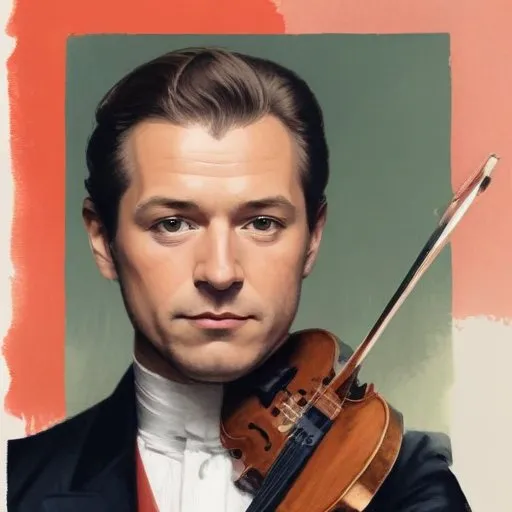
A Dutch virtuoso violinist, composer, and conductor, renowned for his Romantic-era symphonies and chamber music, leaving an indelible mark on the Netherlands' classical music scene.
Johannes Bernardus van Bree was a Dutch composer, violinist, and conductor who left an indelible mark on the music world. He is best known for directing the Felix Meritis Society and introducing Dutch audiences to the works of renowned composers such as Berlioz and Wagner.
Van Bree was born on January 29, 1801, in Amsterdam, Netherlands. He began his musical training under the tutelage of Jan George Bertelman, a respected music educator in Amsterdam. This early guidance laid the foundation for van Bree's future success as a composer and conductor.
From 1829 until his death in 1857, van Bree directed the Felix Meritis Society, a prestigious music organization in Amsterdam. During his tenure, he introduced Dutch audiences to groundbreaking works, including the Dutch premieres of Hector Berlioz's Symphonie Fantastique in 1855 and Richard Wagner's Faust Overture in 1856. These performances not only showcased van Bree's exceptional conducting skills but also demonstrated his commitment to promoting innovative and avant-garde music.
Van Bree was a prolific composer, producing a diverse range of works including operas, choral pieces, orchestral compositions, and chamber music. Some of his notable works include:
Johannes Bernardus van Bree's contributions to Dutch music are immeasurable. Through his conducting and compositions, he introduced new styles and techniques, expanding the musical landscape of the Netherlands. His commitment to promoting innovative music helped pave the way for future generations of composers and conductors.
Van Bree's achievements were recognized during his lifetime, and he received numerous accolades for his contributions to music. Although specific awards and honors are not well-documented, his reputation as a respected composer and conductor has endured long after his passing.
Van Bree's personal life was marked by significant milestones, including his directorship of the Music School of the Society of the Promotion of Music in Amsterdam. This position allowed him to nurture young talent and shape the musical landscape of the Netherlands.
Johannes Bernardus van Bree's impact on modern society is felt through the continued performance and appreciation of his compositions. His commitment to promoting innovation and creativity in music has inspired generations of musicians and composers, ensuring his legacy endures.
Johannes Bernardus van Bree was a trailblazing composer, conductor, and violinist who left an indelible mark on the music world. Through his tireless efforts, he introduced new styles, promoted innovative composers, and inspired future generations of musicians. His legacy continues to inspire and delight audiences today.
Born in 1833
A renowned pianist and composer, he crafted complex, expressive works that blended traditional and innovative techniques, leaving an indelible mark on classical music.
Born in 1840
A renowned Russian composer and educator, he is best known for his iconic and beloved ballets, such as Swan Lake and The Nutcracker, which continue to enchant audiences worldwide.
Born in 1841
A Czech composer and academic who blended folk influences with classical music, creating iconic works like the "New World Symphony".
Born in 1860
A visionary composer and conductor who expanded symphonic music's emotional depth and complexity, creating works of profound beauty and intensity.
Born in 1864
A renowned composer and conductor of the late Romantic era, known for his tone poems and operas that showcased his mastery of orchestration and expressive storytelling.
Born in 1809
A renowned 19th-century musician who masterfully blended classical and romantic styles, creating iconic works like the "Wedding March" and "Elijah" oratorio. His compositions continue to inspire and influence generations of artists.
Born in 1810
A renowned Romantic-era composer and influential music critic, known for his expressive and emotionally charged works, including symphonies, piano music, and art songs.
Born in 1811
A virtuosic pianist and composer who revolutionized classical music with his technically demanding and emotionally expressive works, blending Hungarian folk influences with Romantic-era drama.
