


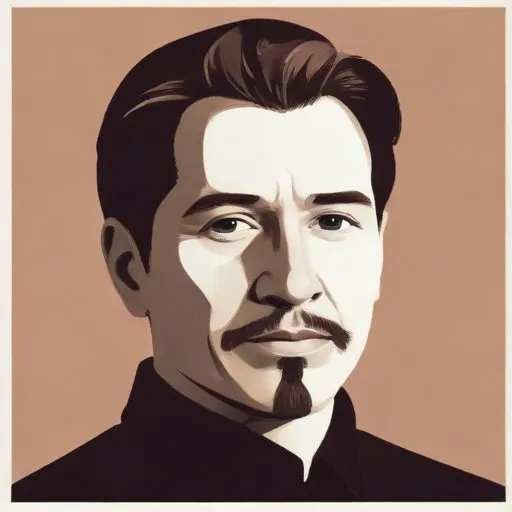
Finnish novelist and playwright who wrote romantic and symbolic works, often exploring themes of love, nature, and the human condition.
Johannes Linnankoski, born Vihtori Johan Peltonen, is best known for his remarkable contributions to Finnish literature, particularly in the Golden Age of Finnish Art. His most iconic work, the romance novel "The Song of the Blood-Red Flower" (1905), has become a cultural phenomenon, exploring themes of guilt, punishment, and redemption as moral questions.
Linnankoski was born on October 18, 1869, in Vakkola, Askola, Finland. He was an active participant in the cultural life of Eastern Uusimaa, and one of the founders of the bank in Porvoo. Additionally, he founded Finnish-language schools and daily newspapers, including Uusimaa, the first Finnish-language newspaper situated outside of the major towns of Uusimaa.
In 1899, Linnankoski married Ester Drugg, and they had four children: Marjatta, Salama, Touko, and Urmas. All his children were born under the surname Peltonen. In his later years, Linnankoski moved to the Helsinki Deaconess Institute, in Helsinki, for treatment of his poor health, and unfortunately passed away at the age of 43 in 1913 due to anemia.
Linnankoski's literary portfolio includes:
His books have been adapted into numerous feature films, with the most notable being "The Milkmaid" directed by T. J. Srkk and "Laulu tulipunaisesta kukasta" directed by Mikko Niskanen. "The Song of the Blood-Red Flower" has also been filmed in Sweden, in three different versions by directors Mauritz Stiller, Per-Axel Branner, and Gustaf Molander.
In 1938, a Linnankoski Museum was opened near the sauna building where Linnankoski was supposedly born, commemorating his life and works. His contributions to Finnish literature have had a lasting impact on the country's cultural heritage, making him a celebrated figure in Finnish literary history.
Johannes Linnankoski's remarkable life and works have left an indelible mark on Finnish literature and culture. Through his exploration of guilt, punishment, and redemption, he has provided a window into the human experience, making his legacy a testament to the power of literature to transform and inspire.
Born in 1878
A renowned Finnish poet and journalist, celebrated for his lyrical and expressive works that explored themes of love, nature, and Finnish identity. His poetry is still widely read and studied in Finland today.
Born in 1861
Finnish literary pioneer and social commentator, known for his influential novels and essays that explored the country's cultural identity and social issues.
Born in 1844
A pioneering Finnish journalist, playwright, and activist who championed women's rights, social justice, and education, leaving a lasting impact on Finnish literature and society.
Born in 1920
Finnish novelist celebrated for his vivid depictions of war and its human toll, particularly in his masterpiece "Under the North Star" trilogy. His works are considered a cultural touchstone in Finland, offering a poignant exploration of the country's history and identity.
Born in 1865
First President of Finland, instrumental in establishing the country's independence and democracy. Known for his role in shaping Finland's modern government and institutions.
