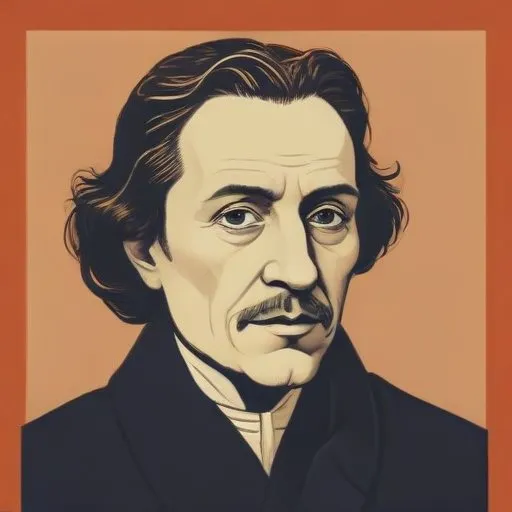
Johannes Secundus: The Neo-Latin Poet of Kissing Fervor
The Liberator of Romantic Expressions
Johannes Secundus, also known as Janus Secundus, is renowned for his provocative and sensual poetry that celebrates the art of kissing. Born on November 15, 1511, in The Hague, Secundus's works are revered for their evocative and romantic expressions, which have captivated readers for centuries.
Early Life and Education
Secundus's father, Nicolaes Everaerts, was a prominent jurist and a close friend of the celebrated humanist Erasmus. This early exposure to intellectual circles had a profound impact on Secundus's development as a writer. In 1528, his family relocated to Mechlin, where he penned his first book of elegies. Secundus's educational pursuits led him to Bourges, where he studied law under the esteemed Alciati and obtained his licentia.
Career and Travels
In 1533, Secundus joined his brother Grudius at the Spanish court of Charles V, where he served as secretary to the Archbishop of Toledo. This period marked a significant chapter in his life, as he immersed himself in the cultural and literary traditions of Spain. However, his tenure was cut short due to illness, and he returned to Mechlin. Despite his untimely demise at the age of twenty-four, Secundus left an indelible mark on the literary world.
The Poetic Genius
Secundus's poetry is characterized by its lyricism, sensuality, and depth. His works include elegies, epigrams, odes, verse epistles, epithalamia, and prose writings. However, it is his iconic "Liber Basiorum" (Book of Kisses) that has garnered the most attention. This collection of nineteen poems explores the theme of kissing in relation to his Spanish lover, Neaera.
The "Basia" poems are a masterclass in eroticism, subtly weaving elements of Neo-Platonism and Petrarchism into the fabric of his verse. Secundus's exploration of the kiss is multifaceted, encompassing imagery of natural fertility, the arithmetic of kissing, and the exchange of souls through this intimate act.
Musical Legacy
Secundus's poetry has inspired numerous musical adaptations, including Cornelis Tijmensz Padbru's 1631 madrigal settings in Dutch translation. This fusion of poetry and music has ensured that Secundus's works continue to enchant audiences across the centuries.
Influence and Legacy
The French philosopher
Michel de Montaigne revered Secundus's "Kisses" as equivalent to Rabelais or The Decameron in terms of literary merit. This endorsement speaks to the enduring impact of Secundus's poetry, which has captivated readers and inspired writers across the ages.
Johannes Secundus's legacy extends beyond the realm of poetry, as his works have contributed to a deeper understanding of human emotions and the complexities of romantic love. His poetry continues to be a testament to the power of art to capture the human experience.
FAQ
Who was Johannes Secundus?
Johannes Secundus was a Dutch poet and author, best known for his Latin poetry and his works on mythology and history.
What were Johannes Secundus literary contributions?
Johannes Secundus made significant literary contributions, including the publication of several volumes of poetry and prose, and the translation of classical works into Latin.
What was Johannes Secundus education like?
Johannes Secundus received a classical education, studying at the University of Louvain and later at the University of Paris.
What was Johannes Secundus career like?
Johannes Secundus held various positions, including that of court poet to the Duke of Alba, and later served as a secretary to the Bishop of Tournai.
What is Johannes Secundus legacy?
Johannes Secundus legacy is marked by his literary contributions, his mastery of Latin, and his role in promoting classical learning during the Renaissance.