


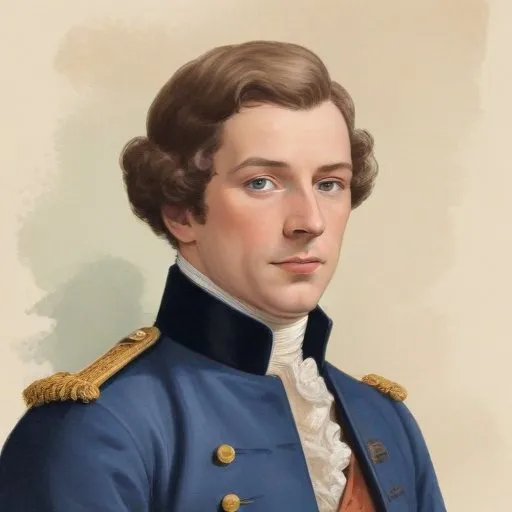
An English nobleman who held significant power and influence during the 14th century, particularly in Kent and surrounding areas. He played a key role in regional politics and governance.
John, 3rd Earl of Kent, is renowned for his brief yet remarkable life as an English nobleman, holding the title of Earl of Kent from 1331 to 1352 and 4th Baron Wake of Liddell from 1349 to 1352. Despite his untimely death at the tender age of 22, John's short-lived career left an indelible mark on medieval English history.
John was born on April 7, 1330, at Arundel Castle in Sussex, as the youngest son and posthumous child of Edmund of Woodstock, Earl of Kent, and Margaret Wake. His birth was preceded by his father's execution for treason, orchestrated by Roger Mortimer, 1st Earl of March, just three weeks prior. However, upon Edward III's assumption of power, the attainder against his father was reversed, and his elder brother Edmund inherited the earldom. Following Edmund's death in October 1331, John succeeded to the title as an infant, with his elder sister Joan serving as his heir throughout his life.
In 1346, John participated in the campaign that culminated in the Battle of Crécy. Although it is uncertain whether he was present at the battle itself, contemporary witnesses fail to record any notable military exploits. In 1347, King Edward III granted John his entire inheritance, rendering him independent of his mother at the age of 17. This bequest encompassed an impressive array of estates, including 43 manors and 30 advowsons, spread across 17 counties, along with various rents and knights' fees in an additional six counties. His annual income exceeded 6,000, a staggering sum in an era where 1,000 was deemed sufficient to maintain the lifestyle of an earl.
On April 3, 1348, John married Isabella, also known as Elizabeth, daughter of William V, Duke of Jülich, and Joanna, by Papal dispensation. Following his uncle Thomas Wake's death in 1349, John inherited his estates, which included his mother's dower lands and Thomas's estate. He took possession of these lands in February 1350, solidifying his position as a prominent landowner.
John's life, though cut short, left an enduring legacy in medieval English history. As a member of the royal family, his life and experiences offer a unique glimpse into the intricacies of medieval nobility. Despite his untimely demise, John's brief yet eventful life serves as a testament to the complexities and challenges faced by the aristocracy during this tumultuous period.
Born in 1449
Younger brother of King Edward IV and King Richard III, known for his brief rebellion against Edward IV and his eventual murder in the Tower of London.
Born in 1133
King of England from 1154 to 1189, known for establishing a strong centralized government, reforming the English church, and his tumultuous relationships with Thomas Becket and his sons.
Born in 1386
Led a victorious English army in the Battle of Agincourt, a major English victory in the Hundred Years' War, and was a popular king who strengthened the English monarchy.
Born in 1133
King of England from 1154 to 1189, known for establishing a strong centralized government, reforming the English church, and his tumultuous relationships with Thomas Becket and his sons.
Born in 1284
The king whose disastrous reign led to his eventual deposition and mysterious death, remembered for his alleged homosexual relationships and power struggles with nobles.
Born in 1367
The last king of the House of Plantagenet, deposed in a coup, known for his extravagance and tyranny, leading to his downfall and the rise of the Lancastrian dynasty.
Born in 1340
A powerful and wealthy medieval English nobleman, known for his immense influence on English politics and his role in the Hundred Years' War. He was also a patron of the arts and a founder of Trinity College, Cambridge.
