


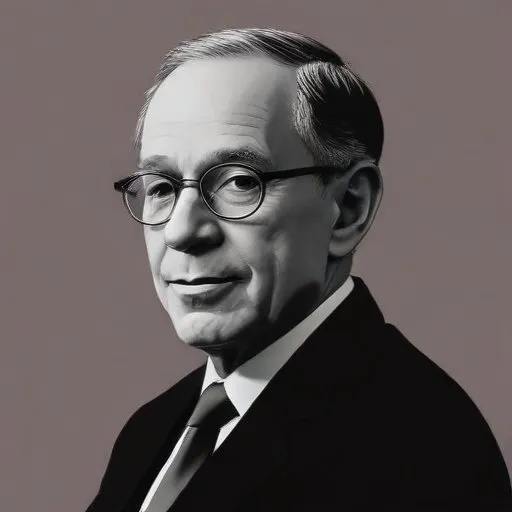
An expert in experimental economics, known for pioneering the use of field experiments to test economic theories, and uncovering insights on human behavior and decision-making.
John A. List, a renowned American economist, has made a significant impact in the field of empirical economic analysis through his innovative work in establishing field experiments as a tool. Known for his groundbreaking contributions to the field, List has been instrumental in revolutionizing the way economists approach economic research.
John August List was born on September 25, 1968. He earned his Bachelor's degree in Economics from the University of Wisconsin-Stevens Point in 1992 and went on to receive his Ph.D. in Economics from the University of Wyoming in 1996.
List's illustrious career has seen him hold various prestigious positions, including the Kenneth C. Griffin Distinguished Service Professor of Economics at the University of Chicago, where he has been teaching since 2012. He also served as the Chairman of the Department of Economics from 2012 to 2018. In 2016, he was appointed as the Visiting Robert F. Hartsook Chair in Fundraising at the Lilly Family School of Philanthropy at Indiana University.
His research has been widely acclaimed, and his popular science book, The Why Axis, co-authored with Uri Gneezy, has become an international bestseller. The book offers new insights into various areas of economics research, including education, private provision of public goods, discrimination, social preferences, prospect theory, environmental economics, and more.
In 2022, List published his second popular book, The Voltage Effect, which has become a runaway bestseller, making it to the top of several bestseller lists, including the Wall Street Journal, New York Times, USA Today, Publishers Weekly, Porchlight, Washington Post, and LA Times bestseller lists. The book is based on a collection of academic articles written by List on scaling.
List has received numerous awards and honors for his contributions to the field of economics. In 2011, he was elected to the American Academy of Arts and Sciences and was also elected a Fellow of the Econometric Society.
List's work has been instrumental in challenging traditional economic theories and introducing new methods of empirical analysis. His research has shown that field experiments can provide valuable insights into human behavior and decision-making, offering a more nuanced understanding of economic phenomena.
List's pioneering work in field experiments has had a significant impact on modern society. His research has influenced policy decisions, corporate strategies, and individual behaviors, helping to create a more informed and rational approach to economic decision-making.
In addition to his academic achievements, List has been recognized for his philanthropic efforts. He has been involved in various charitable initiatives, aiming to promote education and economic development in underprivileged communities.
List's work has been compared to that of Nobel laureates Gary Becker and George Akerlof, who have praised his innovative approach to economic research. His contributions have been instrumental in shaping the field of empirical economic analysis and have paved the way for future generations of economists.
Through his groundbreaking research and influential writings, John A. List has left an indelible mark on the field of economics. His pioneering work in field experiments has opened up new avenues for economic research, and his commitment to philanthropy and education has inspired a new generation of economists and researchers.
95 Years Old
A pioneer in applying economic theory to social issues, he's most known for his work on human capital, crime and punishment, and the economics of the family.
Born in 1912
A Nobel Prize-winning economist who championed free market capitalism and limited government intervention, known for his advocacy of laissez-faire economics and influential writings on monetary policy.
73 Years Old
A Nobel Prize-winning economist and academic who has made significant contributions to the field of international trade and economic geography, and is also a prominent columnist and author.
83 Years Old
A Nobel Prize-winning economist and academic who has made significant contributions to the field of economics, particularly in the areas of information economics and globalization.
92 Years Old
A renowned economist and philosopher who has made significant contributions to welfare economics, social choice theory, and development economics, and is known for his work on poverty, famine, and human development.
Born in 1926
A Nobel Prize-winning economist and academic who pioneered the field of cliometrics, applying economic theory and quantitative methods to historical research, and was recognized for his work on the economics of slavery and railroads.
Born in 1920
A pioneer in institutional economics, he's renowned for his groundbreaking work on the role of institutions in shaping economic growth and development.
87 Years Old
A Nobel Prize-winning economist and academic who developed the Efficient Market Hypothesis, which revolutionized our understanding of stock markets and investments.
