


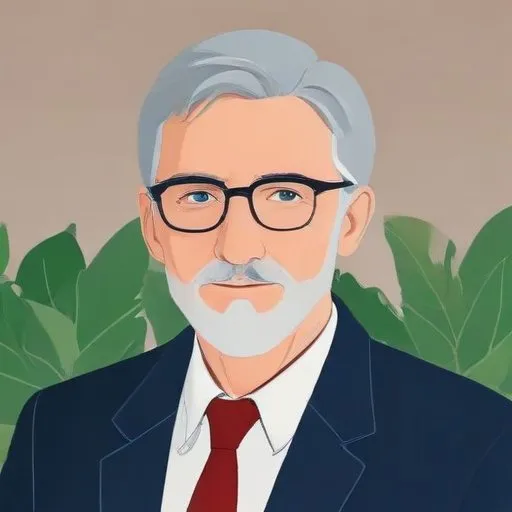
British biologist and academic who made significant contributions to the field of embryology, particularly in the study of cell division and development. His work laid the foundation for modern embryological research.
Sir John Ashworth is a British scientist and educationalist, recognized for his groundbreaking research in developmental biology and cell differentiation, particularly in the field of slime mold. With a distinguished career spanning over four decades, Ashworth has left an indelible mark on the scientific community and education sector.
Ashworth was born on November 27, 1938, and educated at West Buckland School and Exeter College, Oxford. He obtained a PhD degree in biochemistry at Leicester University, laying the foundation for his future research endeavors.
Ashworth's scientific research focused on developmental biology and cell differentiation, with a particular interest in the slime mold. He was a lecturer and reader at Leicester University before taking up the post of foundation Professor of Biology at the University of Essex in 1974.
His career highlights include:
Ashworth has held various leadership positions, including:
Ashworth has received several honors and awards for his contributions to science and education, including:
Sir John Ashworth's contributions to science, education, and governance have had a profound impact on modern society. His commitment to excellence and leadership has inspired generations of scientists, educators, and policymakers. As a testament to his dedication and achievements, Ashworth's legacy continues to shape the scientific and educational landscape.
Through his remarkable journey, Ashworth has demonstrated the importance of interdisciplinary collaboration, innovation, and leadership in driving progress and positive change. As a scientist, educator, and leader, he has left an indelible mark on the world, inspiring future generations to strive for excellence and make a meaningful impact.
Born in 1916
Pioneering scientist who discovered the structure of DNA, revolutionizing our understanding of genetics and life itself.
98 Years Old
Discovered the structure of DNA, revolutionizing our understanding of genetics and earning a Nobel Prize. Pioneering work in molecular biology has far-reaching implications for medicine and beyond.
Born in 1920
A British scientist who contributed significantly to the discovery of the structure of DNA, providing high-quality X-ray crystallography images that helped James Watson and Francis Crick develop their famous model.
Born in 1916
A Nobel Prize-winning physicist and biologist who contributed significantly to the discovery of the structure of DNA, using X-ray crystallography to produce the first clear images of the molecule.
Born in 1901
Pioneering chemist and peace activist who won two unshared Nobel Prizes, one for chemistry and one for peace, for his groundbreaking work on the nature of the chemical bond and his tireless efforts to promote nuclear disarmament.
Born in 1915
A Nobel Prize-winning biologist and immunologist who made groundbreaking discoveries in tissue transplantation and immunology, leading to significant advancements in organ transplants and our understanding of the immune system.
Born in 1914
Pioneering crystallographer who unraveled the structure of hemoglobin, revolutionizing our understanding of biological molecules. His work paved the way for major advances in medicine and biochemistry.
