


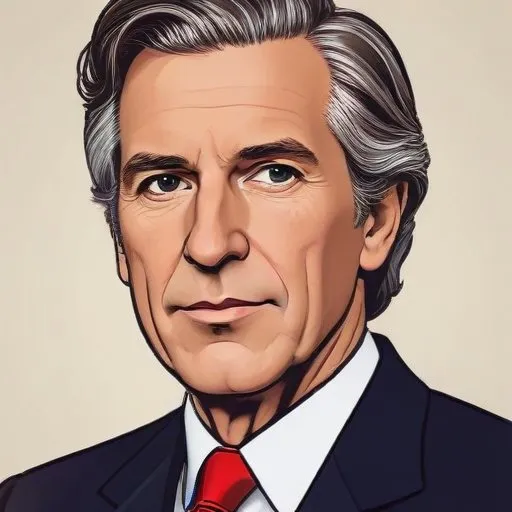
A prominent lawyer and politician who served as the United States Ambassador to France, known for his diplomatic efforts during the American Civil War and his role in preserving the French-American alliance. He was a strong advocate for the abolition of slavery and played a key role in shaping American foreign policy during the 19th century.
John Bigelow was a renowned American lawyer, diplomat, and historian who left an indelible mark on the literary world by editing the complete works of Benjamin Franklin. His meticulous efforts resulted in the first autobiography of Franklin, taken from Franklin's previously lost original manuscript, a feat that cemented Bigelow's place in the annals of American literary history.
Born on November 25, 1817, in Malden-on-Hudson, New York, Bigelow graduated from Union College in 1835, where he was an active member of the Sigma Phi Society and the Philomathean Society. He was admitted to the bar in 1838, laying the foundation for his subsequent career in law and diplomacy.
Bigelow began his political career as a reform Democrat, working closely with William Cullen Bryant in New York. However, his antislavery convictions led him to leave the party in 1848 and join the Free Soil Party. In 1856, he was instrumental in leading other former Democrats into the newly formed Republican Party, and he wrote a campaign biography of John C. Frémont, who won the Republican presidential nomination that year.
In 1861, President Abraham Lincoln appointed Bigelow as American consul in Paris, which marked the beginning of his diplomatic career. He progressed to Chargé d'Affaires and Envoy Extraordinary and Minister Plenipotentiary to the Court of Napoleon III, working closely with Charles Francis Adams, the United States minister to the United Kingdom. Together, they successfully blocked attempts by France and the United Kingdom to intervene in the American Civil War in favor of the Confederacy, thereby contributing significantly to the Union victory.
Bigelow also negotiated with Emperor Napoleon III over withdrawing France's troops from Mexico, which were supporting Emperor Maximilian I of Mexico. His diplomatic efforts were further recognized when Lincoln appointed him ambassador to France in 1865. After leaving this position, Bigelow moved to Germany, where he lived for three years, during the period of the Franco-Prussian War, and forged a lasting friendship with Otto von Bismarck.
John Bigelow's contributions to American literature and diplomacy are undeniable. His tireless efforts in editing the complete works of Benjamin Franklin and his diplomatic actions during the American Civil War and the Franco-Prussian War demonstrated his unwavering commitment to the ideals of freedom and democracy.
In 1895, Bigelow played a central role in the founding of the New York Public Library, a testament to his enduring passion for education and literature. This institution has since become a hub for knowledge and learning, serving as a lasting tribute to Bigelow's vision and dedication.
John Bigelow's remarkable life serves as a testament to his unwavering dedication to the pursuit of knowledge, freedom, and democracy. His legacy continues to inspire generations, ensuring his place as one of the most influential Americans of the 19th century.
Born in 1809
Led the United States through its Civil War and ultimately abolished slavery, leaving a lasting legacy in American history.
Born in 1801
The 24th United States Secretary of State played a crucial role in shaping America's foreign policy, particularly in the acquisition of Alaska from Russia in 1867. He's also known for his strong anti-slavery stance.
Born in 1777
A skilled orator and compromiser who played a crucial role in shaping the country's early development, particularly through his "American System" economic plan. He's also known for his numerous presidential bids and influential leadership in the Senate.
Born in 1782
A renowned lawyer and politician who served as the 14th United States Secretary of State, known for his exceptional oratory skills and influential role in shaping the country's early development.
Born in 1767
The 6th President of the United States was a skilled diplomat and leader who played a key role in shaping America's foreign policy and expansion. He's also known for being the son of a president and a president himself, making him part of a unique American political dynasty.
Born in 1791
The 15th President of the United States, a northern Democrat who remained in office during the American Civil War, is infamous for his inaction in preventing the secession of 11 southern states. He's often regarded as one of the worst presidents in US history.
44 Years Old
A dominant wide receiver in the NFL, known for his athleticism, sure hands, and impressive career statistics, earning him seven Pro Bowl selections.
Born in 1822
Led the Union Army to victory in the Civil War and later became President, known for issuing the Emancipation Proclamation and strengthening federal authority.
