


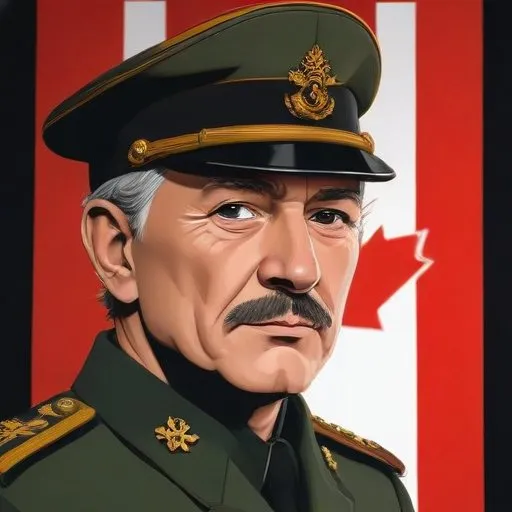
Led a British expedition that captured Fort Frontenac from the French during the French and Indian War, and later became a prominent figure in the American Revolution.
John Bradstreet was a British Army officer, Commodore-Governor of Newfoundland, and a stalwart defender of the British Empire during the tumultuous periods of King George's War, the French and Indian War, and Pontiac's War. His bravery, strategic thinking, and unwavering commitment to the crown earned him recognition as a prominent military figure of his time.
Born on December 21, 1714, in Annapolis Royal, Nova Scotia, to a British Army lieutenant and an Acadian mother, Agathe de Saint Etienne de La Tour, Bradstreet's early life was marked by cultural diversity and a strong military presence. His Acadian heritage and fluency in the French language would later prove advantageous in his military career.
Bradstreet's military service began in 1735, when he joined the regular British army. His early years were marked by garrison duty in Nova Scotia with the 40th Regiment of Foot, during which he engaged in trade with the French at Louisbourg, leveraging his Acadian connections. His capture during the French raid on Canso in 1744 did not deter him; instead, he used the opportunity to develop plans for the capture of Louisbourg, which eventually fell to British forces in 1745.
John Bradstreet passed away on September 25, 1774, in New York City, leaving behind a widow and two children. His legacy as a brave and skilled military leader, as well as his Acadian heritage, continues to inspire and fascinate historians and enthusiasts alike.
Throughout his career, Bradstreet received various honors and recognition for his military service, including his appointment as Commodore-Governor of Newfoundland.
John Bradstreet's life serves as a testament to the enduring power of courage, perseverance, and strategic thinking in the face of adversity. His contributions to the British Empire's war efforts have left an indelible mark on history, solidifying his place as one of the most revered military figures of his time.
Born in 1837
Compiler of the Oxford English Dictionary, revolutionizing the field of lexicography with his comprehensive and authoritative work. His dictionary remains an indispensable reference for scholars and language enthusiasts alike.
Born in 1723
Led British forces during the American Revolutionary War, ultimately surrendering at Saratoga, a turning point in the war. He was also a playwright and politician.
Born in 1741
A traitorous American general who defected to the British Army during the American Revolutionary War, leading to a pivotal moment in American history.
Born in 1754
A British cavalry officer who led Loyalist forces during the American Revolutionary War, infamous for his brutal tactics and subsequent defeat at the Battle of Cowpens.
