


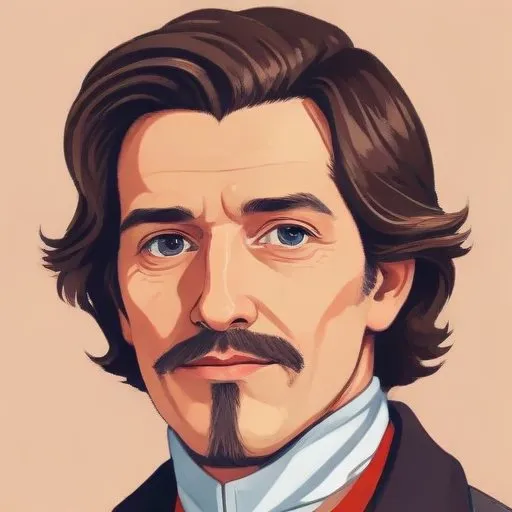
A Scottish physician and author who made significant contributions to the field of medicine, particularly in the area of respiratory diseases, and wrote influential medical texts.
John Cheyne, a renowned British physician and surgeon, is remembered for his groundbreaking contributions to the field of medicine, particularly for identifying Cheyne-Stokes respiration, a unique pattern of breathing in patients with neurological disorders.
Born on February 3, 1777, in Leith, Scotland, Cheyne was raised in a family of medical professionals. His father, Dr. John Cheyne, was a surgeon, and the family's involvement in the medical field sparked Cheyne's interest from an early age.
Cheyne's educational journey began at Leith Grammar School and later at the High School in Edinburgh. His exceptional aptitude in medicine earned him a spot at Edinburgh University, where he graduated as a doctor at the tender age of 18.
Cheyne's medical career was marked by various milestones, including his work as a surgeon with an artillery corps during the Battle of Vinegar Hill. He rejoined his father's practice in 1799 and later moved to Dublin, where he worked at the Meath Hospital.
In 1811, Cheyne was appointed Professor of Medicine in the Royal College of Surgery in Ireland (RCSI), a position that catapulted him to prominence in the medical community. His scholarly pursuits led to the publication of several books, including:
Cheyne's contributions to medicine were recognized by the Royal Society of Edinburgh, which elected him as a fellow in 1814. He was also awarded the Fellowship of the King and Queens College of Physicians of Ireland in 1824.
Cheyne's work was deeply rooted in his philosophical approach to medicine. He believed in the importance of empirical observation and meticulous documentation, which paved the way for future medical breakthroughs.
Cheyne's later years were marked by ill health, which forced him to retire to England in 1831. He passed away on January 31, 1836, at his country estate in Sherington, Buckinghamshire.
John Cheyne's legacy extends beyond his medical accomplishments. He inspired generations of physicians and surgeons, leaving an indelible mark on the field of medicine. His contributions continue to influence medical research and practice, ensuring his place as one of the pioneers of medical innovation.
Born in 1710
Pioneering physician and chemist who discovered the properties of carbon dioxide and developed the theory of latent heat, making significant contributions to the fields of chemistry and medicine.
Born in 1728
Pioneering surgeon and anatomist who made groundbreaking discoveries in human anatomy, particularly in the field of venereal diseases, and was a pioneer in scientific surgery.
Born in 1749
Developed the smallpox vaccine, revolutionizing disease prevention and saving countless lives.
Born in 1736
Improved steam engine efficiency, revolutionizing industry and transportation. Known for his innovative designs and patents that transformed the Industrial Revolution.
Born in 1728
Discovered magnesium and isolated carbon dioxide, making significant contributions to the field of chemistry.
Born in 1726
Pioneering geologist and physician who formulated the theory of uniformitarianism, proposing that the Earth's geological features were shaped by slow, gradual processes over millions of years.
Born in 1710
A prominent figure in the Scottish Enlightenment, he founded the Scottish School of Common Sense, arguing that common sense is the foundation of philosophy, and that knowledge is derived from experience and perception.
61 Years Old
A lawyer and politician who served in the U.S. House of Representatives from 1987 to 1997, known for his moderate Republican views and advocacy for environmental issues.
